
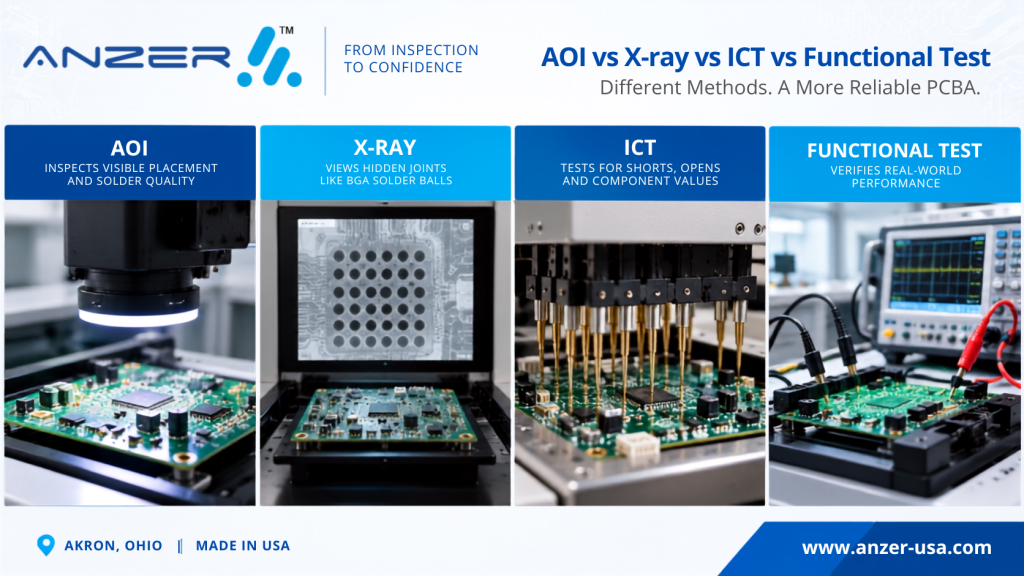
Functional Testing vs ICT vs AOI vs X-ray: PCBA Testing Guide
When an OEM asks an electronics manufacturer, “Do you test the PCB assemblies?”, that question is incomplete. The important question is: What does the test actually prove? AOI, X-ray, ICT and functional testing examine different aspects of a PCBA. AOI focuses on visible assembly conditions….
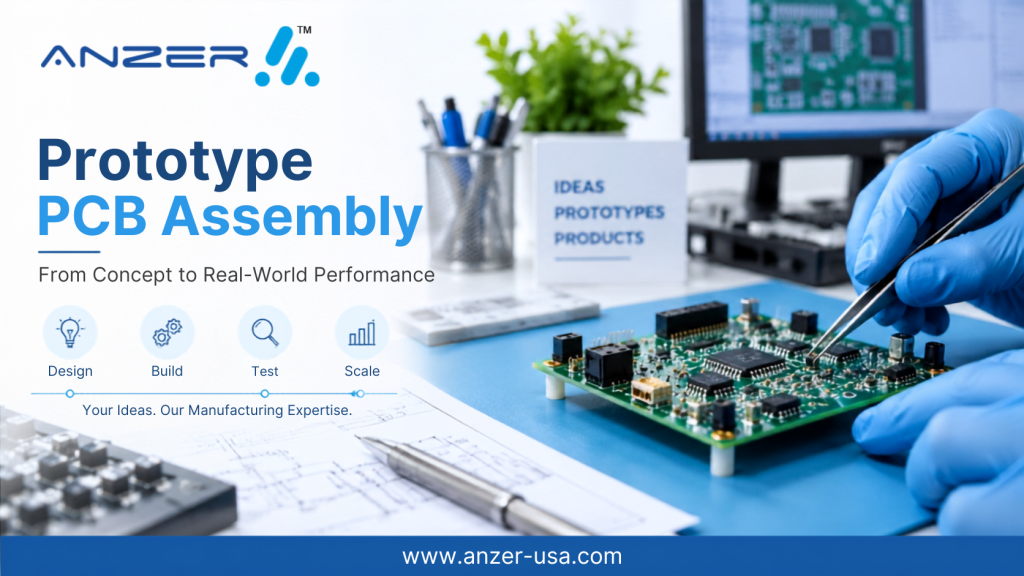
Prototype PCB Assembly for OEMs | ANZER USA
Prototype PCB assembly is the manufacturing step that turns a PCB design into a populated, testable circuit board. For OEMs and R&D teams, the goal is not simply to get components onto a board. A useful prototype should help answer a more important question: Is…
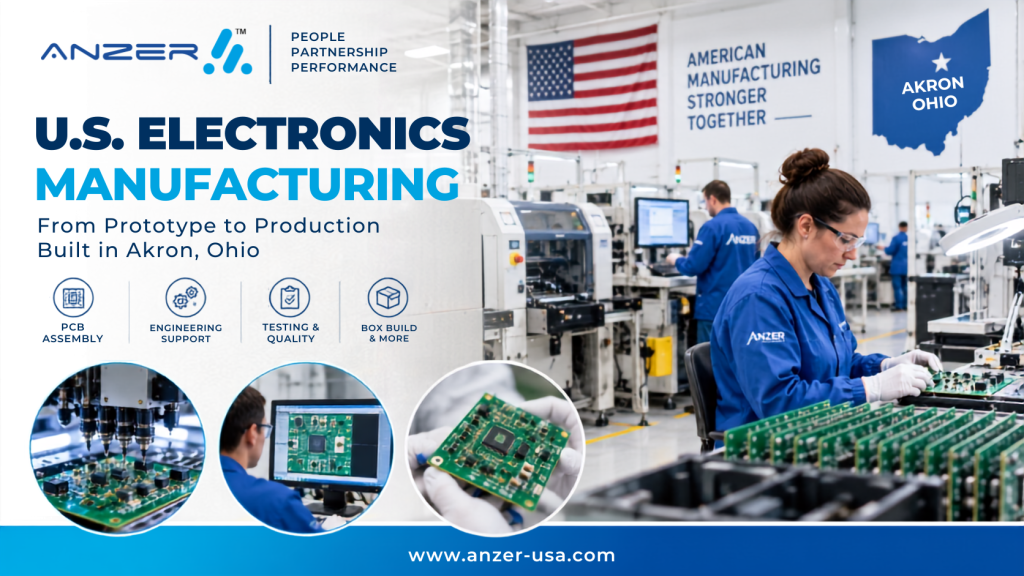
U.S. Electronics Manufacturing: What OEM Buyers Should Look For | Anzer USA
U.S. electronics manufacturing is about more than assembling a PCB in an American facility. For OEMs, the real question is whether a manufacturing partner can consistently manage design-for-manufacturing, component sourcing, PCB assembly, inspection, testing, documentation, integration, and production transition. A U.S.-based electronics manufacturer can also…
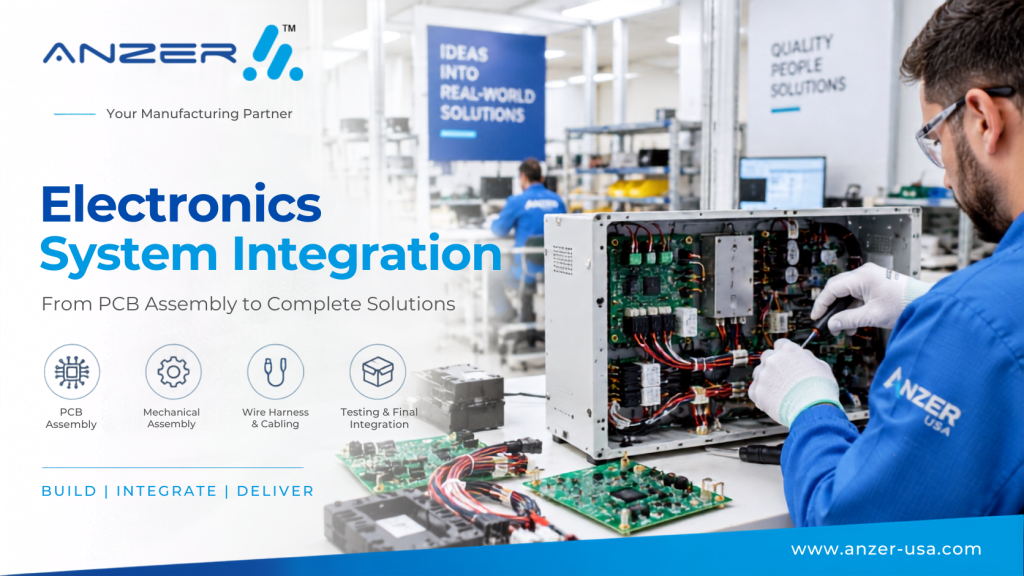
Electronics System Integration: From PCB Assembly to Complete Systems
Electronics system integration is the process of bringing electronic, electrical, mechanical, and assembly elements together into a complete functional system. Instead of treating PCB assembly, wiring, mechanical assembly, testing, and final assembly as disconnected activities, system integration connects them into one manufacturing workflow. For OEMs,…
MBE WBE Electronics Manufacturer: What OEM Buyers Should Know
For OEMs, procurement teams, and engineering groups, choosing an MBE WBE electronics manufacturer can support supplier-diversity objectives while still requiring the same technical discipline expected from any qualified electronics manufacturing partner. The right evaluation should cover certification, manufacturing capabilities, quality systems, engineering support, traceability, testing,…
No Minimum Order PCB Assembly: What OEM Buyers Should Know
Yes, no minimum order PCB assembly is available for OEMs that need prototype, low-volume, or production PCB assemblies without committing to a large quantity. ANZER supports PCB assembly from prototypes through production, with no minimum order quantity, a dedicated prototype production line, SMT and through-hole…
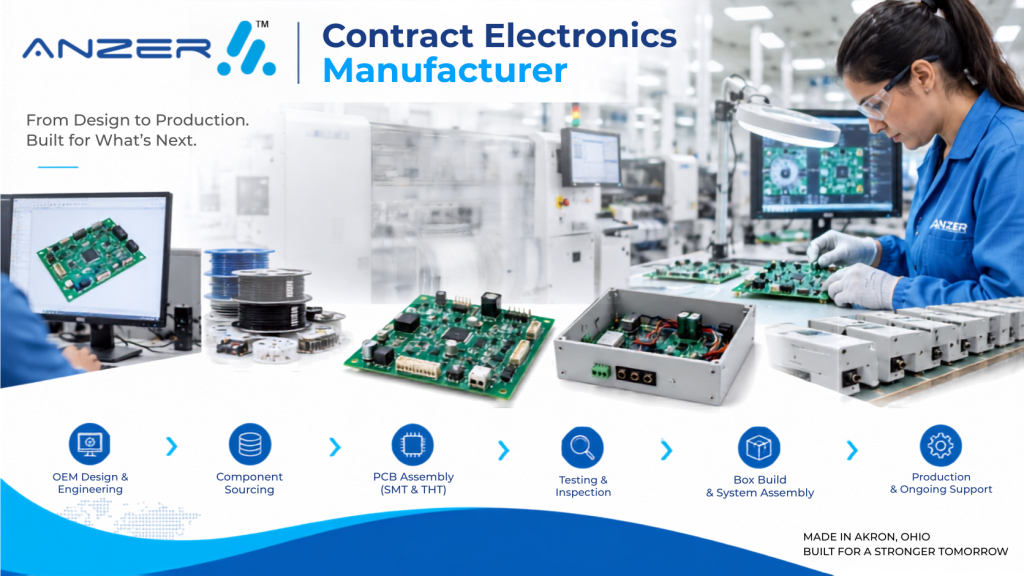
Contract Electronics Manufacturer: What OEMs Should Evaluate Before Choosing an EMS Partner
A contract electronics manufacturer helps OEMs turn an electronic design into a manufacturable product without requiring the OEM to operate every production process internally. Depending on the supplier and project, services can include component sourcing, PCB assembly, testing, box build integration, wire and cable assembly,…
PCB Manufacturing Ohio: What OEM Buyers Should Evaluate Before Choosing a Manufacturer
If you are searching for PCB manufacturing in Ohio, the important question is not simply whether a supplier can produce a circuit board. OEM buyers need to evaluate the complete manufacturing path, including PCB design, fabrication, DFM, component sourcing, SMT and through-hole assembly, inspection, testing,…
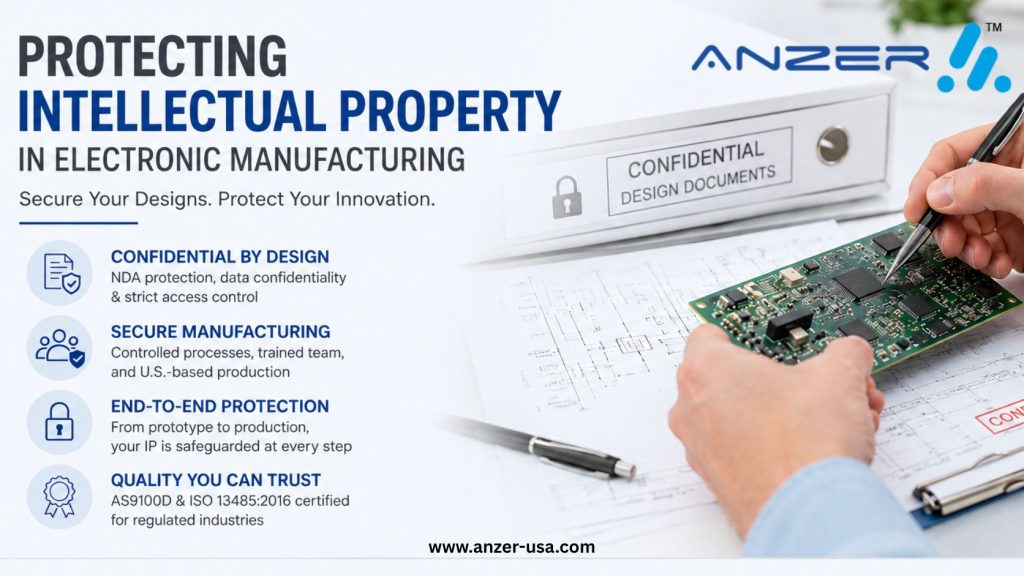
Protecting Intellectual Property in Electronic Manufacturing: What OEMs Need to Know
When an OEM outsources PCB assembly, prototyping, box build, or electronic contract manufacturing, it may share much more than a bill of materials. Schematics, PCB layouts, firmware, test procedures, mechanical drawings, sourcing information, manufacturing instructions, and product revisions can all contain commercially valuable information. Protecting…
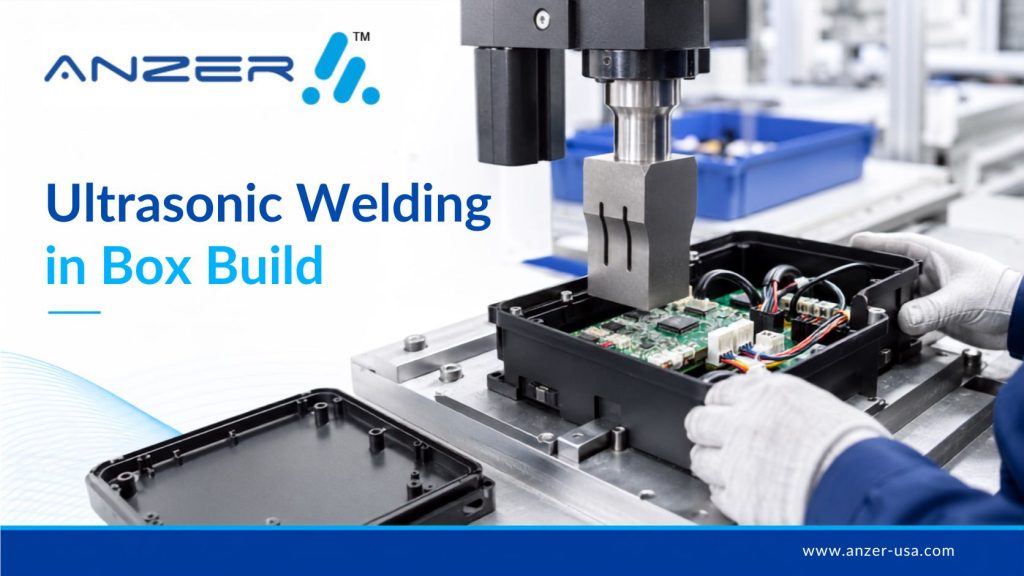
Ultrasonic Welding for Electronic Enclosures in Box Build Assembly: An OEM Design & RFQ Guide
Ultrasonic welding can be an effective way to permanently join compatible thermoplastic electronic enclosures, but the weld cannot be treated as a final assembly step that engineering decides on after the PCB and housing are finished. In an electronic box build, the enclosure, plastic material,…
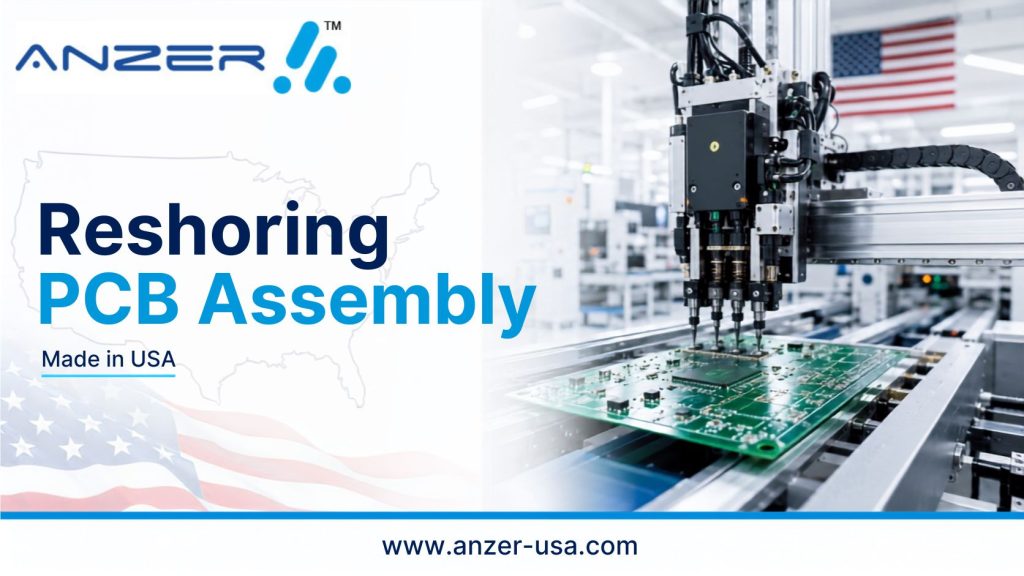
Reshoring PCB Assembly: Why US Manufacturers Are Bringing Electronics Production Home
For decades, the math seemed straightforward: move PCB assembly offshore, cut labor costs, and scale. That math no longer holds. Supply chain failures, trade policy shifts, and the hard lessons of 2020 through 2022 have pushed procurement managers and OEM engineering teams to reassess where…
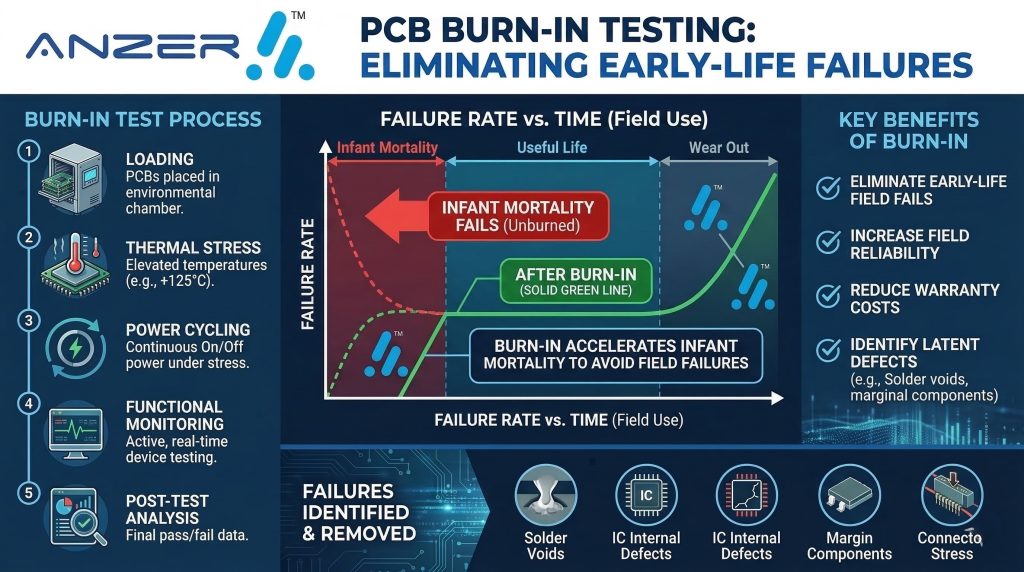
PCB Burn-In Testing: Eliminating Early-Life Failures
PCB burn-in testing applies thermal and electrical stress to eliminate weak components before they fail in the field. It reduces infant mortality failures by 60-80% and is essential for aerospace, medical, and mission-critical electronics. Proper burn-in follows JEDEC and MIL-STD protocols, typically running 24-168 hours…
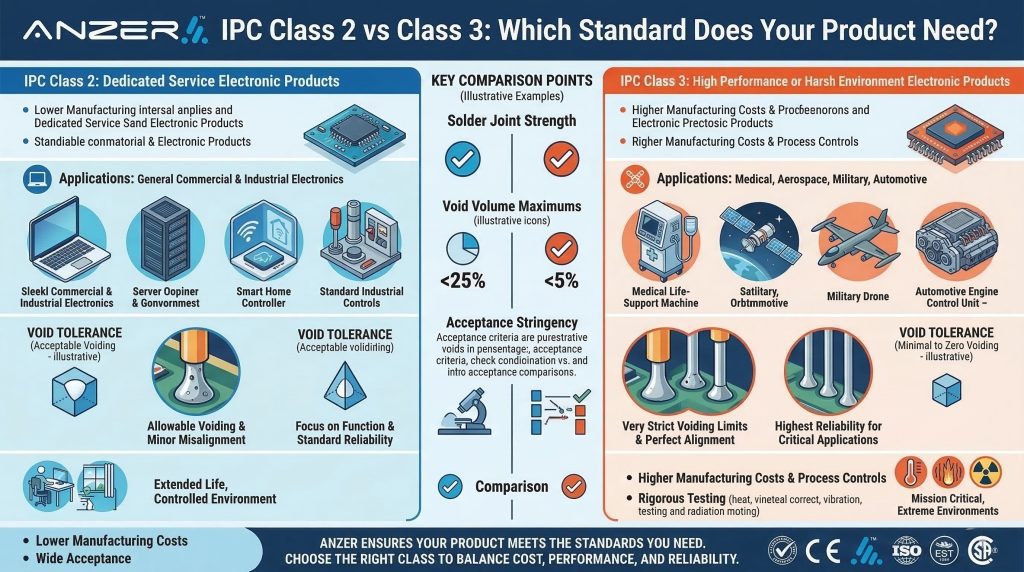
IPC Class 2 vs Class 3: Which Standard Does Your Product Need?
IPC Class 2 covers general consumer electronics with moderate reliability needs. IPC Class 3 applies to high-reliability aerospace, medical, and military electronics where failure is unacceptable. Class 3 has stricter acceptance criteria for solder joints, component placement, and defects – allowing zero cosmetic imperfections that…
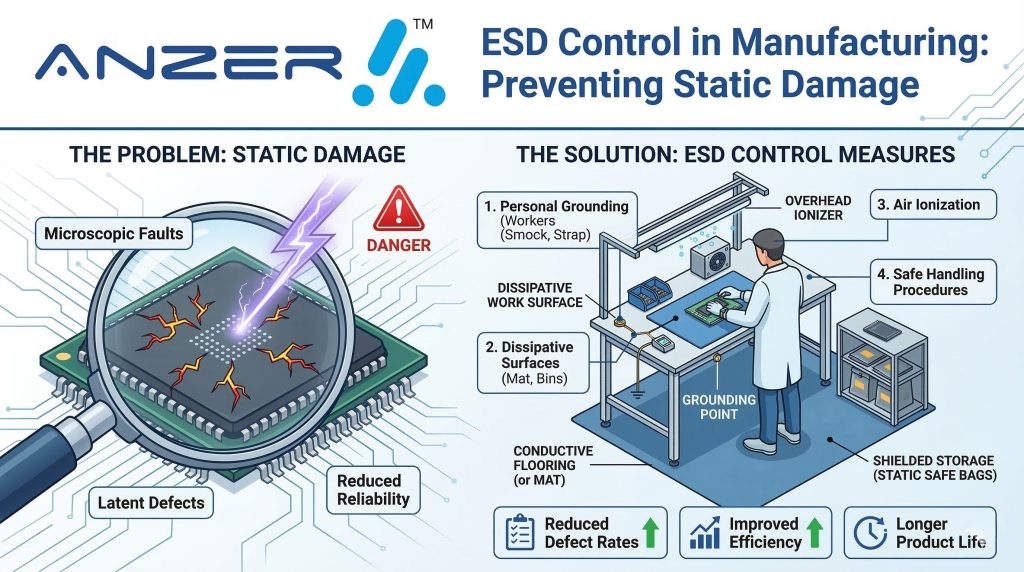
ESD Control in Manufacturing: Preventing Static Damage
TL;DR: Electrostatic Discharge (ESD) causes invisible damage to sensitive electronic components, resulting in immediate failures or latent defects that fail in the field. Industry data shows 30-40% of component failures stem from ESD damage. Prevention requires a comprehensive ESD control program following ANSI/ESD S20.20 standards…
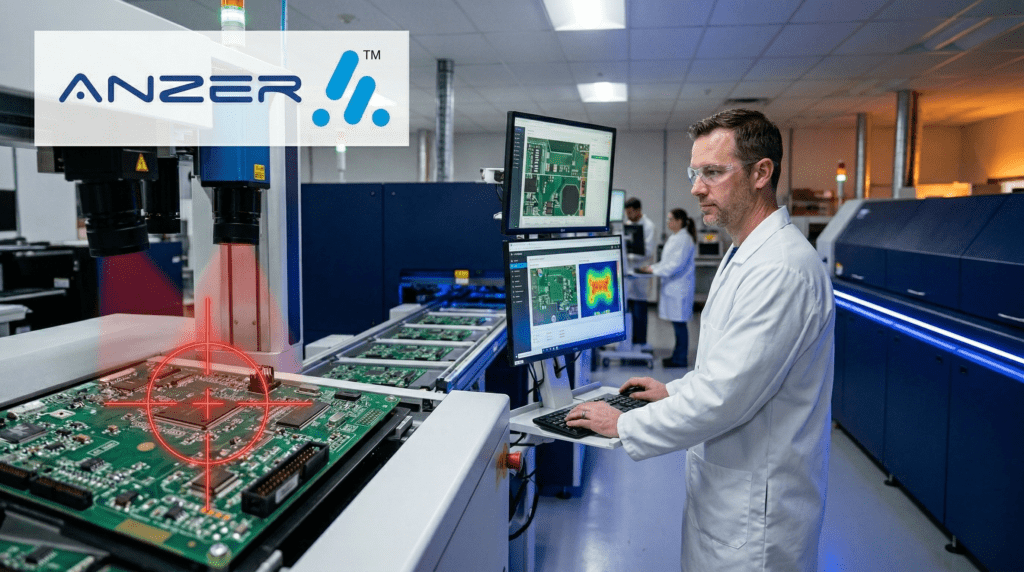
The Impact of AI on Electronics Manufacturing in 2026
Artificial intelligence is changing how electronic assemblies are designed, inspected, and delivered – and the effects are landing on the shop floor right now, not in some future roadmap. For US-based electronic contract manufacturers serving aerospace, medical, and industrial automation markets, understanding where AI creates…
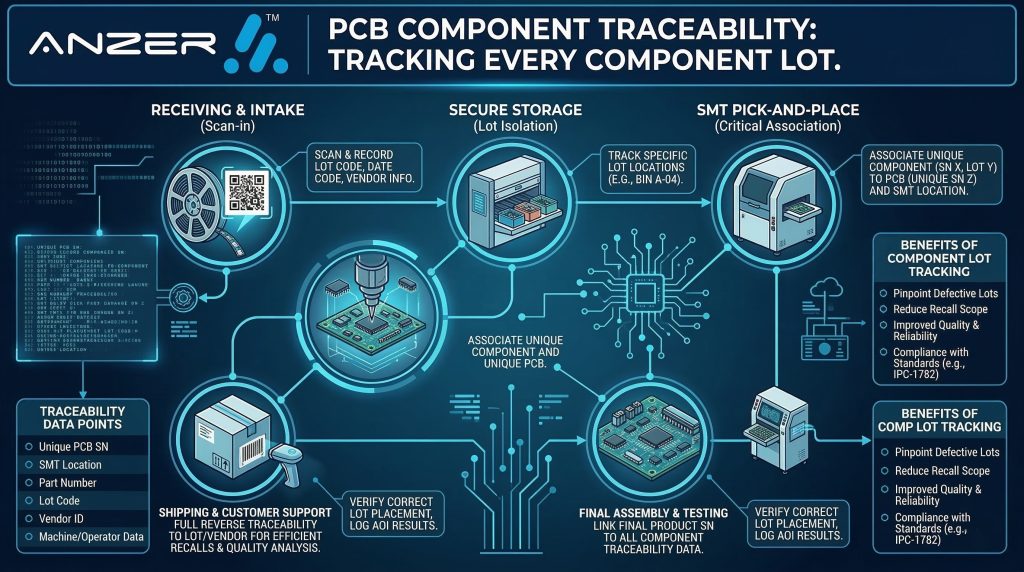
PCB Component Traceability: Tracking Every Component Lot
TL;DR: PCB component traceability is the ability to track every electronic component from original manufacturer to finished product, linking component lot codes to specific assemblies and serial numbers. It’s mandatory for aerospace (AS9100) and medical (ISO 13485) manufacturing. Complete traceability enables rapid defect isolation, supports…
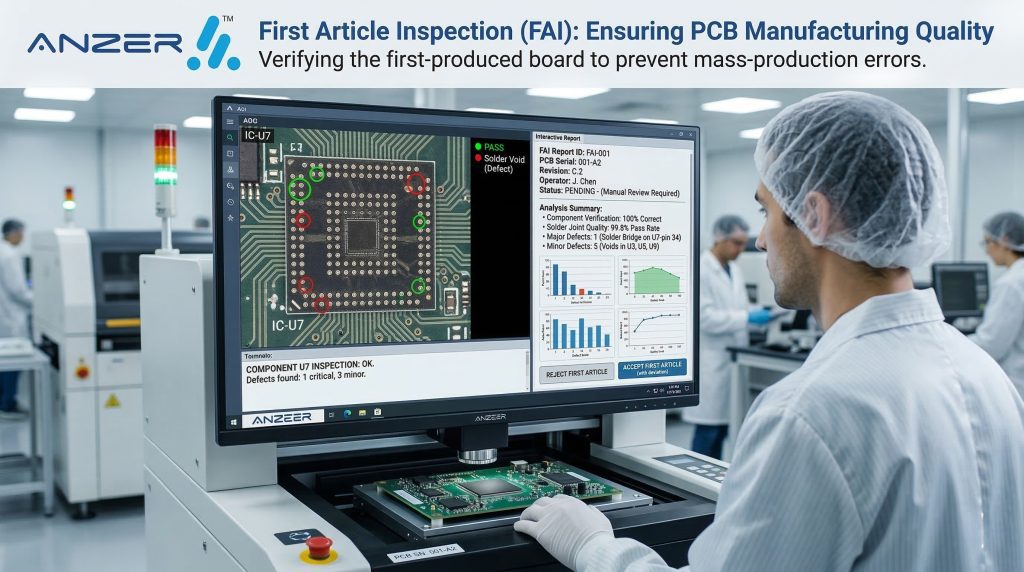
First Article Inspection (FAI): Ensuring PCB Manufacturing Quality
TL;DR: First Article Inspection (FAI) is a comprehensive verification process that confirms a manufactured product meets all design, material, and performance requirements before mass production begins. Required by AS9100 for aerospace manufacturing, FAI validates that production processes can consistently produce conforming products. The process includes…
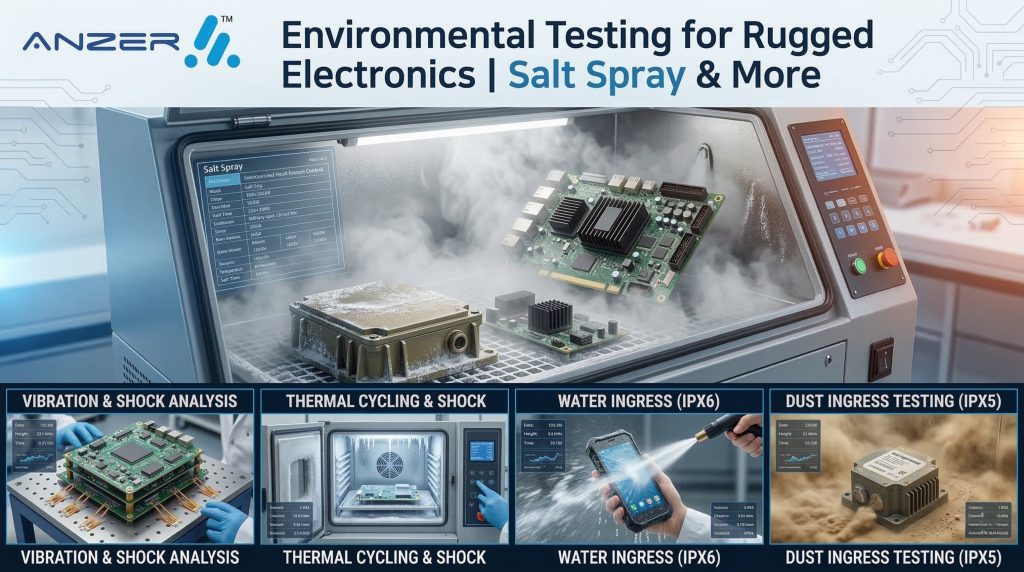
Environmental Testing for Rugged Electronics | Salt Spray & More
TL;DR: Environmental testing subjects electronics to extreme temperature, humidity, vibration, and corrosive conditions to verify they survive harsh operating environments. Required for aerospace, military, marine, and industrial applications, these tests reveal design weaknesses and manufacturing defects before field deployment. Key tests include salt spray (corrosion…
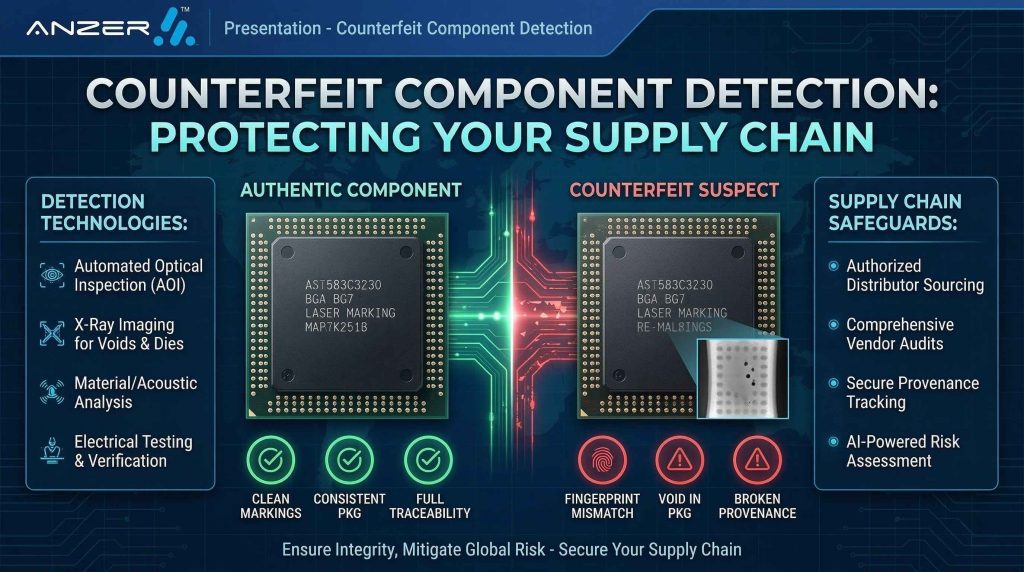
Counterfeit Component Detection: Protecting Your Supply Chain
TL;DR: Counterfeit electronic components – including remarked, recycled, and completely fake parts – represent a multi-billion dollar threat to electronics supply chains. Industry data shows 5-15% of components from unauthorized distributors are counterfeit. These parts cause field failures, safety hazards, and regulatory violations. Detection requires…
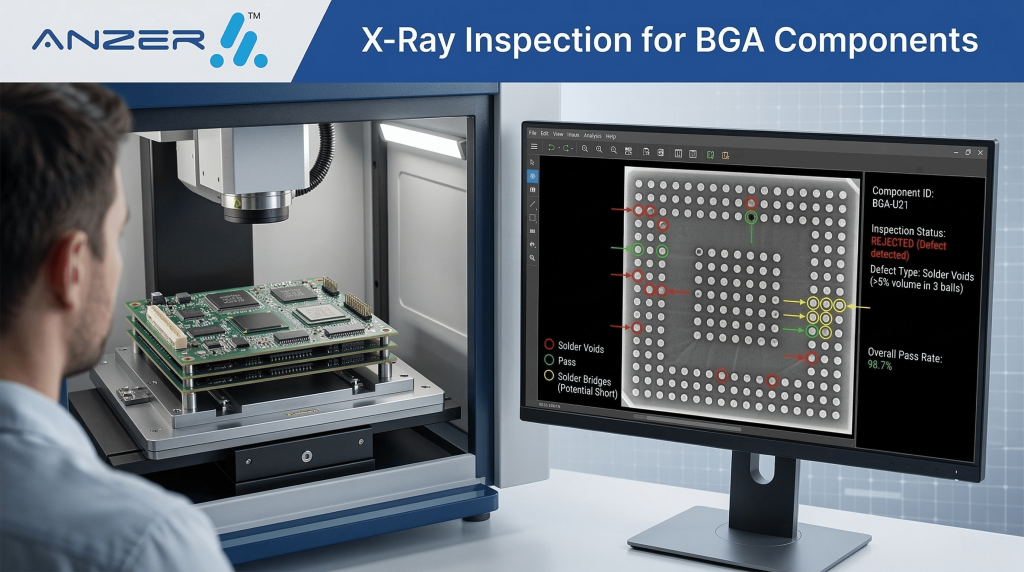
X-Ray Inspection for BGA Components: Complete Guide (2026)
X-ray inspection (AXI) is the only reliable method to verify BGA and leadless component solder joints because these connections are hidden beneath the package. Visual and optical inspection can’t see under the component. X-ray reveals voids, insufficient solder, bridging, and misalignment – defects that cause…