Prototype PCB Assembly for OEMs | ANZER USA
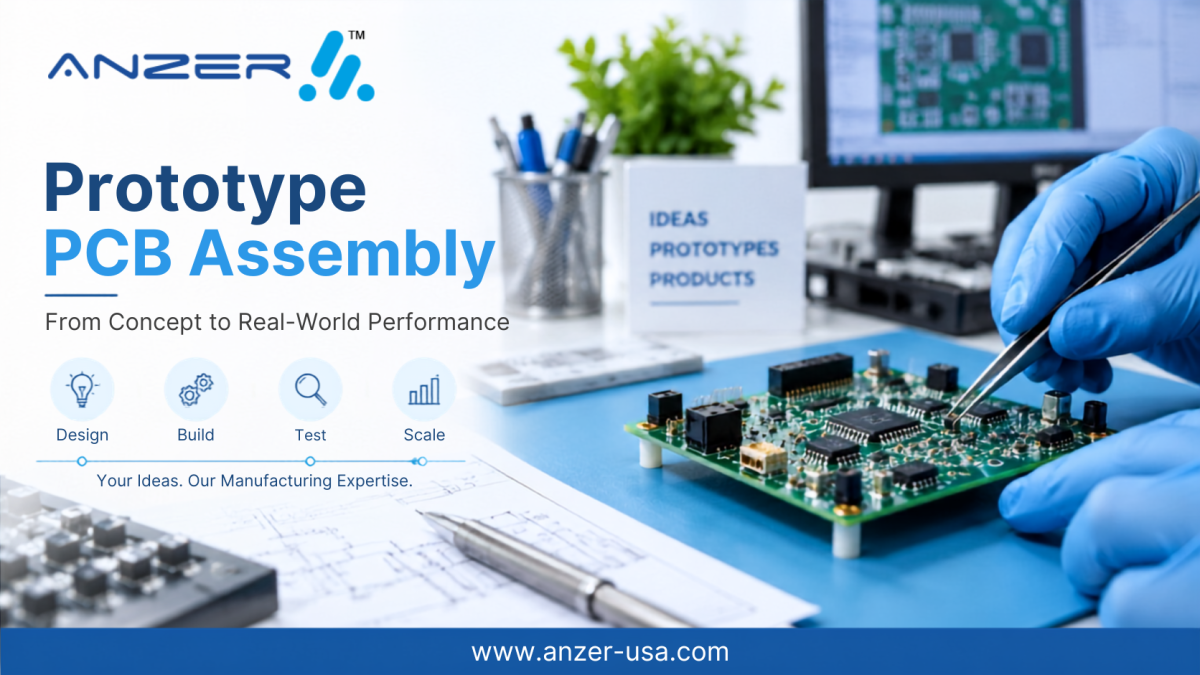
Prototype PCB assembly is the manufacturing step that turns a PCB design into a populated, testable circuit board. For OEMs and R&D teams, the goal is not simply to get components onto a board. A useful prototype should help answer a more important question: Is this design ready to move toward production?
That means prototype PCB assembly should include more than board population. Design for Manufacturability (DFM), Design for Assembly (DFA), component availability, inspection, testing, documentation, and the path to production all matter.
At ANZER USA, prototype manufacturing is supported by a dedicated prototype production line, no minimum order quantity, PCB assembly capabilities, engineering support, testing, and a path from prototype to production at the Akron, Ohio facility.
Explore ANZER PCB Assembly Services
What Is Prototype PCB Assembly?
Prototype PCB assembly is the process of assembling components onto a printed circuit board to create an early working version of an electronic product.
The distinction between a bare PCB and a prototype PCBA is important:
| Term | What it means |
|---|---|
| PCB fabrication | Produces the bare circuit board |
| PCB assembly | Populates the board with electronic components |
| Prototype PCBA | An early assembled version used for design validation and iteration |
| Production PCBA | An assembly manufactured under an established production process |
A prototype PCBA can be used to evaluate electrical performance, component selection, assembly methods, manufacturability, and test requirements before a product moves into larger production quantities.
For buyers, the manufacturing partner matters because problems discovered during prototype assembly can influence the next PCB revision and the eventual production process.
Why Prototype PCB Assembly Matters
A prototype is a manufacturing learning opportunity, not simply a small production order.
A well-managed prototype build can help an engineering team:
- Validate the physical implementation of the design
- Identify manufacturability problems
- Evaluate component choices
- Check soldering and assembly requirements
- Confirm test access
- Identify sourcing risks
- Gather engineering feedback
- Prepare the design for production
- Reduce avoidable changes after production begins
The earlier these issues are identified, the easier they are generally to address.
This is why OEMs should evaluate prototype PCB assembly providers based on engineering and manufacturing capability, rather than looking only at the quoted assembly price.
What Should a Prototype PCB Assembly Partner Provide?
Before sending an RFQ, ask whether the manufacturer can support the complete prototype workflow.
1. DFM and DFA Review
A prototype is a good opportunity to identify manufacturing problems before they become production problems.
A DFM/DFA review can examine areas such as:
- Component clearances
- PCB layout considerations
- Assembly requirements
- Soldering considerations
- Component availability
- BOM risks
- Test requirements
- Manufacturing documentation
ANZER provides DFM and DFA support as part of its design and manufacturing capabilities.
Review the DFM Checklist for PCB Assembly
2. Component Sourcing
The BOM can create manufacturing problems even when the PCB layout is correct.
Prototype builds should therefore consider:
- Component availability
- Approved alternatives
- Obsolescence
- Sourcing risk
- Quantity requirements
- Documentation and traceability requirements
For turnkey programs, the contract manufacturer can manage component procurement as part of the broader manufacturing process.
Learn About Turnkey PCB Assembly vs. Consignment
3. SMT, THT, or Mixed Technology Assembly
Prototype boards may use different component technologies.
SMT assembly is suited to surface-mounted components and automated placement.
Through-hole technology (THT) can be appropriate for components requiring mechanical strength or particular connection methods.
Many real-world boards combine both.
ANZER supports SMT, THT, and mixed-technology PCB assembly, allowing a prototype to reflect the intended production architecture rather than forcing the design into a single assembly method.
4. Inspection
Inspection should be matched to the design and risk.
ANZER’s verified inspection capabilities include:
- Automated Optical Inspection (AOI)
- X-ray inspection where applicable
- Visual inspection
- IPC workmanship criteria
For assemblies containing components with hidden solder joints, such as certain BGA packages, X-ray inspection can provide visibility that conventional optical inspection cannot.
Learn About X-Ray Inspection for BGA Components
5. Electrical Testing
A prototype should be tested according to its intended requirements.
Depending on the project, testing can include:
- In-Circuit Testing (ICT)
- Flying probe testing
- Functional testing
- Burn-in testing
- Environmental testing where required
The correct test strategy depends on the board, application, available test access, and product requirements. A manufacturer should discuss these requirements before assembly rather than treating testing as an afterthought.
Read About Flying Probe vs. ICT
Explore Electronic Functional Testing
The Prototype PCB Assembly Process
A practical prototype workflow can be organized into seven stages.
Design and Documentation Review
The manufacturer reviews the available design and manufacturing documentation, including the BOM, PCB data, assembly information, and testing requirements.
DFM and DFA
Potential manufacturing and assembly issues are identified before the build.
Component Procurement
Components are sourced according to the approved BOM and project requirements.
PCB Fabrication
The bare boards are fabricated to the required specifications.
SMT/THT Assembly
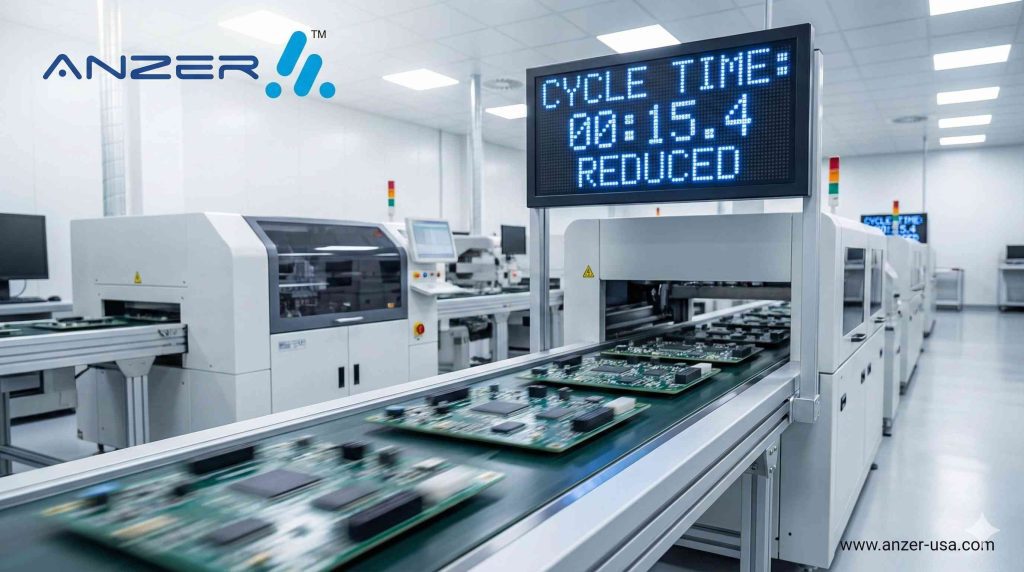
Components are placed and soldered using the appropriate assembly process.
Inspection and Testing
The assembled boards undergo the inspection and testing required for the project.
Engineering Feedback and Iteration
The prototype is evaluated, changes are identified, and the design can be revised before the next build.
This last step is particularly important. A prototype program should create useful manufacturing feedback, not just produce a board.
Prototype-to-Production: The Manufacturing Question Buyers Often Miss
One of the most important questions to ask before selecting a prototype PCB assembly supplier is:
What happens after the prototype works?
A prototype supplier may be capable of building a small batch but may not be the right manufacturing partner for production.
Changing suppliers between prototype and production can introduce another engineering and sourcing transition.
For an OEM, it is worth evaluating whether the same manufacturer can support:
Design review → Prototype → Pre-production → Production → Testing → Final assembly
ANZER supports prototype, pre-production, and production manufacturing, providing a path for customers that want to continue with the same manufacturing partner as the product matures.
Learn More About Prototype-to-Production PCB Manufacturing
Why a Dedicated Prototype Line Matters
Prototype work has different scheduling and engineering needs than established production.
ANZER operates a dedicated prototype production line, separate from its high-volume production lines. This is designed to support prototype work without disrupting established production schedules.
For an engineering team, that can make the prototype process easier to manage because the build is handled within a manufacturing environment designed to support development work.
ANZER also has no minimum order quantity, which can be relevant when an OEM needs a small number of boards for engineering validation rather than a conventional production run.
What Should You Send With a Prototype PCB Assembly RFQ?
A stronger RFQ gives the manufacturer enough information to evaluate both manufacturing requirements and potential risks.
Consider providing:
| RFQ Information | Why It Matters |
|---|---|
| Gerber or PCB fabrication files | Defines the bare board requirements |
| BOM | Defines components and quantities |
| Pick-and-place data | Supports automated component placement |
| Assembly drawings | Clarifies assembly requirements |
| Schematic | Provides additional engineering context |
| Revision information | Prevents version-control mistakes |
| Test requirements | Helps define the manufacturing test strategy |
| Programming requirements | Identifies required programming steps |
| Quantity | Establishes prototype scope |
| Special processes | Identifies coating, potting, or other requirements |
| Regulatory requirements | Establishes quality and documentation expectations |
For a broader RFQ checklist:
See ANZER’s PCB Assembly Quote Guide
Common Prototype PCB Assembly Mistakes
Choosing a supplier based only on unit price
A low assembly quote does not necessarily represent the lowest project cost.
If the supplier cannot identify manufacturing issues, support testing, or provide useful engineering feedback, problems can appear later in the development cycle.
Waiting until production to address DFM
DFM should happen before the prototype is built.
The prototype itself can then provide additional manufacturing feedback.
Ignoring component sourcing risk
A prototype BOM may contain components that are difficult to source consistently.
Discuss availability and potential alternatives early.
Treating inspection and testing as optional
A populated board is not automatically a validated product.
Define what needs to be inspected and what needs to be tested before the build begins.
Selecting a prototype supplier with no production path
If the design succeeds, you will eventually need to manufacture it.
Ask whether the supplier can support the next manufacturing stage.
Prototype PCB Assembly for Regulated Electronics
Prototype requirements can become more demanding when the end product is intended for a regulated or high-reliability application.
ANZER’s verified quality and manufacturing credentials include:
- ISO 9001:2015
- ISO 13485:2016
- AS9100D
- IPC-A-610 trained/certified workforce
- IPC Class 2 and Class 3 manufacturing capability
- ESD controls
- RoHS compliance
- REACH compliance
- Made in USA manufacturing in Akron, Ohio
For medical electronics, ANZER’s ISO 13485:2016 certification is particularly relevant.
For aerospace electronics, AS9100D and IPC Class 3 capability are relevant considerations.
Explore Aerospace PCB Assembly
When Should You Use Prototype PCB Assembly?
Prototype PCB assembly is a strong fit when you need to:
- Validate a new electronics design
- Build engineering samples
- Test a PCB before production
- Evaluate a component change
- Develop a new OEM product
- Prepare a medical or aerospace electronics design for further validation
- Move from an engineering design toward production
- Build small quantities without an MOQ requirement
It is less appropriate to treat the prototype as simply a discounted production run. The real value is the information gained before the design is scaled.
How to Evaluate a Prototype PCB Assembly Manufacturer
Before selecting a supplier, ask these questions:
- Do you support small prototype quantities?
- Is there a minimum order quantity?
- Do you perform DFM/DFA reviews?
- Can you assemble SMT and through-hole components?
- What inspection methods are available?
- Can you support ICT, flying probe, or functional testing?
- How are component sourcing risks handled?
- Can you support prototype revisions?
- Can you transition the product into production?
- Are your quality systems appropriate for the intended application?
- Where is the manufacturing performed?
- Can PCB assembly be combined with downstream services such as wire harness, coating, potting, or box build?
For OEMs, these questions often reveal more about manufacturing fit than a unit-price comparison.
Why Choose ANZER for Prototype PCB Assembly?
ANZER provides prototype PCB assembly from its manufacturing facility in Akron, Ohio.
Verified capabilities include:
- Dedicated prototype production line
- No minimum order quantity
- SMT assembly
- THT assembly
- Mixed-technology assembly
- DFM/DFA support
- AOI
- X-ray inspection
- ICT
- Flying probe testing
- Functional testing
- Burn-in testing
- Conformal coating
- Potting
- Wire harness assembly
- Box build assembly
- Prototype-to-production support
ANZER’s manufacturing history extends back to 1991 through its WRC legacy, representing 33+ years of manufacturing experience, with 4,000+ projects and 200+ customers according to the company’s verified internal intelligence record.
Get a Prototype PCB Assembly Quote from ANZER
Frequently Asked Questions
What is prototype PCB assembly?
Prototype PCB assembly is the process of producing small quantities of populated circuit boards so an engineering team can test and refine an electronic design before production.
Does ANZER have an MOQ for prototype PCB assembly?
No. ANZER’s verified capabilities include no minimum order quantity, making the service suitable for small prototype builds.
Can ANZER assemble both SMT and through-hole components?
Yes. ANZER supports SMT, THT, and mixed-technology PCB assembly.
Can a prototype move directly into production with ANZER?
Yes. ANZER supports prototype, pre-production, and production manufacturing, allowing an OEM to continue through the manufacturing lifecycle without necessarily changing suppliers.
What files are needed for a prototype PCB assembly quote?
Typical RFQ documentation includes PCB fabrication data, BOM, assembly information, drawings, revision information, and test requirements. The exact package depends on the project.
Conclusion
A successful prototype PCB assembly program should do more than produce a functioning board. It should help an OEM understand whether the design, components, assembly process, inspection strategy, and testing approach are ready for the next stage.
For that reason, evaluate prototype manufacturers on DFM support, assembly capability, inspection, testing, sourcing, documentation, iteration, quality systems, and prototype-to-production continuity, not only price.
ANZER supports prototype PCB assembly from Akron, Ohio, with a dedicated prototype production line, no MOQ, SMT/THT assembly, testing, engineering support, and production capabilities for B2B electronics programs.