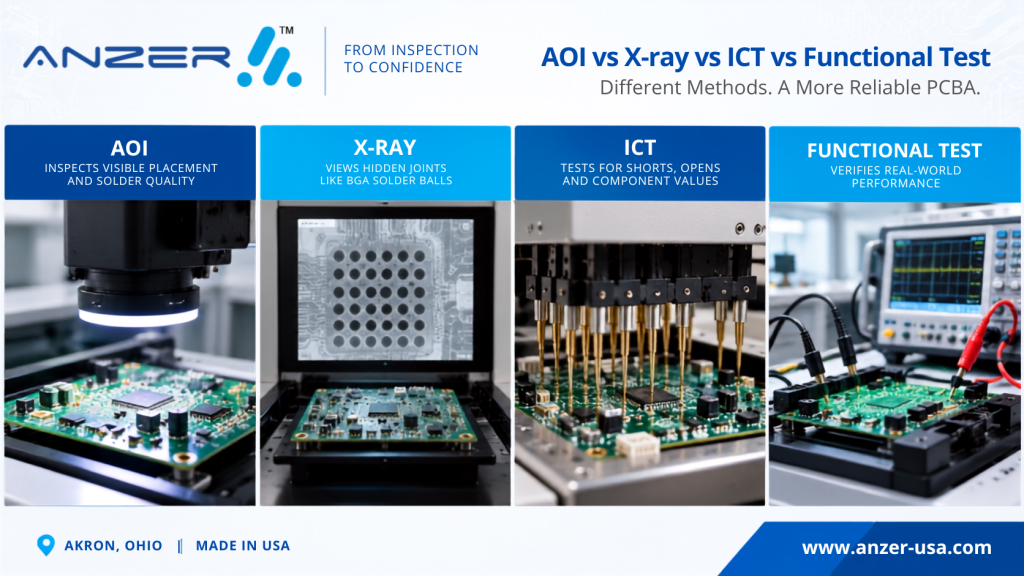
Functional Testing vs ICT vs AOI vs X-ray: PCBA Testing Guide
When an OEM asks an electronics manufacturer, “Do you test the PCB assemblies?”, that question is incomplete. The important question is: What does the test actually prove? AOI, X-ray, ICT and functional testing examine different aspects of a PCBA. AOI focuses on visible assembly conditions….
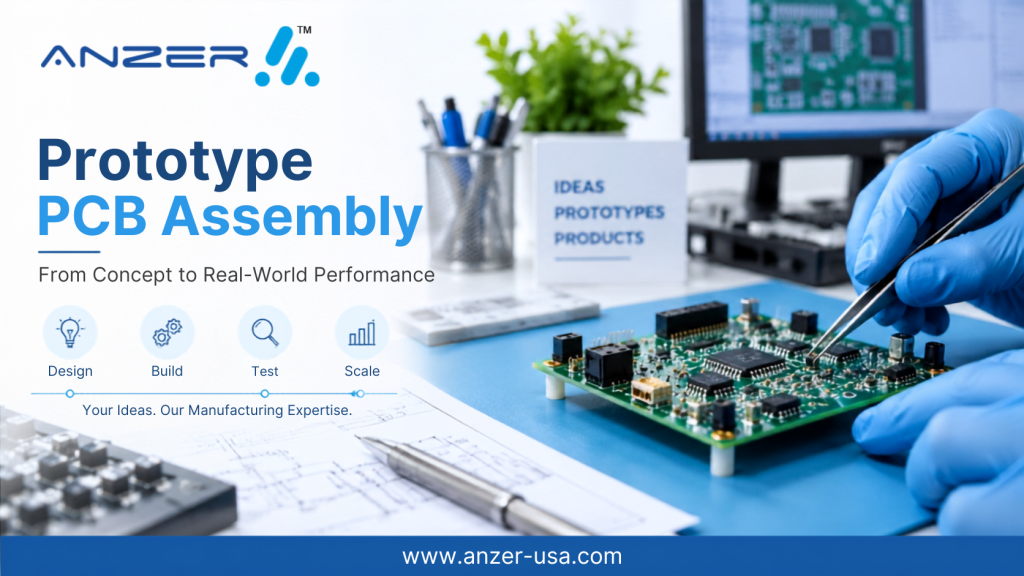
Prototype PCB Assembly for OEMs | ANZER USA
Prototype PCB assembly is the manufacturing step that turns a PCB design into a populated, testable circuit board. For OEMs and R&D teams, the goal is not simply to get components onto a board. A useful prototype should help answer a more important question: Is…
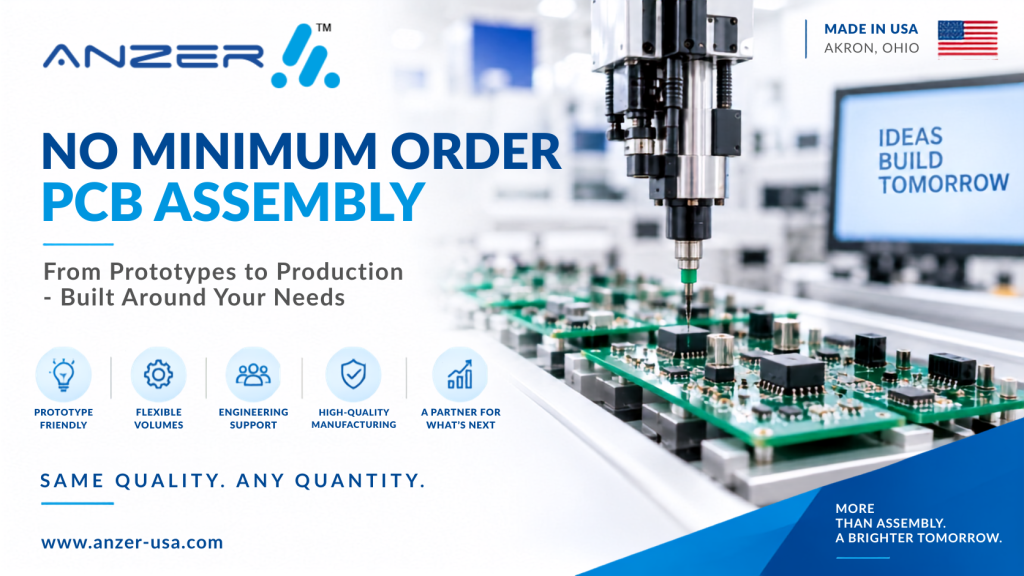
No Minimum Order PCB Assembly: What OEM Buyers Should Know
Yes, no minimum order PCB assembly is available for OEMs that need prototype, low-volume, or production PCB assemblies without committing to a large quantity. ANZER supports PCB assembly from prototypes through production, with no minimum order quantity, a dedicated prototype production line, SMT and through-hole…
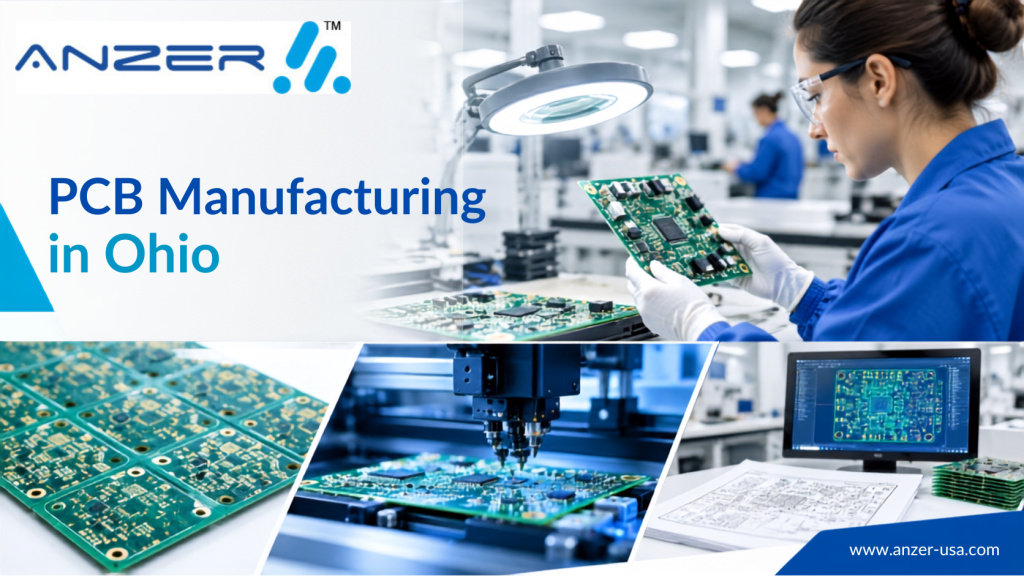
PCB Manufacturing Ohio: What OEM Buyers Should Evaluate Before Choosing a Manufacturer
If you are searching for PCB manufacturing in Ohio, the important question is not simply whether a supplier can produce a circuit board. OEM buyers need to evaluate the complete manufacturing path, including PCB design, fabrication, DFM, component sourcing, SMT and through-hole assembly, inspection, testing,…
Reshoring PCB Assembly: Why US Manufacturers Are Bringing Electronics Production Home
For decades, the math seemed straightforward: move PCB assembly offshore, cut labor costs, and scale. That math no longer holds. Supply chain failures, trade policy shifts, and the hard lessons of 2020 through 2022 have pushed procurement managers and OEM engineering teams to reassess where…
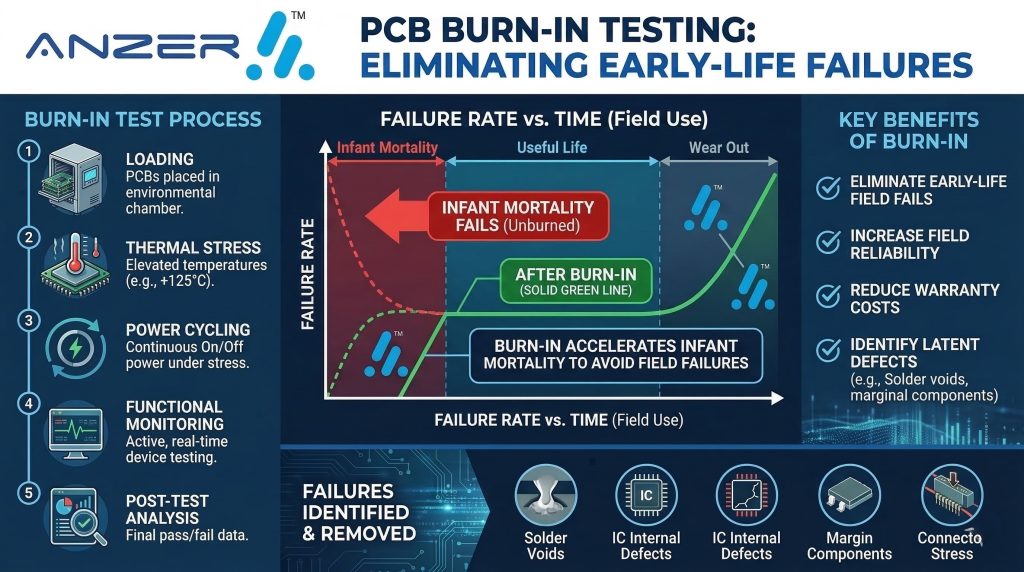
PCB Burn-In Testing: Eliminating Early-Life Failures
PCB burn-in testing applies thermal and electrical stress to eliminate weak components before they fail in the field. It reduces infant mortality failures by 60-80% and is essential for aerospace, medical, and mission-critical electronics. Proper burn-in follows JEDEC and MIL-STD protocols, typically running 24-168 hours…
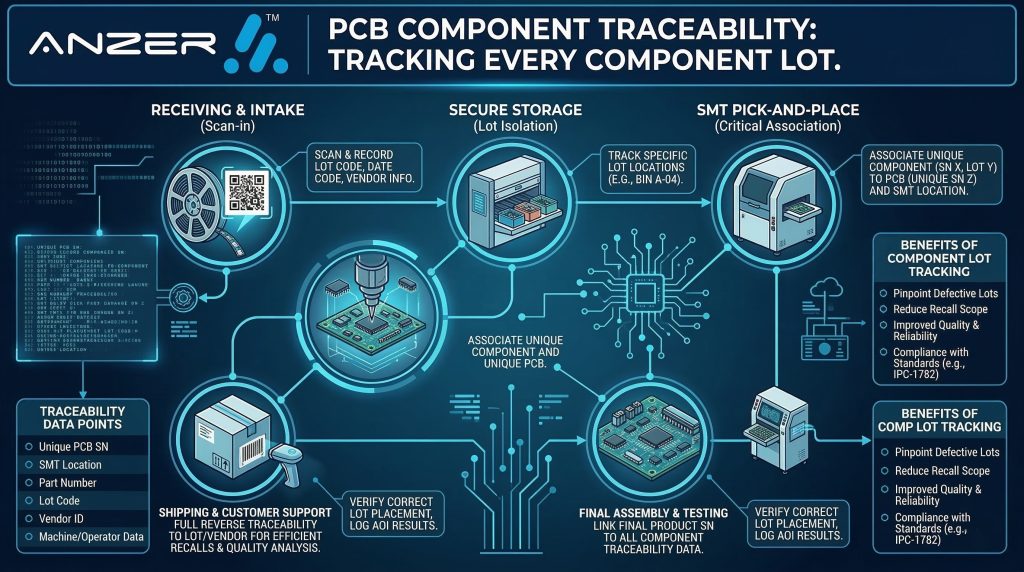
PCB Component Traceability: Tracking Every Component Lot
TL;DR: PCB component traceability is the ability to track every electronic component from original manufacturer to finished product, linking component lot codes to specific assemblies and serial numbers. It’s mandatory for aerospace (AS9100) and medical (ISO 13485) manufacturing. Complete traceability enables rapid defect isolation, supports…
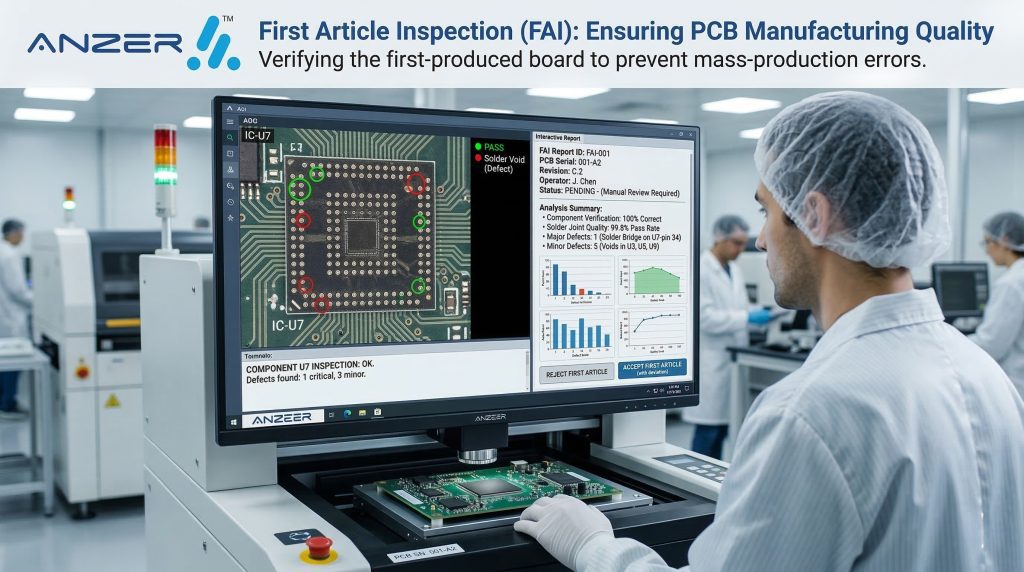
First Article Inspection (FAI): Ensuring PCB Manufacturing Quality
TL;DR: First Article Inspection (FAI) is a comprehensive verification process that confirms a manufactured product meets all design, material, and performance requirements before mass production begins. Required by AS9100 for aerospace manufacturing, FAI validates that production processes can consistently produce conforming products. The process includes…
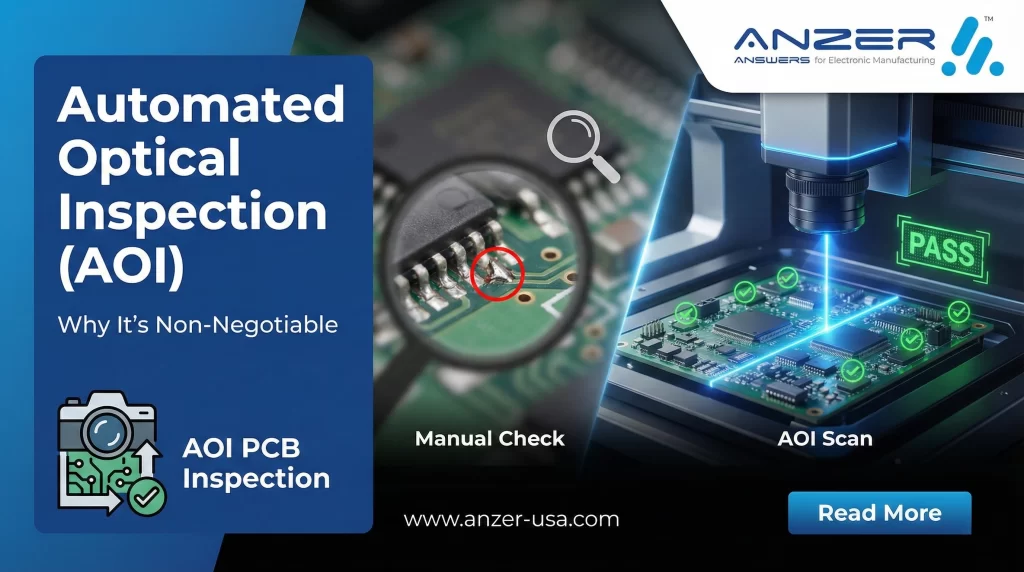
Automated Optical Inspection (AOI): Why It’s Non-Negotiable
Automated Optical Inspection (AOI) catches surface-level defects like missing components, misalignment, solder bridges, and insufficient solder in PCB assembly – making it non-negotiable for achieving high yield, reliability, and compliance in regulated industries like aerospace, medical, and automotive. Key Takeaways What Is Automated Optical Inspection…
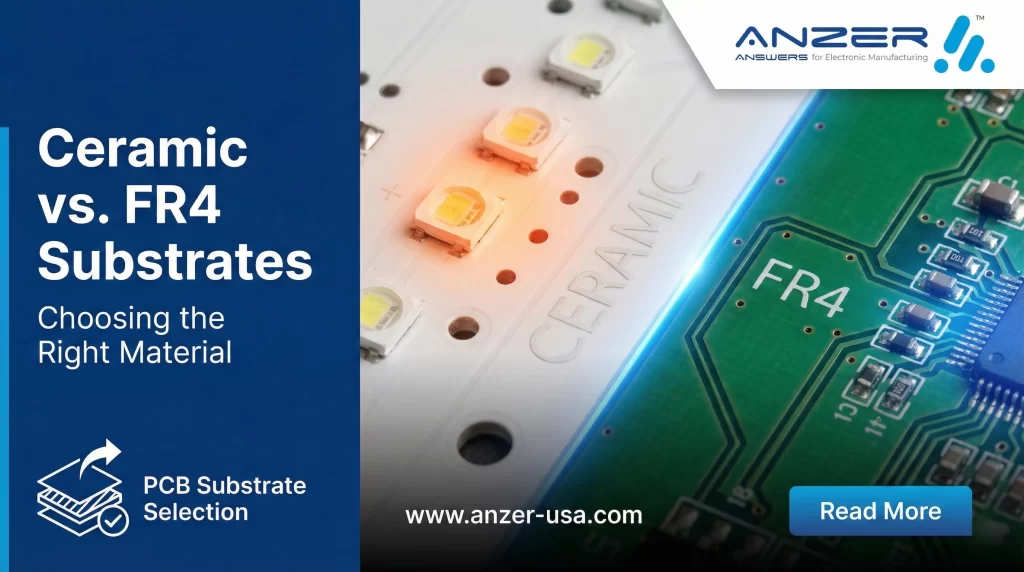
Ceramic vs. FR4 Substrates: Choosing the Right Material
Key Takeaways Understanding PCB Substrates: The Foundation of Every Circuit The substrate is the physical foundation of your PCB – the insulating material that holds copper traces and components. Most engineers default to FR4 (Flame Retardant 4) because it’s cheap, widely available, and meets general…
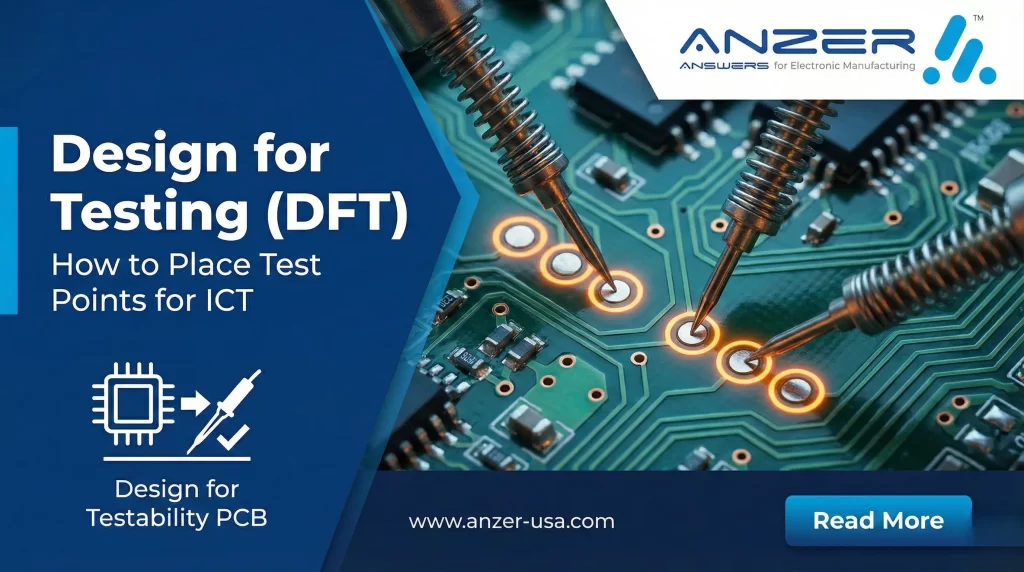
Design for Testing (DFT) PCB: How to Place Test Points for ICT
Key Takeaways What Is Design for Testability (And Why It Matters More Than Ever) Design for testability (DFT) is the practice of designing PCBs so manufacturing defects can be detected quickly, reliably, and cost-effectively. Your circuit might be perfect, but if you can’t verify that…
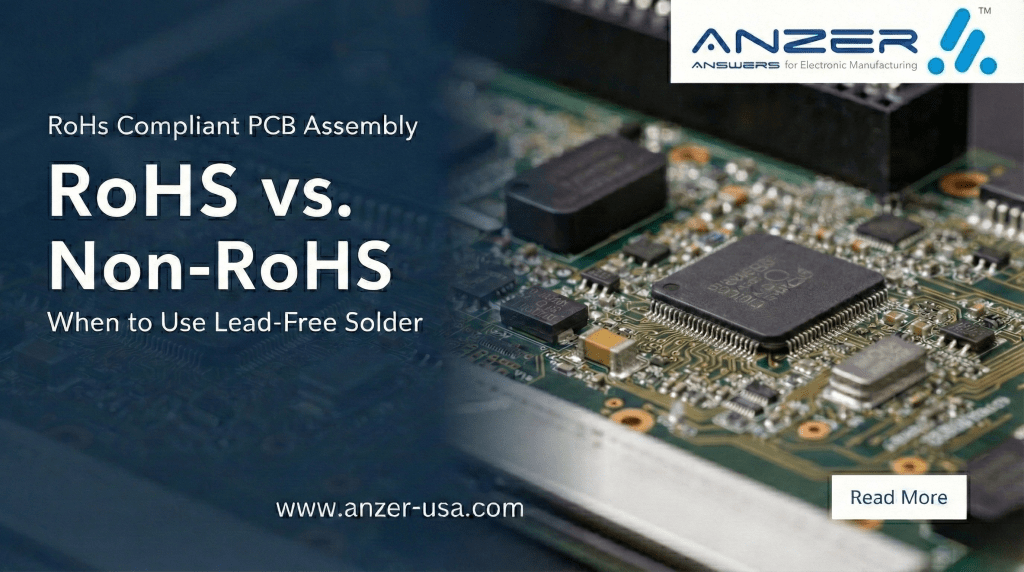
RoHS vs. Non-RoHS: When to Use Lead-Free Solder
Key Takeaways What Is RoHS Compliant PCB Assembly? RoHS compliant PCB assembly restricts six hazardous substances in electronics: lead, mercury, cadmium, hexavalent chromium, and two types of flame retardants (PBB and PBDE). The European Union introduced the Restriction of Hazardous Substances Directive in 2006, and…
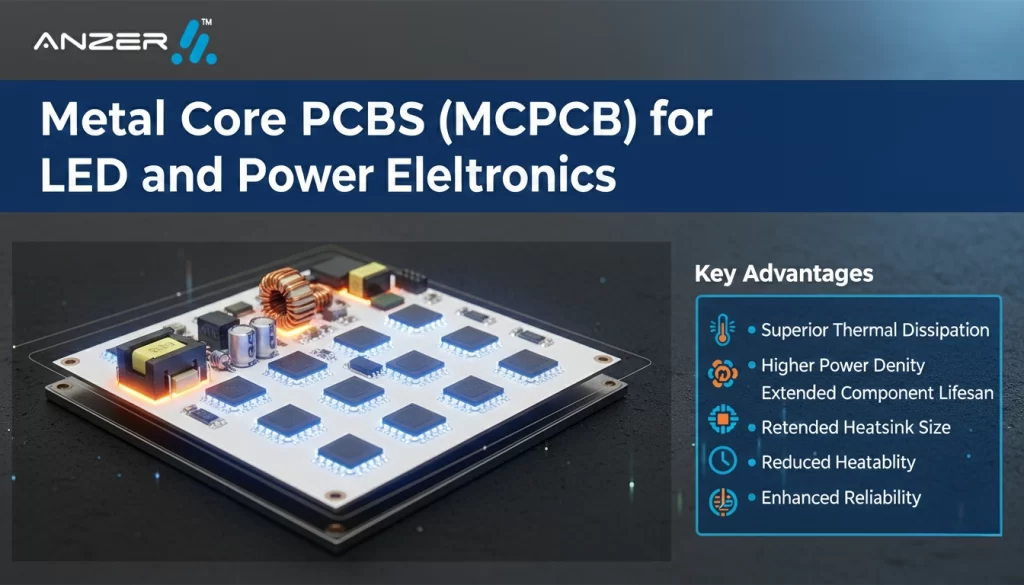
Metal Core PCBs (MCPCB) for LED and Power Electronics
Hello, innovators and electronics enthusiasts! This is Jay Mendpara, CEO of ANZER USA, coming to you from our headquarters in Akron, Ohio. With over two decades in the trenches of information technology, my MS in Computer Science, and my passion as an IPC-certified trainer, I’ve…
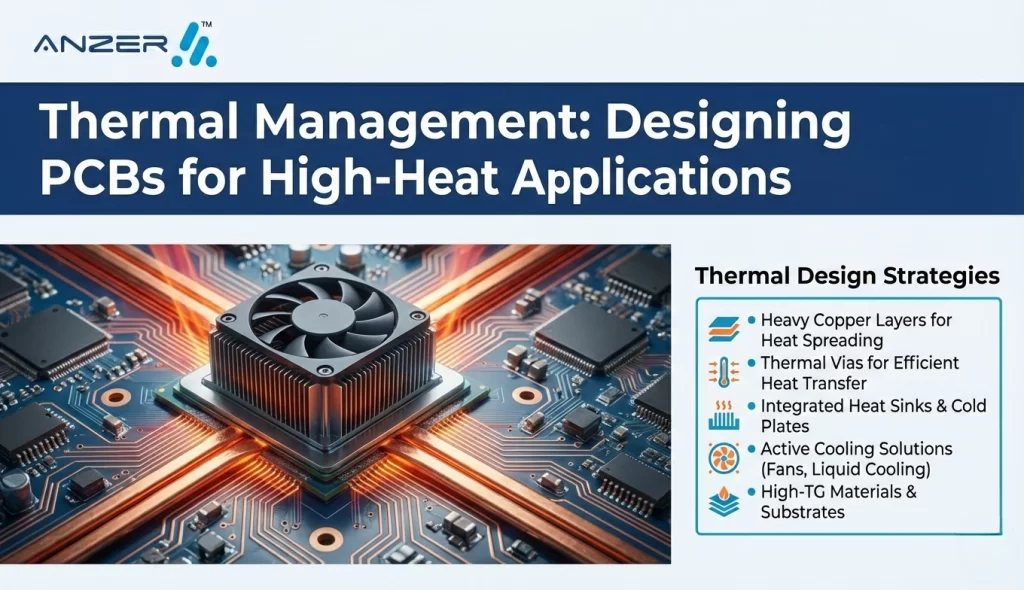
Thermal Management: Designing PCBs for High-Heat Applications
Hey there, tech pioneers and engineering aficionados. Jay Mendpara speaking, CEO of ANZER USA, nestled in the innovative hub of Akron, Ohio. With my MS in Computer Science and years as an IPC-certified trainer, I’ve navigated the hot pun intended – world of electronics manufacturing…
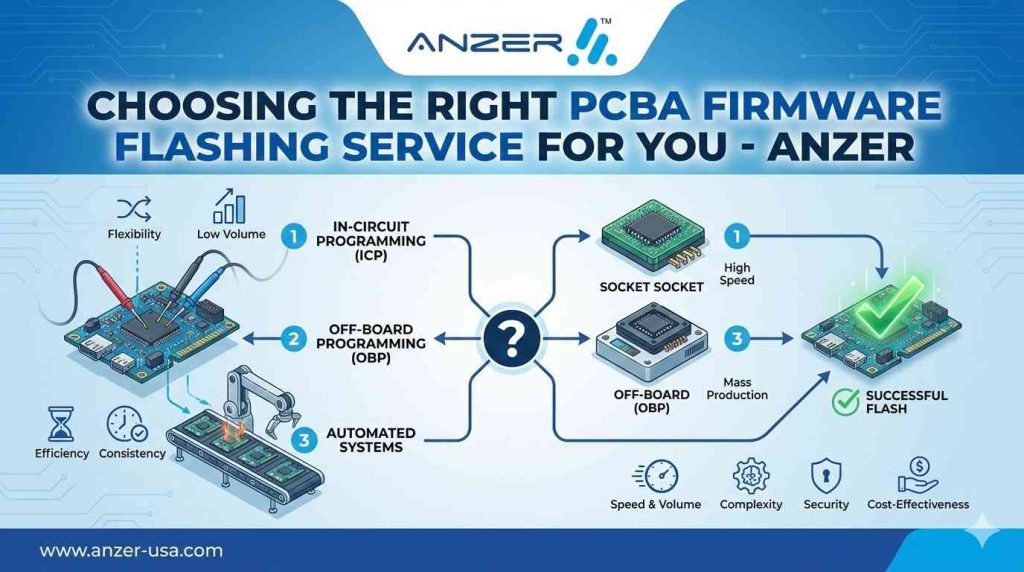
Choosing the Right PCBA Firmware Flashing Service for You – Anzer
Welcome to the world of electronics manufacturing! Making reliable products is not just about making the hardware. The software, called firmware, is what gives life to your electronic devices. During pcb assembly, putting this firmware into the device is called flashing. It is a key…
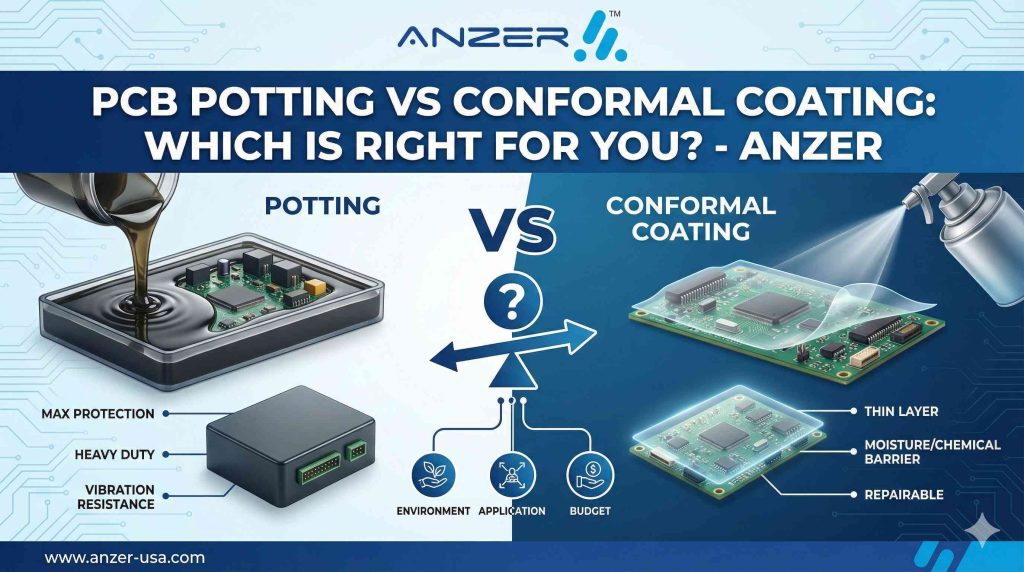
PCB Potting vs Conformal Coating: Which Is Right for You? – Anzer
Every printed circuit board is at the core of a device because it holds many important electronic components. These need to be safe and need to work for a long time. You have to keep them away from things that harm them or make them…
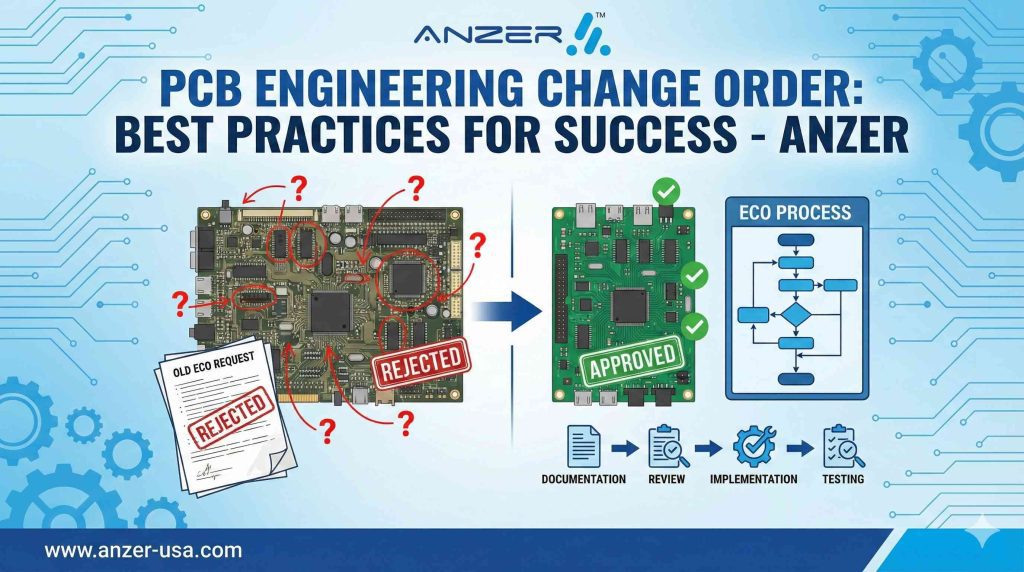
PCB Engineering Change Order: Best Practices for Success – Anzer
Change is a constant part of the electronics industry. During product development, you may need to update a printed circuit board (PCB) design to fix an issue, add a feature, or switch components. Making an engineering change without a proper system can lead to confusion…
The Future of JIT PCB Manufacturing in Electronics Industry – Anzer
Welcome to the future of electronics manufacturing! The Just-in-Time (JIT) model is changing how companies approach their production process. Instead of making large batches based on forecasts, JIT focuses on producing goods only as they are needed. This lean strategy helps streamline operations, reduce waste,…

Top PCBA Cost Reduction Strategies for Maximum Savings – Anzer USA
Are you looking for ways to lower your Printed Circuit Board Assembly (PCBA) costs without sacrificing quality? In the competitive world of electronics, managing expenses is key to success. Effective cost reduction for your circuit board is not just about finding cheaper parts; it involves…
What is the Minimum Order Quantity (MOQ) Myth in Modern Manufacturing?
Key Highlights Introduction When you start to plan a new electronics project, the first thing you may see is the term Minimum Order Quantity (MOQ). So, what is MOQ in PCB assembly and why should you care about it when you make an order? The…