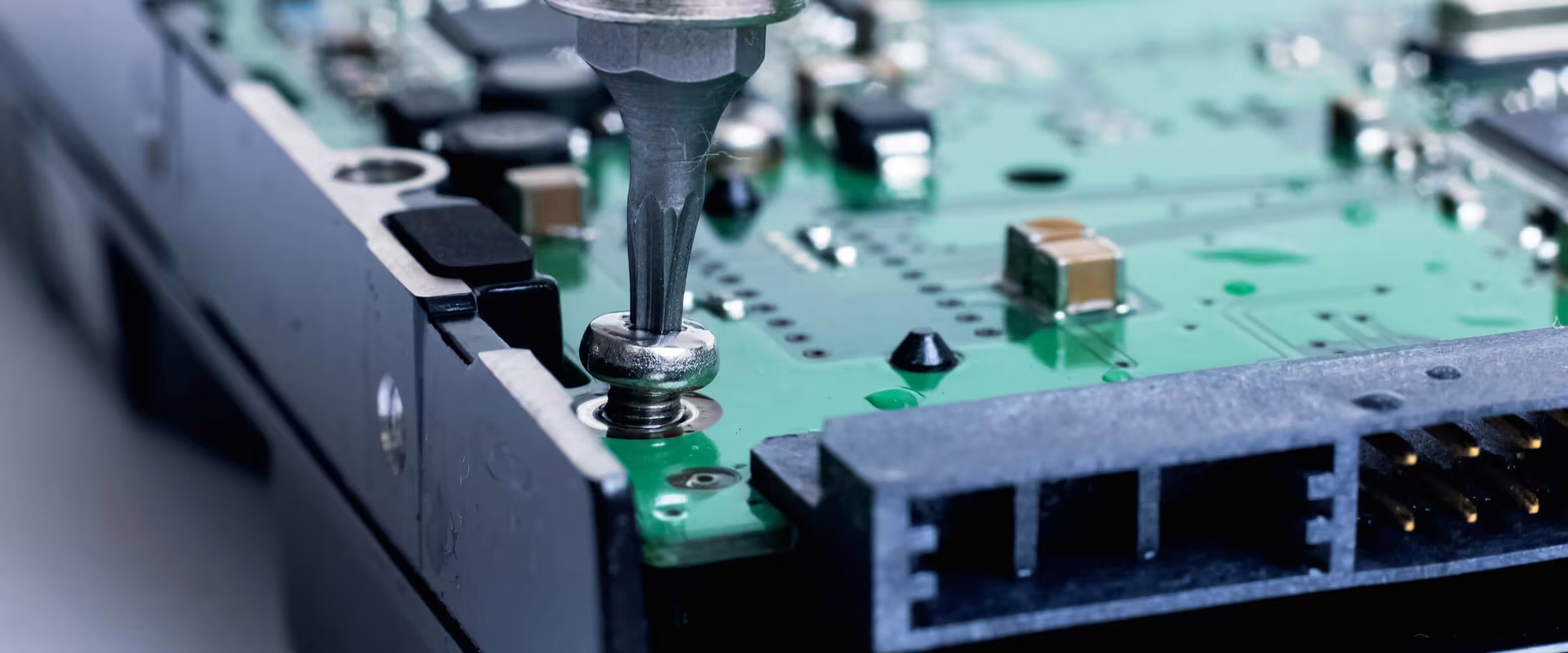
ANZER offers complete PCB (Printed Circuit Board) box-build assembly services, integrating and assembling electronic and non-electronic components into a complete product or system enclosure. Our assembly process involves putting the PCBs and mechanical, electrical, and software components into a finalized enclosure, often called a “box” or a “chassis.” Depending on our customer's needs, this final product can be a simple or complex electronic device, a machine, or a system.
Anzer’s PCB box-build assembly services include:
- PCB Integration: This consists of assembling the printed circuit boards, which are the backbone of the electronics, onto the enclosure or chassis. It includes soldering components on the PCB, connecting wires and cables, and ensuring proper electrical connections.
- Mechanical Integration: Besides electronics, the assembly process often includes integrating mechanical components such as brackets, connectors, hinges, displays, buttons, and other hardware that might be required for the functioning of the device.
- Cabling and Wiring: Connecting different system parts often requires intricate cabling and wiring. This involves ensuring proper cable routing, strain relief, and cable management to maintain organization and prevent interference. With over three decades of experience, ANZER understands there are no shortcuts to a quality result.
- Component Procurement: As a service provider, ANZER handles the sourcing and procuring of components required for the assembly process, including electronic components, mechanical parts, and all necessary materials. We are highly proficient in inventory acquisition and management.
- Testing and Quality Control: Rigorous testing is crucial to ensure the final assembled product meets quality standards and functions as intended. This often involves functional testing, electrical testing, performance testing, and more.
- Enclosure and Packaging: The assembled product is frequently placed within an enclosure that provides protection, aesthetics, and sometimes environmental sealing. ANZER can design and assist such that the packaging can withstand transportation and provide user-friendly access as required.
- Documentation: Detailed documentation of the assembly process, including schematics, bills of materials, assembly instructions, and testing procedures, is managed and stored in secure electronic and paper files. We follow strict procedures to meet our certification guidelines whether a project is designed in-house or customer provided.
- Customization: Our box-build assembly services are highly customizable, catering to specific customer requirements. Depending on the project’s complexity, services may range from simple to complex system integration involving multiple subsystems. ANZER is known for flexibility when working to exceed our customer’s expectations.
- Project Management: ANZER coordinates all stages of assembly, including procurement, integration, testing, and delivery. We utilize advanced inventory and project management tools to meet timelines and quality standards. This results in quality electronic products being On-Spec. On-Time. On-Budget.
Industries often requiring PCB box-build assembly services include consumer electronics, industrial automation, medical devices, telecommunications, automotive electronics, and aerospace. By outsourcing assembly services to ANZER, your company can focus on its core competencies while relying on specialized experts to assemble and integrate its products.


Box Build Blog
ISO 13485 Electronics Manufacturing: What Medical Device OEMs Need to Know
Medical device electronics must do more than function correctly on the production line. They must be manufactured through controlled processes, supported by appropriate documentation, and evaluated against defined quality requirements. ISO 13485 electronics manufacturing helps establish the quality management framework needed to control these activities...
How to Choose an EMS Provider: 12 Criteria for OEMs | Anzer USA
Choosing an EMS provider is a manufacturing decision, not simply a purchasing decision. The right electronics manufacturing services partner needs to fit your product, engineering requirements, quality expectations, production volume, testing strategy, documentation requirements, and long-term manufacturing plans. A low PCB assembly quote can look...
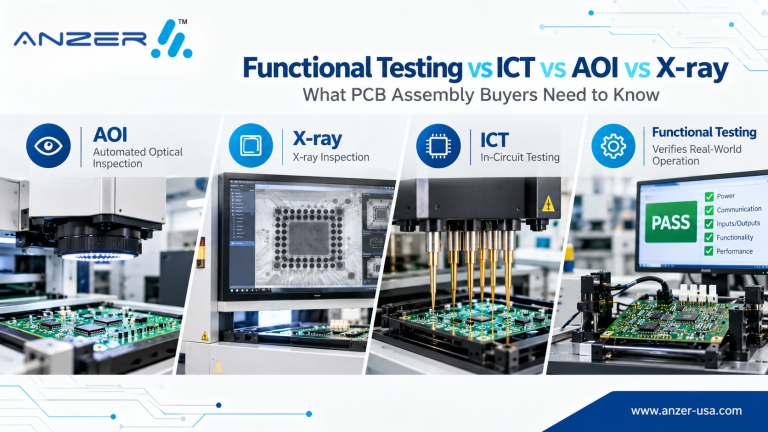
Functional Testing vs ICT vs AOI vs X-ray: What PCB Assembly Buyers Need to Know
When an OEM evaluates PCB assembly testing, four terms appear repeatedly: AOI, X-ray inspection, ICT, and functional testing. They are not interchangeable. AOI primarily inspects visible assembly conditions. X-ray inspection helps reveal hidden solder connections. ICT evaluates electrical characteristics. Functional testing checks whether the assembled...