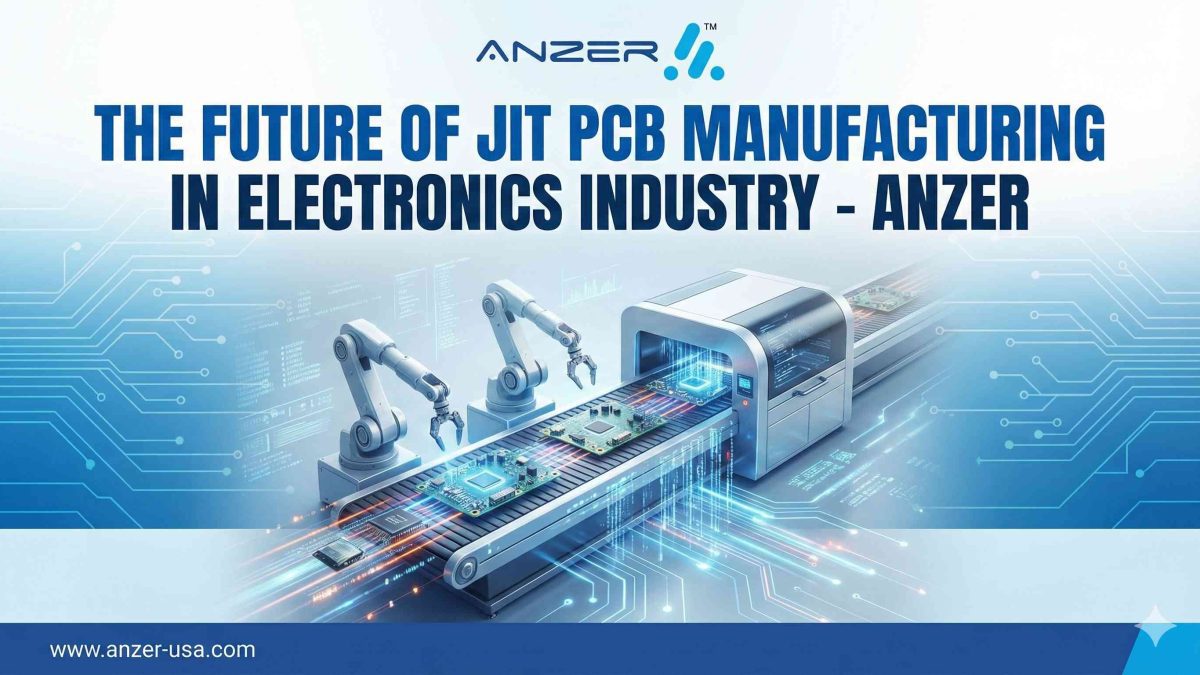
The Future of JIT PCB Manufacturing in Electronics Industry – Anzer
Welcome to the future of electronics manufacturing! The Just-in-Time (JIT) model is changing how companies approach their production process. Instead of making large batches based on forecasts, JIT focuses on producing goods only as they are needed. This lean strategy helps streamline operations, reduce waste, and increase efficiency. For industries like printed circuit board (PCB) manufacturing, where speed and precision are key, adopting JIT is a game-changer. Let’s explore how this powerful system works.
Table of Contents
Key Highlights
- Just-in-Time (JIT) manufacturing revolutionizes the production process by making only what is needed, when it is needed.
- This approach significantly reduces inventory management costs and waste.
- A well-managed JIT system shortens lead times and improves on-time delivery.
- Strong supplier relationships are crucial for a smooth supply chain and successful JIT implementation.
- Continuous improvement and strict quality control are core principles of JIT.
- Technology like automation and advanced software is shaping the future of JIT.
Understanding JIT PCB Manufacturing in the Electronics Industry
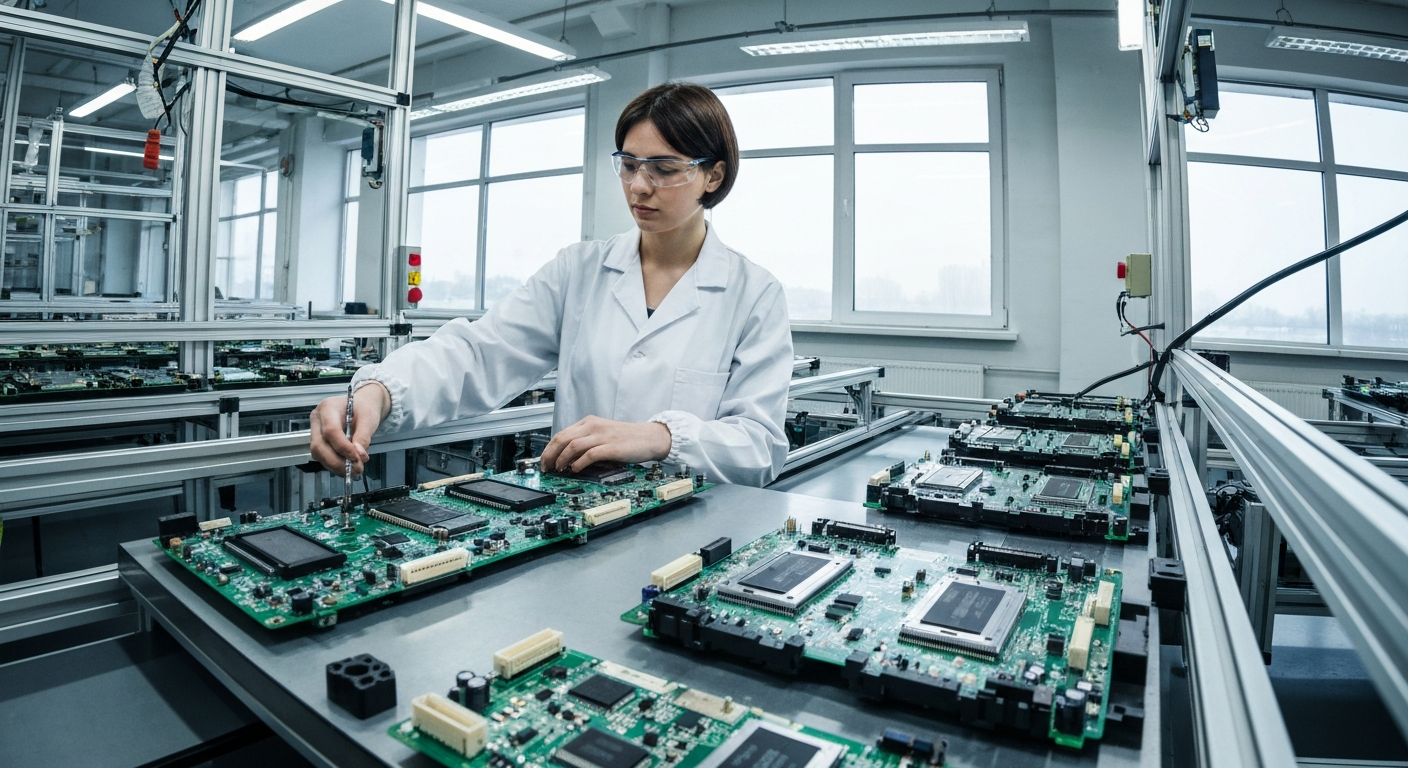
JIT PCB manufacturing is a strategy where printed circuit boards are produced exactly when they are required for the next stage of production or for a customer order. This method avoids building up large stocks of components. It’s a “pull” system, meaning actual demand from a customer triggers the production line to start working.
This approach requires tight control over your supply chain and inventory management. Instead of guessing future needs, you order materials and produce PCBs in response to real-time orders. This keeps your operations lean and highly responsive to customer demands.
The Principles of Just-in-Time (JIT) Production
The concept of JIT production is a cornerstone of lean manufacturing. Its roots trace back to post-World War II Japan, where Toyota developed the Toyota Production System (TPS). The main goal was to eliminate waste in the production process, use resources efficiently, and respond quickly to customer needs.
A key principle is continuous improvement, also known as Kaizen. This means your entire team constantly looks for small ways to make processes better, enhance workflow, and improve output quality. It’s not a one-time fix but an ongoing effort to perfect every step.
Effective supply chain management is also vital. JIT relies on having a reliable network of suppliers who can deliver high-quality materials exactly when you need them. This synchronization between production and supply is what makes the entire system work smoothly and efficiently.
How JIT Works for Printed Circuit Boards
For printed circuit boards, JIT works as a pull system. This means production of a circuit board assembly doesn’t start until an actual customer order is received. This is very different from traditional “push” systems, where products are made based on forecasts and then stored until someone buys them.
This inventory management strategy dramatically reduces the amount of stock you need to hold. Your production schedules are created based on real-time demand, making the entire production line more flexible and efficient. You order components and materials just in time for them to be used in assembly.
To manage this flow, many companies use a Kanban system. This is a visual signaling method that indicates when it’s time to order more materials or start a new production run. It ensures that components arrive right when they are needed, preventing both shortages and overstocking.
Key Benefits of Adopting JIT in PCB Manufacturing
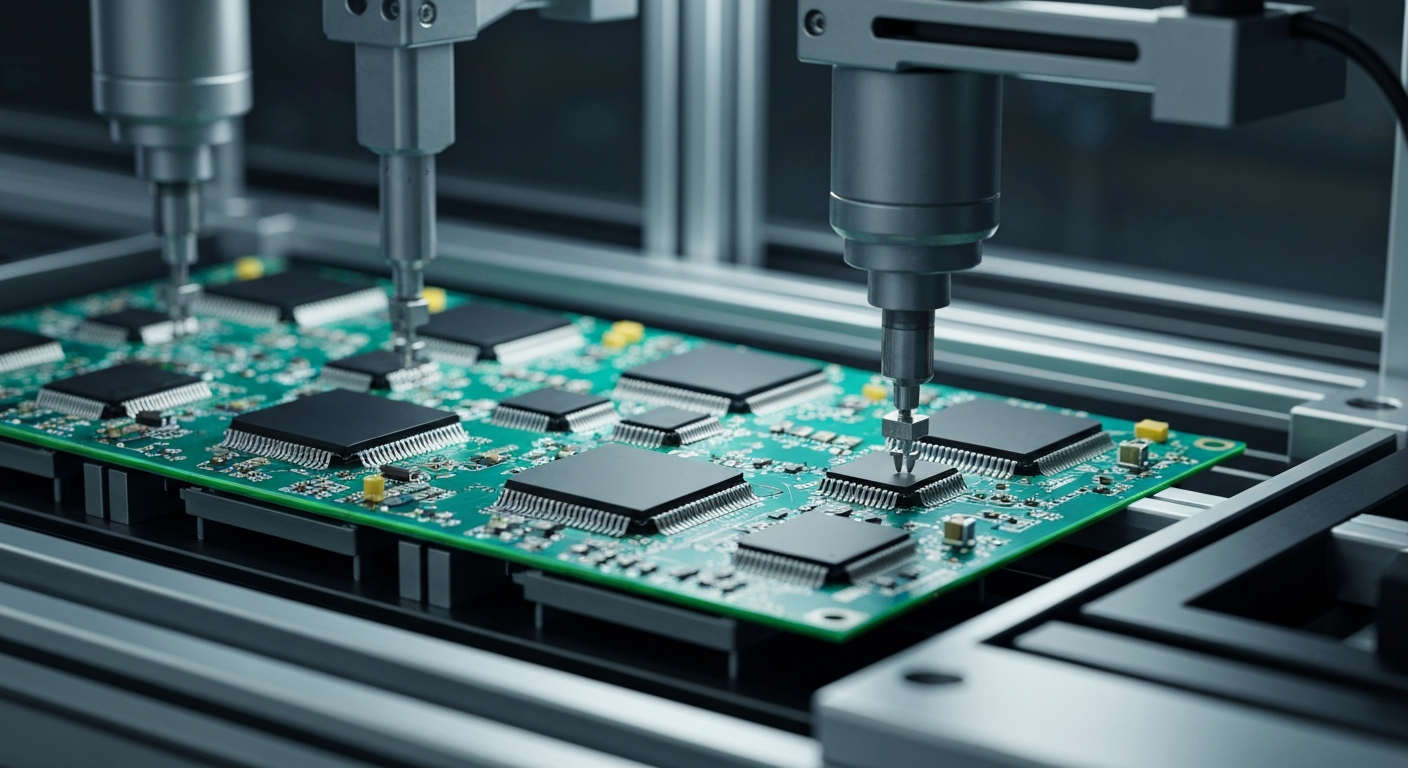
Adopting JIT in your PCB manufacturing process offers significant financial and operational advantages. One of the biggest benefits is the reduction in inventory costs. By holding less stock, you free up cash flow that would otherwise be tied up in materials. This also lowers your production costs by minimizing waste and storage expenses.
Beyond cost savings, JIT sharpens your competitive edge by shortening lead times and improving your ability to meet delivery promises. This enhanced responsiveness and commitment to high quality standards lead to greater customer satisfaction. We’ll now look closer at how JIT helps manage inventory and improve delivery times.
Reduced Inventory and Waste Management
One of the primary goals of JIT is to achieve reduced inventory levels. Traditional manufacturing often leads to excess inventory, which costs money in storage and risks becoming obsolete. JIT tackles this head-on by ensuring parts are ordered and produced only when a customer places an order.
This approach to waste management transforms your inventory control. Instead of relying on a large safety stock, you maintain a minimum level of components needed to meet immediate demand. This lean method prevents the financial drain caused by overstocking.
Effective JIT implementation minimizes waste in several key areas:
- Reduced Overproduction: You only make what has been ordered.
- Lower Storage Costs: Less inventory means less need for expensive storage space.
- Minimized Obsolete Stock: With faster turnover, parts are less likely to become outdated.
- Improved Cash Flow: Capital isn’t tied up in unsold products.
Improved On-Time Delivery for Electronic Components
JIT is designed to boost production efficiency, which directly translates to better on-time delivery performance. By streamlining workflows and eliminating unnecessary steps, you can significantly shorten production lead times. This allows you to respond to customer orders faster and more predictably.
When your production process is lean and agile, you can avoid many of the common production delays that plague traditional manufacturing. This reliability is crucial for building trust and ensuring high customer satisfaction. Your clients know they can count on you to deliver what they need, when they need it.
The key ingredients for successful on-time delivery with JIT include:
- Flexible Production: The ability to quickly set up machines for different production runs.
- Certified Suppliers: Working with trusted partners who guarantee quality and timely deliveries.
- Real-Time Data: Using accurate data to align production with customer delivery dates.
JIT Material Management and Its Impact on PCB Production
Effective JIT material management is the engine that drives a successful PCB production operation. This system ensures that raw materials arrive exactly when they are needed, which is essential for maintaining a smooth workflow. By synchronizing material deliveries with your production schedule, you can slash lead times and improve inventory control.
This precise approach to supply chain management means you no longer have to worry about overstocking components or facing shortages that halt production. The JIT system creates a balanced flow of materials, directly impacting your ability to fulfill orders quickly and efficiently. Let’s examine the techniques that make this possible.
Streamlined Inventory Control Techniques
A cornerstone of JIT inventory control is the Kanban system. Developed by Toyota, Kanban uses visual signals, like a card or a digital notification, to trigger an action. When materials on the production line drop below a certain point, a Kanban signal is sent to automatically order more. This ensures a continuous flow without building up excess stock.
This method helps you manage your inventory management strategy with incredible precision. Instead of holding a large buffer stock, you maintain a small, calculated amount of materials, often called a safety stock, to cover immediate needs while new supplies are on the way.
Advanced software now plays a huge role in modern Kanban systems, providing real-time visibility into inventory levels. These tools help you:
- Automate replenishment signals.
- Track materials throughout the production cycle.
- Limit the number of items in a production queue.
- Ensure a minimum amount of materials is always available.
Faster Lead Times and Order Fulfillment
JIT material management directly contributes to faster lead times and more reliable order fulfillment. When your supply chain is tightly integrated with your production schedule, you eliminate the delays caused by waiting for materials. This boost in production efficiency means you can get finished PCBs to your customers sooner.
Accurate demand forecasting is also a key component. While JIT is a pull system, having a good sense of upcoming orders helps you and your suppliers prepare. This alignment ensures that even when demand fluctuates, your supply chain can respond quickly.
The table below shows how JIT compares to traditional manufacturing in key areas, highlighting its impact on speed and efficiency.
| Feature | Traditional Manufacturing | JIT Manufacturing |
|---|---|---|
| Inventory | Large stockpiles, high storage costs | Minimal stock, just enough for current orders |
| Production Trigger | Based on forecasts (“push”) | Based on actual demand (“pull”) |
| Lead Times | Longer due to inventory handling and delays | Shorter and more predictable |
| Supplier Role | Transactional, less integration | Collaborative, highly integrated partner |
Overcoming Challenges of JIT in PCB Assembly
While JIT manufacturing offers many benefits, it’s not without its challenges. The system’s lean nature makes it vulnerable to supply chain disruptions. Since there’s very little buffer stock, any delay in receiving materials can bring production to a halt. This puts immense pressure on your operations and requires robust risk management.
Maintaining consistent quality control is another hurdle. In a rapid production environment, there is less room for error. Any quality issues can cause significant production delays and impact customer satisfaction. Let’s look at how successful JIT manufacturers tackle these issues.
Handling Supply Chain Disruptions
Supply chain disruptions are a major risk for any JIT system. Unexpected problems like transportation issues, supplier problems, or supply shortages can quickly derail your production schedule. Global events and natural disasters have also shown how fragile supply chains can be.
Effective risk management is the key to building a resilient JIT operation. One of the best strategies is to diversify your supplier base. Relying on a single supplier for a critical component is risky. Having backup options provides a safety net if your primary supplier faces a problem.
Here are some strategies to manage disruptions:
- Build Strong Supplier Relationships: Work closely with reliable partners who can adapt to changes.
- Increase Supply Chain Visibility: Use technology to track materials in real-time and anticipate potential delays.
- Implement a “Just-in-Case” Plan: While JIT is lean, having a small safety stock or alternative suppliers for critical parts can be a lifesaver.
Ensuring Consistent Quality in Rapid Production
In a JIT environment, there’s no time for rework. Ensuring consistent quality from the start is non-negotiable. This requires embedding rigorous quality control processes throughout the entire production line, not just at the final inspection stage. The philosophy of “get it right the first time” is central to JIT success.
This approach is part of a broader strategy called Total Quality Management (TQM). TQM involves every employee in the effort to maintain high standards of production quality. Everyone on the team takes ownership of quality, from machine operators to managers, helping to identify and resolve potential quality issues before they become major problems.
By focusing on continuous improvement and empowering your team to halt production to fix a problem, you can prevent defects from moving down the line. This proactive stance on quality ensures that even with rapid production cycles, the final product meets the highest standards.
Future Trends in JIT PCB Manufacturing
The principles of JIT manufacturing have evolved significantly since their origins after World War II. Today, technology is driving the next wave of innovation. Trends like automation, the Internet of Things (IoT), and advanced data analytics are making JIT systems smarter, faster, and more resilient than ever before.
The core idea of continuous improvement remains, but the tools used to achieve it are becoming more powerful. The future of JIT in PCB manufacturing lies in creating interconnected, data-driven operations that can adapt to changes in real-time. Let’s explore how these technologies are shaping the industry.
Advances in Automation and Simulation Technologies
Automation is transforming the JIT landscape by streamlining repetitive tasks and reducing human error. Robots and automated systems can handle material transport, assembly, and inspection with incredible speed and precision. This increases operational efficiency and allows production teams to focus on more complex tasks.
Advanced software and simulation technologies are also becoming essential. Simulation allows you to create a virtual model of your PCB assembly line. With this model, you can test different layouts, schedules, and workflows to find the most efficient setup before making any physical changes.
This helps you optimize your JIT process by:
- Identifying potential bottlenecks.
- Testing responses to supply chain disruptions.
- Improving workflow and resource allocation.
- Training production teams in a risk-free environment.
Frequently Asked Questions
How does Anzer support reliable JIT PCB manufacturing?
Anzer ensures reliable JIT manufacturing by building strong supply chain partnerships and implementing strict production quality standards. Our advanced inventory control systems and agile processes allow us to deliver high-quality PCBs on time, every time, giving you a competitive edge in a fast-moving market.
What makes JIT PCB manufacturing different from traditional methods?
JIT manufacturing differs from traditional methods by maintaining minimal inventory levels. Instead of producing in bulk, the production process is triggered by actual orders. This reduces storage and production costs, frees up working capital, and creates a much leaner, more efficient operation.
Is JIT PCB manufacturing cost-effective for small batches?
Yes, JIT manufacturing is highly cost-effective for small batches. Because it eliminates the need for large-scale production runs and reduces storage costs, it lowers the overall production costs associated with custom or low-volume orders, making it an ideal solution for flexible manufacturing needs.
Conclusion
In conclusion, the future of Just-in-Time (JIT) PCB manufacturing is bright and full of potential. By embracing the principles of JIT, companies can streamline their processes, reduce waste, and enhance delivery times, positioning themselves competitively in the bustling electronics industry. As technology advances and challenges arise, continual adaptation and innovation will be key to overcoming obstacles and ensuring quality production. Whether you’re looking to improve your inventory management or stay ahead of industry trends, understanding JIT can make a significant difference. If you have questions or need assistance, get in touch with us to explore how we can support your JIT PCB manufacturing needs!
ANZER is your reliable partner for innovative PCB Assembly and Electronics Manufacturing Services in Ohio, USA. You’re developing a prototype, scaling up to mass production, or requiring specialized assembly—we’re here to deliver precision-crafted, cost-effective solutions. With latest technology and years of expertise, we guarantee products that exceed expectations every time.