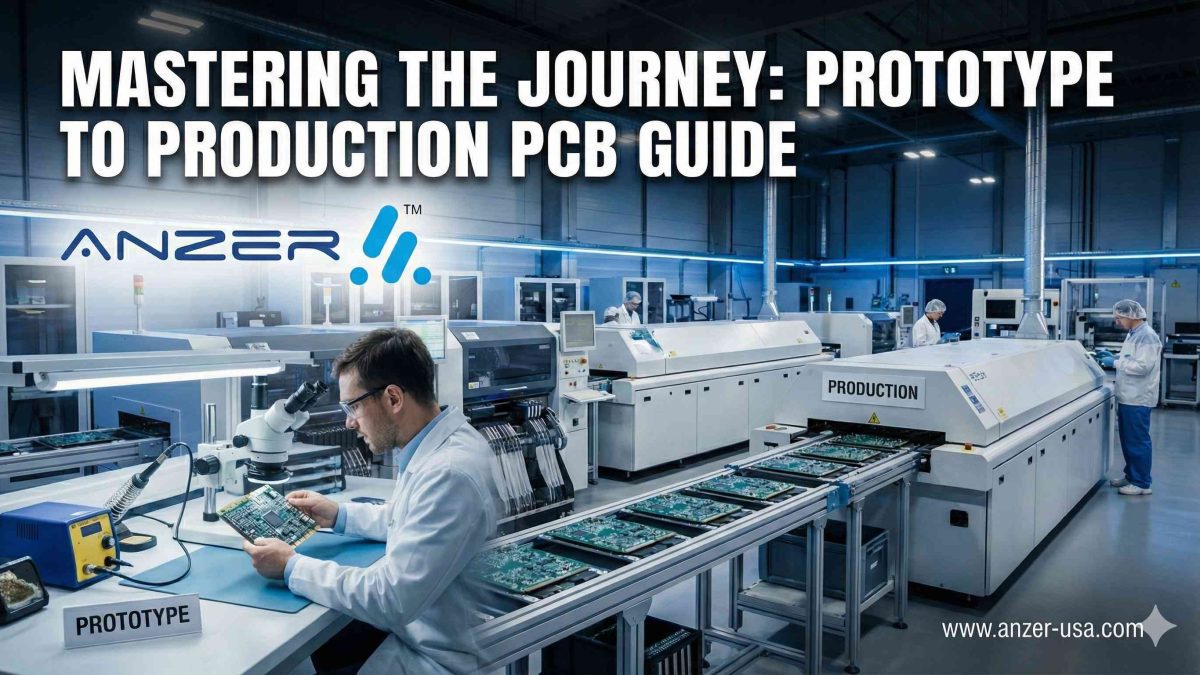
Mastering the Journey: Prototype to Production PCB Guide
Getting a printed circuit board (PCB) from an idea to a finished product in the market is a big task. There is an important step where you move from pcb prototyping to making many boards at once. This part helps make sure your electronic device is not just working, but also strong and not too expensive when you make a lot of them. You will need to know the small details of this work, starting from pcb design to building the last circuit board. If you understand this, you can stop problems and save time. This guide will show you how to get through that process.
Key Highlights
- PCB prototyping is a vital step to test your PCB design before committing to mass production.
- The transition from prototype to production involves optimizing design files for efficiency and cost.
- Design for Manufacturability (DFM) checks are crucial to prevent issues during PCB manufacturing.
- Choosing a manufacturer that handles both PCB prototyping and production can streamline the entire process.
- Careful planning of materials, components, and testing ensures a smooth journey from a single board to thousands.
- Scaling up requires adjustments to your design to lower costs for large-volume orders.
Overview of the Prototype to Production PCB Journey
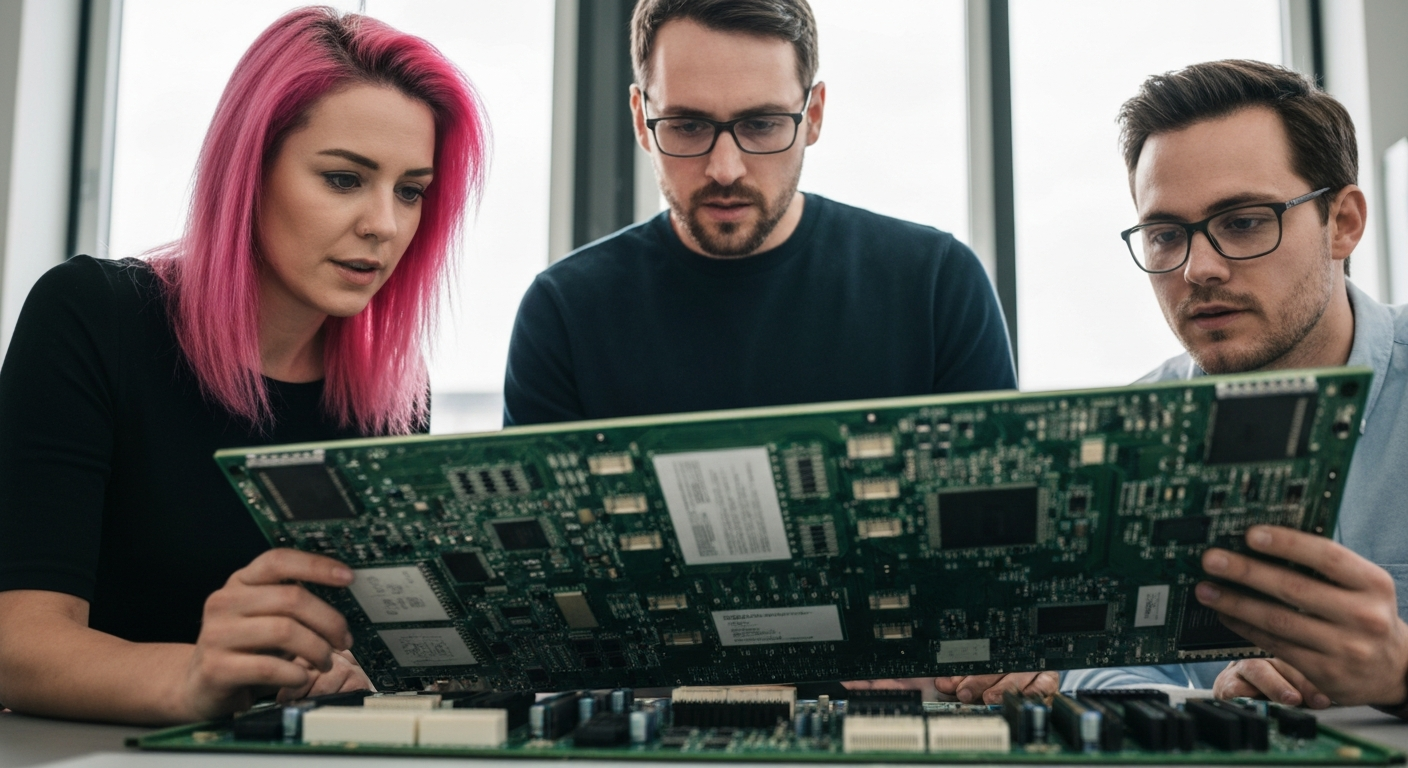 The process from building one pcb prototype to making many goes through a few clear steps. First, you make and test a working model of your pcb design. This helps you see if the design works well, and also find any problems early in the design process.
When the pcb prototype is just right, you can start getting it ready for large-scale production. You will need to adjust the pcb design so it is easy to build in bigger numbers. You also need to pick materials that do the job well and cost less. Quality checks are very important, too, at this stage. The next parts will tell you more about what to expect at each step.
Defining PCB Prototyping and Its Purpose
PCB prototyping means making a few circuit boards to test and check your design. You can think of it like a first try before going with a big and costly order. With this first small batch, you get to see your design in real life and find out if it does what you want.
The big reason for prototyping is to lower risk. It helps you find problems in the design, in how it works, or with the different parts, which you might not notice just working on the computer. By putting together and testing the prototype, you can fix things early in the design process.
This test step is important because it helps make sure the final product will work well. When the prototype goes well, you can be sure your circuit board will work right when you make a lot of them. This saves you time and money later.
Keywords used: circuit board, pcb prototyping, design process, final product
Key Differences Between Prototyping and PCB Production
While both involve making PCBs, the goals of PCB prototyping and PCB production are very different. Prototyping is focused on testing and validation during the design phase, often with a fast turnaround time being the top priority. The goal is to confirm the design works before spending more money.
In contrast, PCB production is about manufacturing a large quantity of boards efficiently and consistently. The focus shifts from speed to scalability, repeatability, and lowering the cost per unit. The manufacturing process is optimized for high volume, and stricter quality controls are put in place.
Understanding these differences helps you choose the right service for your needs. A prototype service is ideal for testing, while a production service is for scaling up your finalized design.
| Feature | PCB Prototyping | PCB Production |
|---|---|---|
| Quantity | Small (e.g., 5-50 pieces) | Large (hundreds to thousands) |
| Primary Goal | Test and validate the design | Manufacture at scale efficiently |
| Cost | Higher cost per board | Lower cost per board |
| Speed | Fast turnaround (as quick as 24 hours) | Longer lead times, scheduled runs |
| Flexibility | High, easy to make design changes | Low, changes are costly and difficult |
Essential Steps in PCB Prototyping
The PCB prototyping phase is where your idea starts to become real. At this stage, you go through a series of steps to turn your plan into a board you can test. First, you make a plan for your circuit and choose the right parts.
After that, you set up the layout and check that your design can be made. At the end, you create and look over the actual boards. Here is a closer look at each step in the pcb prototyping process.
Schematic Design and Component Selection
Every pcb design project starts with a schematic. This is the plan for your electronic circuit. The schematic shows how all the parts connect to each other. You make this diagram using pcb design software. It will be the guide for the whole board.
After that comes component selection. You pick the exact parts for your board, like resistors, capacitors, and integrated circuits. These are listed the bill of materials, called BOM. The BOM has every part you need for the build. When you pick the parts, you look at things like:
- Availability and lead time
- Cost for both small and large quantities
- Physical size and electrical specifications
When you finish the schematic and BOM, you can start on the physical layout of the board. This is where your circuit gets its actual shape.
PCB Layout and Design for Manufacturability (DFM)
After the schematic is done, the next thing you need to do is the PCB layout. In this step, you take your schematic and turn it into a real board design. You have to decide on the right component placement and draw the copper traces that will connect each part. A good PCB layout is a big part of how well your board will work and last.
You also need to do the DFM process at this stage. DFM means designing your board so it’s easy and cheap to make. The DFM guidelines will help you stop problems during manufacturing that might slow you down or raise costs. Some things in DFM to watch out for are:
- Make sure there is good spacing between all copper traces and components
- Use standard sizes for drill holes and the board’s thickness
- Check if your PCB layout matches what your maker can do
If you run a DFM check on your design files before sending them to be made, it will help you find potential issues early. This process makes sure that it will be easy to go from design to a real, working prototype.
Creating and Reviewing Prototype Boards
When your design files are ready, the next step is to make the actual pcb prototype. The manufacturer will take your files to build a small group of boards. This is when you finally get to see and hold your design for the first time.
As soon as you get the prototypes, you start checking them. You should do a thorough testing, not just look at them. Turn on the board and try every part. Watch for things that do not act the way you want.
Be sure to watch for signal integrity, power distribution, and how well the board handles heat. This step helps you find and fix any problems so the board can be made and used the right way. Testing your pcb prototype well right now makes sure your final product is good.
Transitioning from Prototype to Production
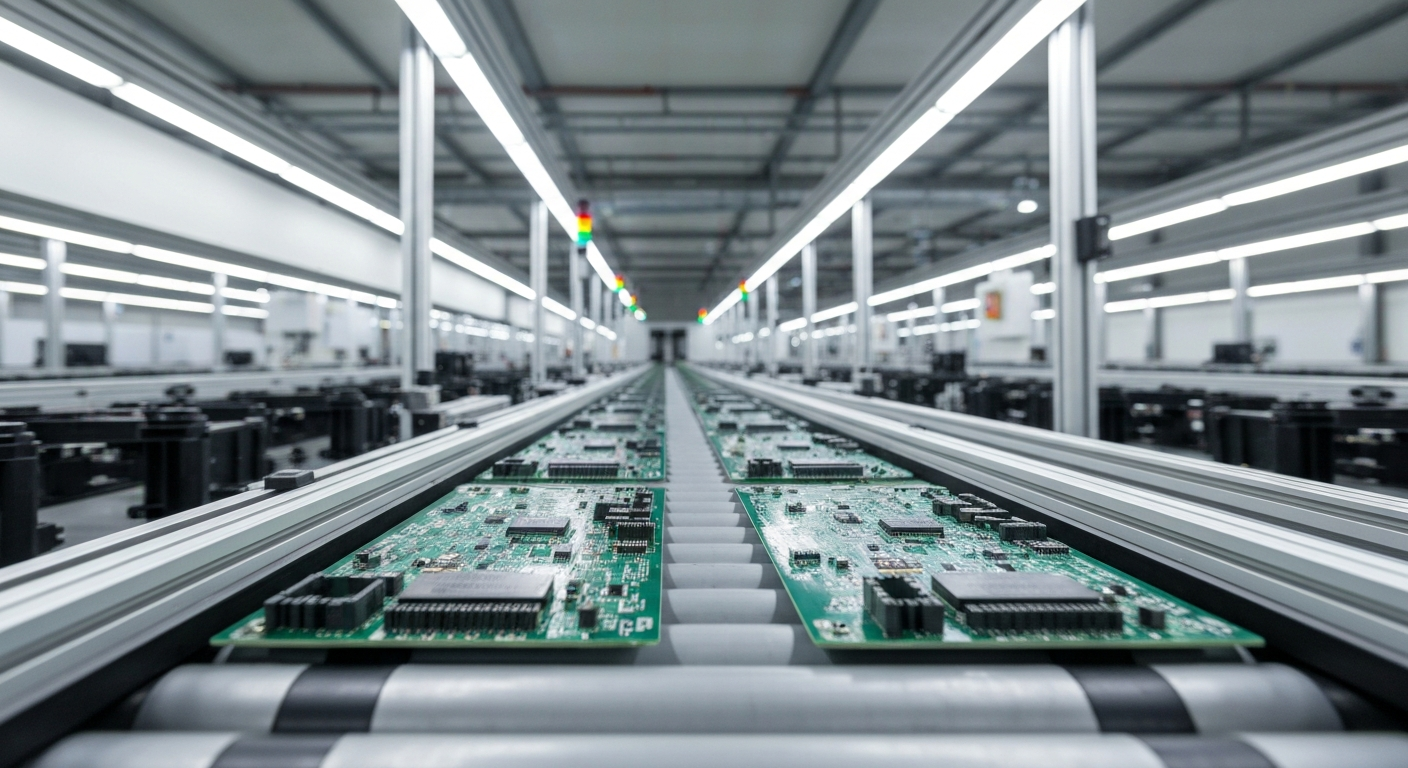 After you have tested and signed off on your prototype, the next big step is moving to full production. This is not just about ordering more units. You also need to fine-tune your pcb design. This helps make it work well for mass production.
When you start this process, you may run into some problems. You must check your design to lower your production costs. You should also make sure that the parts you need will be there when you order in big amounts. Careful planning is a must to make this change go smoothly. Now, let’s take a look at how to get your design ready to make many, not just a few.
Scaling Up: Volume Considerations and Process Adjustments
When you take your pcb design from a sample stage to mass production, a lot of things in the making process change. At this point, the goal is to have lower costs and make more boards fast. That is why the way manufacturers work needs to shift for high volume.
One of the key considerations in this stage is called panelization. With panelization, you put more than just one copy of your pcb design on a bigger board called a “panel.” The whole panel moves through the line together as one piece. This helps speed up work and cuts down handling time. After the boards get made, workers take the smaller boards out of the big panel.
There are also other important steps to get ready for mass production:
- Automate assembly to make things work faster.
- Buy parts in large amounts to get a better deal on price.
- Change some steps to get the best number of good boards in each batch.
These steps are very important for mass production because they help cut costs. They make sure you can make thousands of boards in the same way, and at a lower price. This is not as important during sample making, but it becomes the main thing when you need more boards for real work.
Design Modifications for Production-Ready PCBs
A prototype design may not be ready for mass production right away. It usually needs a few changes first. When getting your PCB ready for the manufacturing process, you often have to tweak the design. These changes help make the board easier to build, stronger, and less costly.
You should check your design files using strict DFM guidelines from the manufacturer. You may need to make some parts of the design wider. There could be adjustments to spacing, or you might need to set it up in a way that’s easier for machines to put together in large numbers. Be sure to run design rule checking at the end to find any issues.
This is also a good time to look at your components. Check if there are other parts that cost less when bought in large amounts, or if there are ones you can always get in future years. Making these changes before the manufacturing process helps keep the work moving smoothly and improves the quality of your final product.
Quality Control and Testing Before Full Production
Before you start a full production run, it is very important to do a last round of quality control with thorough testing. Prototyping is mostly about testing how the product works. Production, though, needs a stronger method to find any potential issues that could show up in a big batch of boards.
Manufacturers use different automated steps to keep the quality high when making a lot of boards. One of the top methods is automated optical inspection. This system uses cameras that scan each board. They look for problems, like components that are not in the right spot or bad solder joints. Other key tests are:
- In-Circuit Testing (ICT), to look for shorts, open connections, and make sure each part is correct.
- X-ray inspection for complex parts such as BGAs, so you can check hidden solder points.
- Functional testing to be sure every board does what it is supposed to.
These checks are needed to keep good boards coming out. They make sure each board meets the needed performance and works the way you want.
Choosing the Right PCB Manufacturer
Choosing the right PCB manufacturer can be one of the biggest steps you will take. The company you go with will affect the quality, price, and how fast you get your boards. So, it’s good to pick a PCB manufacturer whose skills match what you need in your project, whether it’s a test run or a large job.
You need to find a company that does more than meet just the technical side. It should also follow industry standards for quality and for lasting use. When you are ready to grow, you must look at many providers. See how well they can help with making simple samples and with bigger jobs.
What to Look For in a Prototype Service Provider
When you pick a prototype service provider, speed, flexibility, and support are what you look for most of the time. You need someone who can take your pcb design and make a board fast. This lets you start testing and move through your design process without waiting.
It’s good to find a provider with an online system that is easy to use. You want to be able to upload your files and get a quote right away. Good support and advice from their team help a lot, too. Some providers will check your design for manufacturing problems before making your boards. Here are things you should look for:
- Fast turnaround, some can do it in just 24 hours.
- Small order sizes, like if you only need 5 or 10 boards.
- Simple, clear help from their support and technical teams.
Careful planning and picking the right prototype provider helps make your project go well from the start. It also makes it easier when you move from testing to making more boards later.
Evaluating Manufacturers for Production Capabilities
When you pick a PCB maker for production, you do not just look for speed. You also need the production to be big, stable, and have good quality checks. It is important to have a partner who has the right tools and team to get the work done at the right scale. They need to give you the volume you want and keep the standards high during the whole manufacturing process.
It is a good idea to find makers who give a “one-stop” solution. They should help with both PCB making and putting the parts together. This makes the supply chain simple. It also means there will be less problem with talking and passing news. It helps if they talk in a clear way about the way they do things and what quality marks they have. While you are choosing, keep an eye on:
- How much they can make and how long the usual work will take.
- What quality signs they hold, like ISO 9001 and UL.
- Any extra skills, like BGA work, impedance checks, and more surface touch choices.
Many top PCB makers give help for small and big jobs. That is a big help. If you use the same maker from start to big jobs, you can be sure that the way they work and the industry standards will be the same from your test to your full order.
Managing Cost, Timeframes, and Challenges
Moving from a prototype to production needs careful planning. You have to think about cost, time, and challenges. Watching your budget is important, because manufacturing costs can rise fast if you do not track them.
You should also know how long production will take, so you can meet your deadlines. If you can see what problems may come up, you will be able to plan ahead and avoid them. This will help make sure you get to market with fewer issues. Here is how you can manage these parts well.
Cost-Saving Tips in the Transition Phase
Reducing costs is a big goal when you get ready for mass production. It’s good to know that there are many ways to save money during this step. You can use simple changes in your pcb design that give a big drop in price later.
One smart way to lower costs is to use better material selection. Your prototype may use special items, but switching to standard FR-4 for mass production will help save money. Picking a regular surface finish like HASL instead of ENIG can also lead to savings. Here are a few more ways to cut costs:
- Order more at one time to get price cuts for bigger numbers.
- Try to use fewer layers in the pcb design.
- Pick standard drill sizes and trace widths so the manufacturing process is much easier.
Talk with your manufacturing partner about these options. You can find the best ways to lower costs but keep the quality and how your board works.
Common Challenges When Moving to Production
Moving from a prototype to making the actual product can bring many problems. These problems can slow things down or make the project cost more. Knowing what these problems are can help you get ready for them and keep them from messing up your work.
One big problem is forgetting to use the DFM process during the design phase. If a design is hard to make, it can give you low yields and more rework. This makes it cost more. Another issue so many people face is getting parts for the product. Some parts you used for a prototype may not be easy to get in larger amounts, or they may take longer to arrive. Some other common problems that you or others may run into in the manufacturing process include:
- Incomplete or wrong design files (Gerbers, BOM, CPL).
- Designs that do not think about what the manufacturing tolerances are.
- Bad communication with the manufacturer about requirements.
To avoid these problem areas, careful planning and clear communication help make the manufacturing process go smoothly and boost your chance for success.
Frequently Asked Questions
How do I reduce lead time when moving from PCB prototype to production batch?
To help cut down on lead time, make sure your design files are finished and don’t have any mistakes before you send them in. Talk clearly with your PCB manufacturer about your schedule and what you need. If you choose one PCB manufacturer who does both pcb prototyping and pcb manufacturing, it can make the whole process faster and help you get your product to market sooner.
What quality checks should be done before sending a prototype to production?
Before you start making your product, do a full quality check. First, test how your prototype works. This helps you see if it does what it should and if the signal integrity is good. Next, do design rule checking on your files at the end to make sure everything meets the right rules. When you send boards for production, be sure your maker uses automated optical inspection. This helps spot any potential issues before they go further.
Are there PCB manufacturers who offer both prototyping and production in the US?
Yes, many PCB manufacturing companies in the US offer all kinds of services. They help with rapid prototyping and with mass production, too. It is good to work with one PCB manufacturer the whole time. This can make shipping and orders easier. The design will stay the same for every board, and the quality will be high. You also know that they will follow all industry standards, whether you make a few boards or thousands.
Conclusion
To sum up, learning the steps from prototype to mass production in pcb design is important. You need to know how the prototype works and what is needed for making many copies at once. It helps to look closely at things like the schematic, layout, checking quality, and picking a good manufacturer. In pcb design, strong planning and checking each step all the way will help you get over problems as you go. If you want to move your pcb project ahead and focus on mass production, get in touch with us now. We can help you reach your production goals.