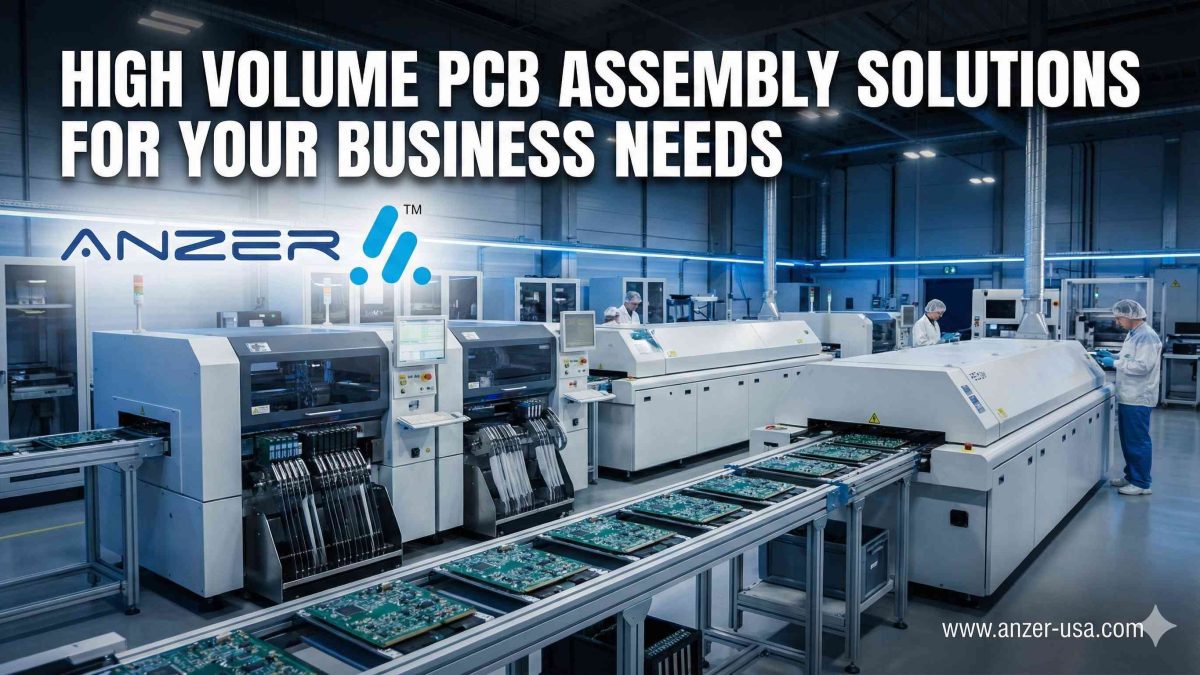
High Volume PCB Assembly Solutions for Your Business Needs
When your business wants to grow, you need to shift from making small batches to mass production. High volume PCB assembly helps you meet the big market demand for your electronic products. This type of manufacturing makes thousands of the same printed circuit boards quickly and at a good price. If your product design does not change much and people keep wanting it, high volume PCB assembly can really help you. It lowers your costs and lets you get your products out faster. This gives you an edge in the market.
Key Highlights
- High volume PCB assembly is designed for mass production, typically involving orders of 10,000 units or more.
- The assembly process leverages automation and strict process control to ensure speed and consistency.
- Key benefits include significant cost savings per unit and faster lead time to market.
- Rigorous quality assurance, including automated testing, is essential for maintaining product standards across large batches.
- Successful high volume PCB manufacturing relies on a stable design and a well-managed supply chain.
- This approach is ideal for industries like consumer electronics, automotive, and medical devices.
Understanding High Volume PCB Assembly Services
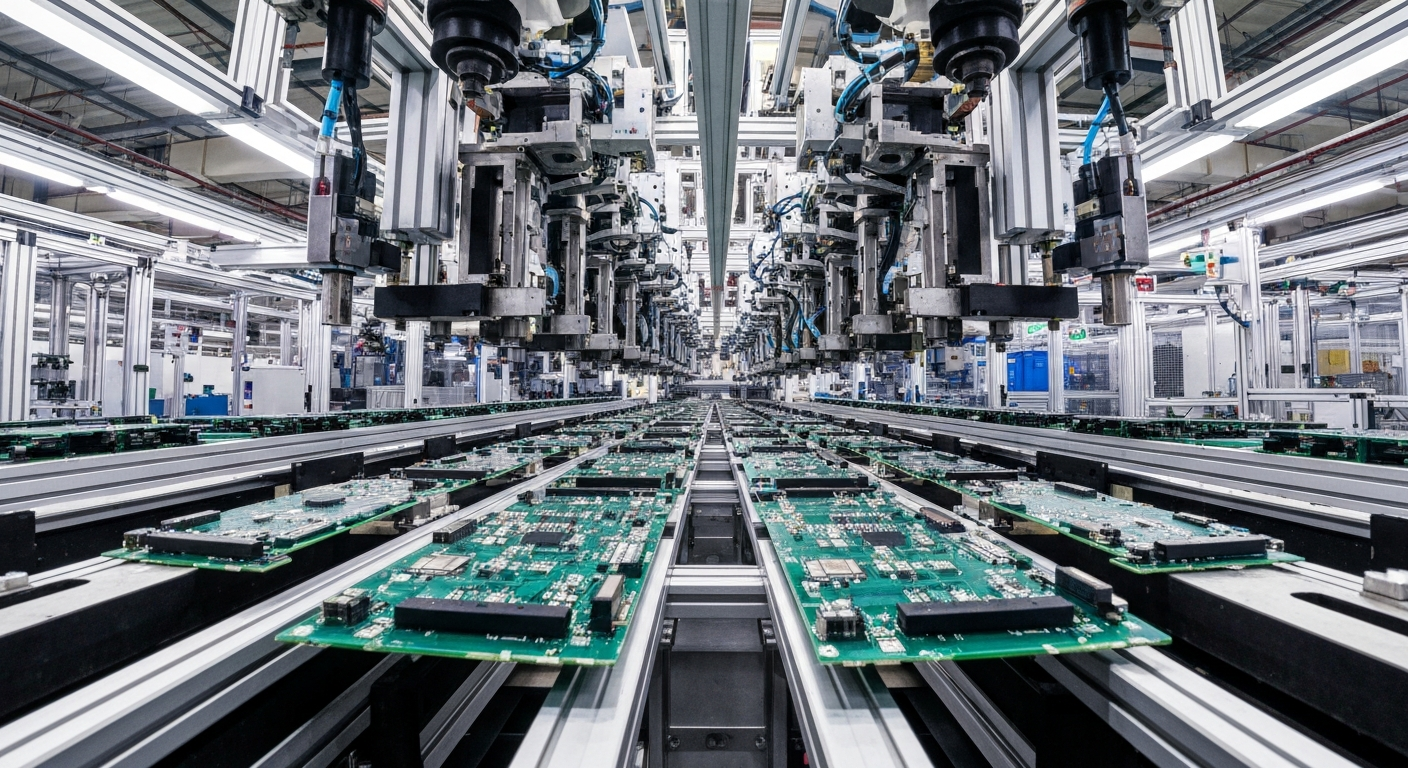 High volume PCB assembly services help companies that need to make a lot of circuit boards. This is a way to do mass production by using machines and smooth steps to make sure every board has the same, consistent quality. Services for small runs or just prototypes are different because high volume production is focused on doing things quicker and the same way every time.
Every part of the manufacturing process, from how they get parts to the final tests, is set up for large numbers. This makes sure every circuit board assembly service hits the exact specifications needed for your end product. If you look at how high volume and low volume assembly are different, and see which industries use them the most, you can pick the best choice for your business.
What Defines High Volume Versus Low Volume PCB Assembly
The main difference between high volume and low volume pcb assembly is the number of boards that are made during one run. High volume production is when you order 10,000 units or more. It works well for products that people already want. This way of making things uses a lot of machines to get work done fast and lower the cost for each piece.
Low volume assembly is best for testing, small batch jobs, and new products that still need design changes. With low volume pcb assembly, you get more freedom to try new things, which helps if you have to change the design or try out the market before going big.
Your product’s stage matters in choosing the right way. Use low volume assembly if you need to test and improve. When your product is ready for bigger numbers, high volume production gives you a cost-effective and fast way to meet market demand. A good manufacturing partner can help you move from low volume to high volume production without any issues.
Industries and Applications That Rely on High Volume PCB Assembly
Many important industries today rely on high volume PCB assembly to get their products out to the whole world. The push for electronics that are both affordable and work every time is making pcb manufacturing at a large scale more popular. These sectors often stick with one product design for a long time and can guess what their sales will be, so going with high volume production just makes sense.
The uses for circuit boards are big, from the tech in our homes to major parts of city systems. Consumer electronics need huge numbers of circuit boards to keep up with times like the busy shopping season when people buy a lot of smartphones, smart home gadgets, and laptops. In the same way, car makers use high volume pcb production to make the many complicated systems you find in cars today.
Other big users of high volume PCB assembly are:
- Medical and Life Sciences: These need devices that always work the same and can be trusted every time.
- Aerospace and Defense: These systems have to follow strict quality standards, since so much depends on them running right.
- Telecommunications: These build and keep up things like 5G and IoT networks that let us stay in touch with the world.
Key Advantages of High Volume PCB Assembly for Businesses
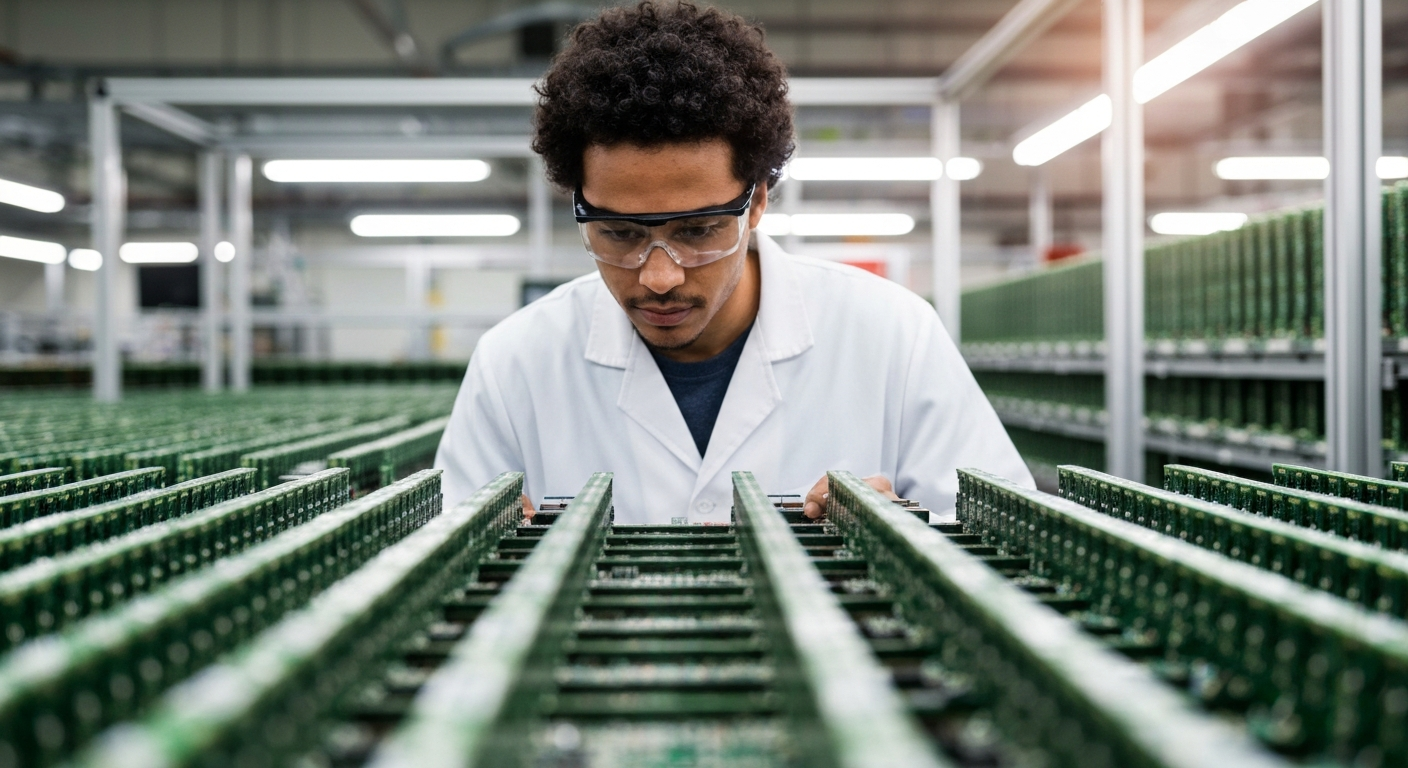 Choosing high volume PCB assembly in your manufacturing process brings a lot of good things. One of the main benefits is cost efficiency. When you make many boards at once, the cost for each one goes down. This is because you buy more materials at a time and spread out the costs of setup and tools over many boards.
This type of assembly process gives you great consistency too. Machines do the work, and quality control steps are strong. That means every board gets made to the same high level each time.
When you pick high volume PCB assembly, you get faster production times and better costs for your business. This is a smart way to improve how you work and cut your expenses.
Streamlined Production and Faster Turnaround Times
One of the biggest benefits of high volume assembly is that it helps cut down on production time. The whole assembly process is built for speed and steady output. It uses high-speed SMT lines and machines to put the parts in place. Because much of the work is done by machines, there is less need for people to step in. This makes the workflow quicker from start to end.
Good process control is key to making things faster. When there is live monitoring and smart schedules in place, materials are always ready to go and production does not stop. Procurement, fabrication, and assembly are all pulled together by these systems. This close teamwork helps shorten lead time, letting you take your product to the market more quickly.
How long a high volume assembly order takes can change based on how complex the board is and if the parts are easy to get. But, with solid process management, you can get thousands of units made fast and on a regular schedule. This speed helps your company react to market demand and keep ahead of others in the field.
Cost Optimization in Large-Scale Manufacturing
Cost efficiency is one of the main reasons why businesses go for high volume pcb production. The idea is simple. When you make more units, the cost for each one goes down. This happens because the setup cost for tooling and programming gets divided over thousands of boards, not just a few.
Plus, when you choose mass production, you can buy the parts in bulk. This lets you get better pricing from suppliers. A good manufacturing partner uses their supply chain connections to find high-quality parts for less money and gives those savings to you. This way helps lower the whole cost of making your project.
For high volume projects, pricing is made to show these savings. While you do have some upfront costs for tooling and getting things ready, each unit ends up much cheaper than with small batch pcb assembly. So, high volume pcb assembly is a good choice if you have products with a steady design and ongoing demand. This method uses the power of mass production, supply chain benefits, and competitive pricing to bring great cost value.
Essential Steps in the High Volume PCB Assembly Process
The high volume PCB assembly process has many steps that work together for speed and accuracy. This process starts even before any part is placed. First, your design files go through a careful check. This is to make sure they are ready and good for mass production.
Next, the steps include component sourcing, building the boards, the assembly work, and a lot of testing. Each part of the assembly process uses strong controls. This keeps the quality high and the work on schedule.
Knowing how a product goes from a basic model to full-scale production is important. It’s also key to know how the supply chain and high volume PCB work during this time. Get a closer look at these important steps in the pcb assembly process.
Design, Prototyping, and Production Ramp Up
The journey to mass production starts with a strong pcb design. Your gerber files and drawing packages are carefully checked to be sure the design fits high volume needs. This step, called design for manufacturability or dfm, helps find and fix things that could slow you down or cost a lot later.
After the design review, a pcb prototype is made. With this rapid prototyping stage, you can test a working sample of your board. This shows if it works like you planned. You can make changes now if you need to, before mass production begins. Fixing things at this stage is easier and saves money.
When the prototype is good, you move to the new product introduction part. The process then shifts to full-sized production. Tools and fixtures are made ready, and the production lines are set up. Starting this step well is key, and a good partner will help things go fast, smooth, and strong. This way, you don’t get stuck, and your product can grow and scale in the right way.
Component Sourcing and Supply Chain Management
A strong supply chain is key for good high volume PCB fabrication. It helps make sure that you get every part in your bill of materials (BOM) from suppliers you can trust. This is important to keep track of all your components, stop fake ones from being used, and keep product quality high.
Managing the supply chain well is not just about buying parts. It means working with many different suppliers and building long-term ties with them. This helps you get best quality components at good prices. It also makes your business more stable and ready to handle problems, so you always have the materials you need and your production keeps going.
When you pick a partner for high volume PCB work, pick one that is good at getting parts and lets you see how their supply chain works. The way they handle vendors, lead times, and pricing will have a big effect on both the quality and the cost of your high volume project.
Quality Control Measures in High Volume PCB Assembly
Keeping the same quality in lots of units is a big challenge in high volume production. You need a strong quality control system for this. To do that, you add checks and balances at every step of the manufacturing process. Quality assurance means not just finding problems, but stopping them before they happen by keeping a close eye on every part of the process.
There are many layers of inspection, starting with solder paste inspection and ending with final functional testing. This way, each finished product will meet high quality standards. These steps are needed for a good and reliable product that your customers will trust. Now, let’s look at the testing protocols and industry standards that make sure you get consistent quality every time.
Automated Testing and Inspection Protocols
High volume assembly needs reliable and fast checking to keep up quality. People cannot depend only on visual inspection when making thousands of boards. Special machines are used instead. These machines find problems quickly and accurately. One of the first steps is solder paste inspection (SPI). This makes sure the right amount of solder paste is put on before any component placement happens.
After component placement, Automated Optical Inspection (AOI) looks over each board. The system compares the board to a sample image. This helps pick up on missing parts, wrong direction in placement, or messy soldering work. When boards are complex and have hidden joints, like with BGAs, Automated X-ray Inspection (AXI) can check solder connections by looking through the board.
A final step is functional testing. This checks each board to see if it works how it should according to its plans. By using these steps with automated testing, any problems show up early. This means they can be fixed before the boards become finished products. The result is good boards that do not have widespread problems.
Ensuring Compliance With Industry Standards
Adherence to recognized industry standards is a non-negotiable aspect of quality assurance in PCB assembly. These certifications and guidelines provide a framework for ensuring that every finished product meets specific pcb assembly requirements for quality, reliability, and safety. Compliance is especially critical in regulated industries like medical, aerospace, and automotive.
Working with a manufacturer that holds key certifications demonstrates a commitment to maintaining the highest quality standards. These certifications are awarded by third-party organizations after a rigorous audit of the company’s processes, equipment, and quality management systems.
Key industry standards and certifications provide you with the assurance that your products are built to last.
| Standard/Certification | Description |
|---|---|
| ISO 9001:2015 | An international standard for quality management systems, ensuring consistent processes and customer focus. |
| IPC-A-610 | The most widely used standard for the acceptability of electronic assemblies, defining criteria for quality. |
| RoHS Compliant | Restricts the use of specific hazardous materials found in electrical and electronic products. |
| ITAR Registered | Required for manufacturers producing items for the United States Munitions List (USML). |
Choosing the Right High Volume PCB Assembly Partner
Picking the right high volume pcb assembly partner is one of the most important choices you will make for your product. The pcb manufacturer you pick is not just someone you buy from. They become a part of your team. What they can do, how many years of experience they have, and how serious they are about quality will shape your success. If the high volume pcb assembly manufacturer has good experience, they know how to help you handle mass production without big problems.
It is about getting the mix right with cost, best quality, and reliability. You want a pcb manufacturer who will give you the best quality pcb assembly, already done on time, and for a price that fits your budget. If you know what to look for, you can make a smart choice for your work.
Evaluation Criteria for Service Providers
When you are looking for a partner in high volume PCB assembly, you need to consider more than just the price. It is important to see if they can meet your specific requirements for quality, how much they can make, and the help they give. Working with a company with many years of experience means they know how to handle large jobs well.
You should also check if they follow the right quality standards. Ask them about any certifications they have, how they test things, and the way they manage their supply chain. If they have a clear and well-documented quality system, you can trust them more. It is also important to look at their production capability. Make sure they have the tools and skills to do the amount of work you need.
Think about these points when you choose:
- Certifications and Quality Standards: Do they have ISO 9001, IPC, or other needed certifications?
- Technical Capabilities: Does their equipment handle the board design you want?
- Supply Chain Management: How do they get parts and work with their suppliers?
- Customer Support: Are they quick to answer, open about their work, and good at working with you?
Technology and Equipment Considerations
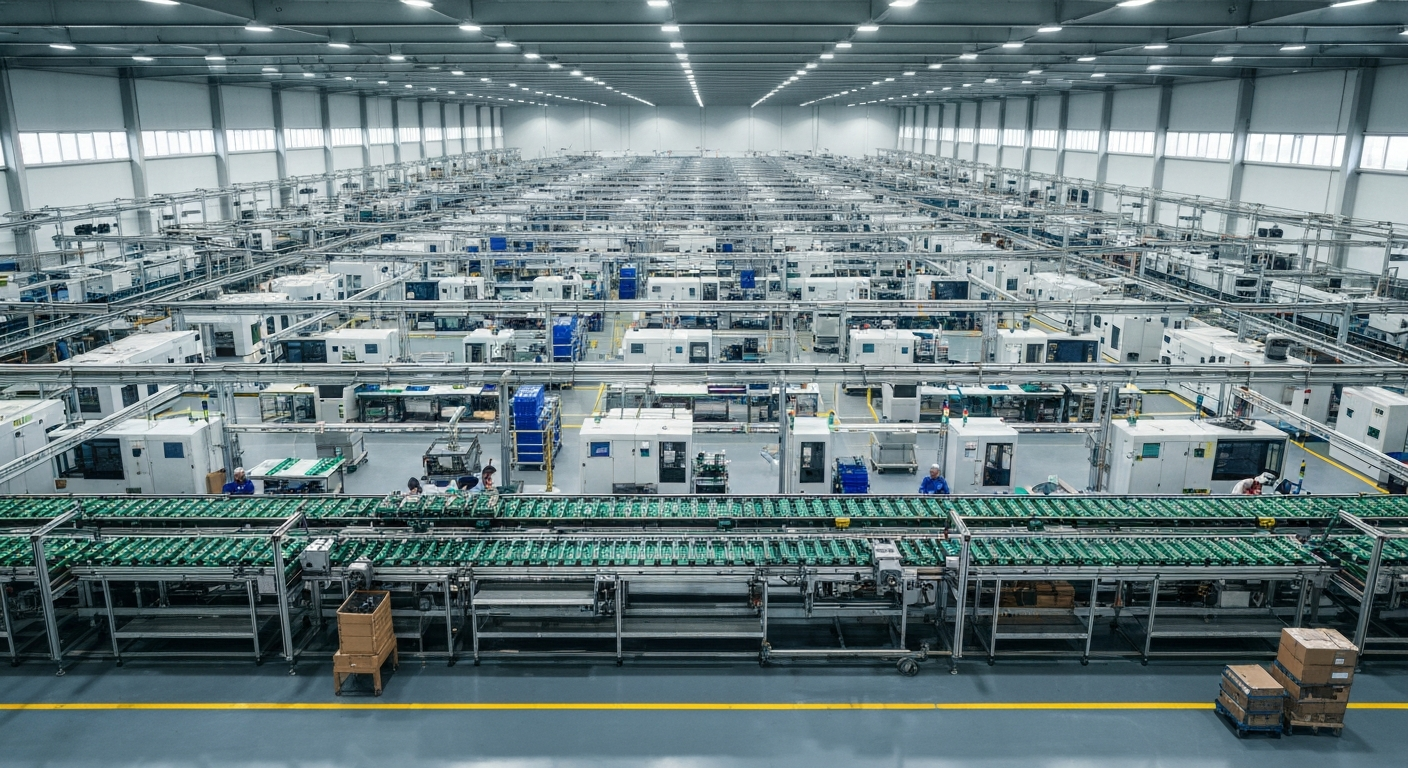
The technology and tools that a manufacturer uses show what they can do. For high volume assembly, you need advanced automation. It is smart to choose a partner with more than one high-speed SMT line. These lines should have modern pick and place machines for a mix of component sizes. This will give you better speed and reach.
Good equipment helps a lot with quality control. Automated inspection, like AOI and AXI, can catch the defects even when there is high volume work. If you see these systems, you know they want high-quality results and to keep failure rates low.
The process control that a manufacturer uses also matters as much as what equipment they have. Software that gives real-time monitoring, manages inventory, and plans out production helps everything go right. When their process control is connected well with technology, they offer a better experience. This is what sets a top provider apart from others.
High Volume PCB Assembly at ANZER
At ANZER, we have been leaders in pcb assembly for over thirty years. We create high volume assembly solutions that help your business grow. Our team knows that you need the right scale, solid reliability, and steady quality to stay on top in any market. We have shaped our manufacturing process to stay flexible and trustworthy, no matter what you need. Whether you order simple boards or need help with complex systems, we will be here for you.
Our work goes past regular pcbs. We also build flex pcbs, handle box build assembly, and do wire harness assembly. With these services, we can be your one partner for a full product. We use new tech and keep our focus on customer happiness. These tools let us make your high volume assembly project run smoothly from beginning to end.
Our Capabilities, Certifications, and Commitment to Excellence
With over 30 years of experience, ANZER knows how to handle your high volume projects, no matter how tough. For the company, doing great work means sticking to top quality standards and using the most up-to-date manufacturing steps. They want to give you the best quality possible and always aim to do more than you expect.
Their quality management comes with major industry certifications. This way, you can be sure your products are built the way you need. When it comes to high volume production, there can’t be mistakes. That is why their skilled team checks each step, making sure every unit matches their high quality standards.
Their promise to you:
- Proven Experience: Many years of experience—three decades—in contract electronics manufacturing.
- Comprehensive Capabilities: Services cover pcb assembly, box builds, and wire harnesses.
- Quality First: They work hard to give every customer more than they expect, and always provide the best quality.
- Industry Certifications: They follow known quality standards like ISO 9001 and IPC.
Conclusion
In short, high volume PCB assembly is important for companies that want more efficiency, lower costs, and good quality. When you know the difference between high volume and low volume assembly, it helps you choose what is best for your production. At ANZER, we aim to give good service and support during every step, from design to mass production. We stick to strong quality control, automated testing, and follow the rules. This means your products will meet industry standards and keep you ahead of others. If you want a PCB assembly or high volume solution that matches your business, contact us today.
Frequently Asked Questions
How Does ANZER Manage Lead Times for Large Orders?
ANZER keeps lead time short for high volume orders by careful planning and strong supply chain steps. Our production lines use machines to cut down production time and keep consistent quality. We match up our component sourcing with our work plans. This helps us avoid delays and get your large orders done on time and in a smooth way.
What Type of Support Is Offered From Prototype to Mass Production?
We give full support, starting with rapid prototyping. This helps you check if your design works. Our engineering team talks with you to understand your specific requirements. We help make sure you move from testing ideas to high volume production with no problems. Our assembly services and quality assurance steps are set up to help you go from a simple prototype to mass production without stress.
How Does Pricing Work for High Volume PCB Assembly Projects?
The pricing for high volume assembly is set up to help you get good cost efficiency. While you do have to pay some setup costs at the start, the price for each unit is much lower because of the high volume. When you work with us as your PCB manufacturer, we offer you competitive pricing that changes based on how many you need, how complex your board is, and the bill of materials.
Your Trusted Partner for Top-Quality PCB Assembly & Electronics Contract Manufacturing in Ohio