
Top PCBA Cost Reduction Strategies for Maximum Savings – Anzer USA
Are you looking for ways to lower your Printed Circuit Board Assembly (PCBA) costs without sacrificing quality? In the competitive world of electronics, managing expenses is key to success. Effective cost reduction for your circuit board is not just about finding cheaper parts; it involves a smart, holistic approach. From the initial design phase to final production, every decision impacts the bottom line. This guide will walk you through proven strategies to optimize your PCBA process for significant savings.
Key Highlights
Here are the top takeaways for achieving maximum cost savings on your next project:
- Implement Design for Manufacturability (DFM) principles early to lower PCB assembly costs.
- Standardize your components to simplify inventory and gain purchasing power, reducing material costs.
- Optimize your Bill of Materials (BOM) by finding alternative parts to manage manufacturing costs effectively.
- Simplify your PCB layout by reducing layers and board size to cut down on material waste.
- Partner with a strategic PCBA supplier to unlock better pricing and expert guidance for greater cost reduction.
Understanding PCBA Cost Structure in the United States
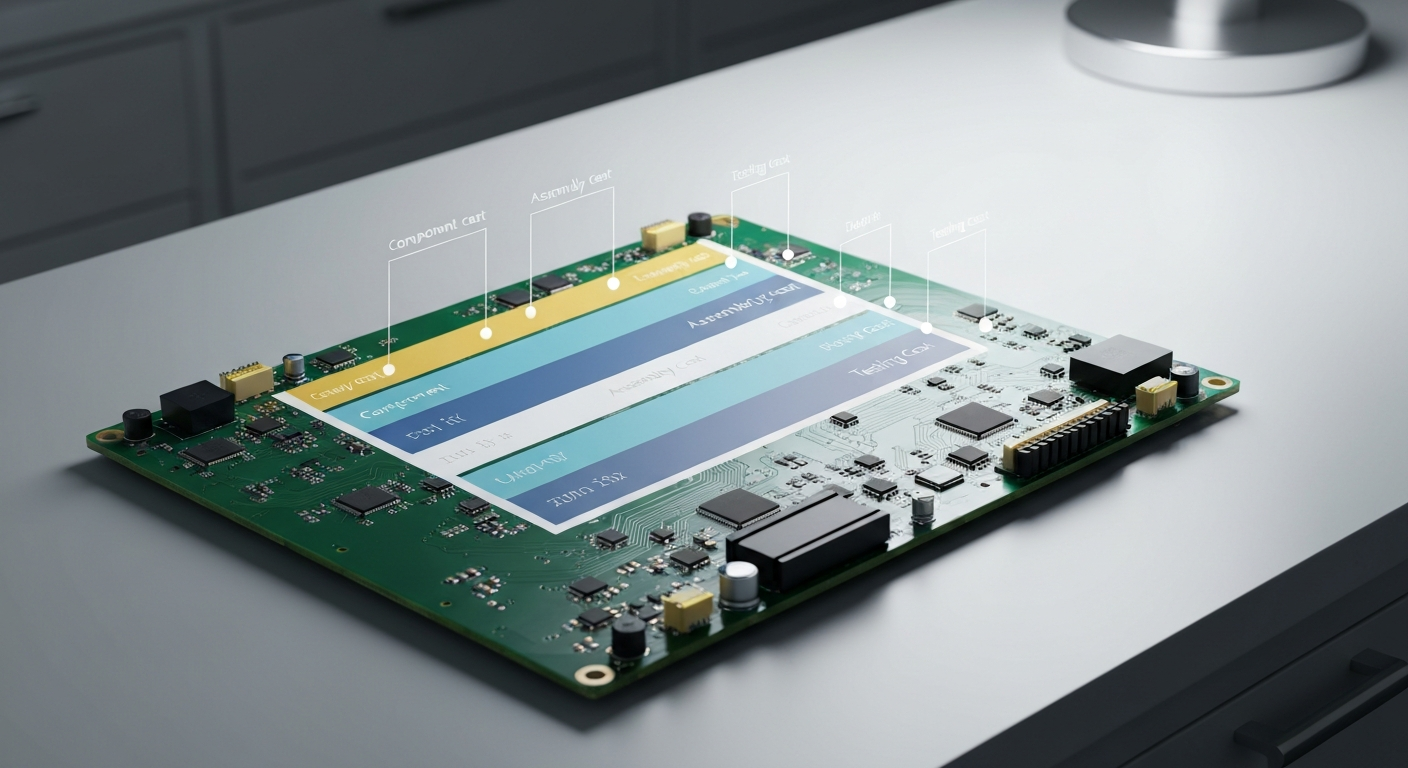
To effectively reduce your PCBA costs, you first need to understand the cost structure. The final price of your assembly is a mix of several key factors. These include material costs for components and the board itself, labor costs for assembly and testing, and overhead from the manufacturing facility.
By breaking down these production costs, you can pinpoint where your money is going. This allows you to apply targeted cost reduction strategies that make a real difference. Lowering manufacturing costs without sacrificing quality becomes possible when you know which levers to pull, from component selection to process improvements.
Key Components Contributing to PCBA Expenses
Several key components drive up your total PCBA expenses. Your design decisions in these areas have the biggest impact on the final cost. Material costs are often the largest part of the budget. This includes not only the price of individual electronic components like semiconductors and capacitors but also the raw PCB itself.
The complexity of your design also plays a major role. More intricate manufacturing processes, such as those for boards with many layers or fine-pitch components, naturally increase production costs. The assembly costs are influenced by whether you use surface-mount technology (SMT), through-hole, or a mix of both, as each requires different equipment and labor.
Finally, a few specific factors can significantly affect your budget:
- Component Selection: Specialized or hard-to-find parts are more expensive than standard, widely available ones.
- PCB Fabrication: The choice of material (like FR-4 vs. high-frequency laminates), layer count, and board size directly influence cost.
- Testing and Quality: Comprehensive testing adds to the initial expense but prevents costlier rework later.
Breakdown of Fixed and Variable Costs in PCBA
PCBA costs can be split into two main categories: fixed and variable. Understanding this distinction is crucial for developing effective strategies to reduce assembly costs. Fixed costs, also known as Non-Recurring Engineering (NRE) costs, are one-time expenses you pay for each new design. These costs don’t change whether you produce 10 boards or 10,000.
Variable costs, on the other hand, change with your order size. These include the procurement costs for components and the labor costs for the assembly process itself. The more units you produce, the higher your total variable costs will be, although the per-unit cost often decreases with larger volumes.
Here is a simple breakdown to help you visualize these production costs:
| Cost Type | Examples |
|---|---|
| Fixed Costs | Stencil fabrication, machine programming, first-article validation |
| Variable Costs | Component costs, raw PCB material, assembly labor, shipping |
Major Factors Impacting PCBA Manufacturing Costs

Many elements influence your final PCBA manufacturing costs, and having a firm grasp on them is the first step toward effective cost control. The choices you make regarding material selection, design complexity, and order volume all play a significant role in the total price of your project.
To achieve proven cost optimization, it’s helpful to examine each factor individually. Let’s look at how the materials you choose, the people and equipment involved, and the size of your production run contribute to the overall expense of the PCB assembly process.
Material Selection and Its Influence on Cost
Your choice of materials is one of the biggest drivers of PCB production costs. This goes beyond just the active components; it includes the PCB substrate, solder, and even adhesives. Opting for standard materials like FR-4 instead of specialized high-frequency laminates can lead to immediate cost savings.
When it comes to component selection, optimizing your Bill of Materials (BOM) is key to cost efficiency. Are you using over-specified components with tighter tolerances than necessary? Switching to parts with wider tolerances can reduce material costs without affecting performance in many applications. Similarly, choosing common, multi-sourced components over single-source or obscure ones mitigates supply chain risks and lowers procurement expenses.
A thorough analysis of your material selection can uncover numerous opportunities for savings. By questioning every choice and looking for more cost-effective alternatives, you can significantly reduce your overall PCBA costs while maintaining the quality and integrity of your final product.
Labor, Equipment, and Overhead Considerations
Beyond materials, the costs associated with labor, equipment, and overhead are significant parts of your total manufacturing costs. The complexity of the assembly process directly impacts labor costs. Designs that require extensive manual soldering or handling of large, awkward components will naturally cost more to produce than those optimized for automation.
The type of equipment needed for your project also matters. Advanced machinery for placing fine-pitch components or conducting X-ray inspections represents a major investment for a manufacturer, and these costs are factored into your assembly price. Overhead includes everything from facility maintenance to the electricity needed to run the production line, contributing to the final production costs.
Choosing the right PCBA partner can lead to substantial cost savings in this area. An experienced manufacturer with efficient processes and modern automation can complete your assembly with less labor and time, directly lowering your expenses. They can also offer guidance on how to make your design more automation-friendly.
PCBA Volume and Order Size Effects
The size of your order has a direct and significant impact on your per-unit PCB assembly costs. Manufacturers have fixed setup costs for every production run, including programming pick-and-place machines and creating stencils. For small-batch or prototype runs, these setup fees are spread across fewer units, making each board more expensive.
As your order size increases, you benefit from economies of scale. The fixed costs are distributed over a larger number of boards, bringing the per-unit price down. Larger volumes also give your manufacturing partner more leverage in procurement, allowing them to secure lower component prices and reduce procurement costs.
What if you only need a small batch? One simple tip is to plan ahead. Longer lead times give your partner more flexibility to source materials cost-effectively and schedule your production process efficiently. While you may not get the same per-unit price as a massive order, thoughtful planning is a great cost reduction tactic for smaller runs.
Design Optimization Strategies for Cost-Effective PCBA
The design phase is your best opportunity to lock in major cost savings. Decisions made here have a ripple effect throughout the entire manufacturing process. Effective design optimization focuses on creating a PCB design that is not only functional but also easy and inexpensive to produce.
Small adjustments to the layout, component choice, and board structure can lead to significant cost reduction. Let’s explore some of the most impactful cost reduction strategies you can apply during the design phase to make your PCBA more cost-effective from the start.
Simplifying PCB Layout Without Sacrificing Performance
A complex PCB layout can drive up manufacturing costs due to increased difficulty in fabrication and assembly. Simplifying your layout is an effective cost reduction method that, when done correctly, doesn’t have to sacrifice performance or signal integrity. The goal is to make the board as easy to build as possible.
How can you lower manufacturing costs through layout simplification? Start by grouping components logically based on their function. This can help shorten trace lengths and reduce routing complexity. Overpopulating your board can also make placement and soldering challenging, so ensure there is adequate spacing between parts. A clean, organized layout minimizes the risk of assembly errors and rework.
Consider these simple tips for a more cost-effective PCB layout:
- Stick to regular board shapes like squares or rectangles when possible.
- Optimize trace spacing to potentially reduce the overall board size.
- Use sufficient thermal reliefs to ensure high-quality solder joints.
- Avoid placing sensitive components in the center of the board where flexing is greatest.
Selecting Standard Component Footprints
One of the most impactful design decisions for cost efficiency is your component selection, specifically the footprints you use. During the design phase, prioritizing standard component footprints can streamline the entire supply chain and assembly process. Common package sizes like 0402, 0603, and 0805 are readily available and compatible with standard automated assembly equipment.
Using custom or unusual footprints in your PCB layout can create unnecessary complications. It may require your manufacturer to make special adjustments to their machines or even resort to manual placement, which increases labor costs and slows down production. Sticking to industry standards like IPC-7351 ensures your land patterns match component dimensions, leading to reliable soldering.
By focusing on standard footprints, you also make it easier to find alternative components if your primary choice becomes unavailable. This flexibility is crucial for avoiding production delays and unexpected cost increases. A little foresight in the design phase goes a long way toward a smoother, more affordable manufacturing run.
Reducing Layer Count and Board Size
Two of the most direct ways to achieve cost reduction are by minimizing your board’s size and the number of layers. A smaller board size means less material is used, which directly cuts down on fabrication expenses. It also reduces material waste during panelization, where multiple boards are arranged on a single large panel for efficient processing.
Similarly, each additional layer in a PCB adds complexity and cost to the manufacturing process. It requires more lamination and drilling steps, increasing both material and labor costs. While complex designs sometimes need more layers for routing, carefully planning your layout can often help you reduce the number of layers without compromising functionality.
Optimizing your component selection and Bill of Materials can help with this. For example, using smaller components might allow for a more compact layout, reducing the required board size. This is a perfect example of how different cost reduction strategies work together to lower your overall production costs.
Best Practices for Bill of Materials (BOM) Cost Reduction

Your Bill of Materials (BOM) is essentially a shopping list for your project, and it’s a prime area for cost savings. Effective BOM cost reduction involves more than just picking the cheapest parts; it’s about making smart, strategic choices that lower component costs and procurement costs without harming quality.
By optimizing your BOM, you can build a more resilient supply chain and avoid costly disruptions. Let’s look at some best practices for analyzing your BOM to find opportunities for significant savings.
Eliminating Obsolete or Hard-to-Source Components
One of the biggest mistakes that can increase production costs is using components that are obsolete or hard to find. Relying on such parts creates major risks for your project. If a critical component goes end-of-life (EOL) or has a long lead time, it can bring your production to a halt, forcing expensive redesigns or causing significant delays.
Building supply chain resilience starts with smart component selection. Before finalizing your design, check the lifecycle status and availability of all parts. Choosing components that are actively in production and available from multiple suppliers is a simple way to protect your project from disruptions and keep procurement costs under control.
Here are a few tips to avoid getting stuck with problematic parts:
- Check component availability before sending files to your manufacturer.
- Include approved alternative components in your BOM from the start.
- Work with your assembly partner to identify at-risk parts early.
- Avoid components with a history of price volatility or limited stock.
Leveraging Alternate and Approved Vendor Lists
A powerful strategy for cost control and supply chain management is to create and leverage an approved vendor list (AVL) and a list of alternate components. Instead of locking your design into a single part from a single supplier, you give your procurement team flexibility. This is key to achieving cost efficiency, especially when market conditions change.
Having pre-approved alternate components means that if your primary part is out of stock or its price spikes, your manufacturer can seamlessly switch to another option without needing to stop production for your approval. This saves valuable time and helps keep procurement costs in check. It also reduces your dependency on a single source, making your supply chain more robust.
Your PCBA partner can be a huge asset here. An experienced partner can help you identify and qualify suitable alternate components, drawing on their broad supplier network and market knowledge. This collaborative approach ensures you have multiple reliable options, contributing directly to long-term cost savings and production stability.
BOM Consolidation for Efficient Procurement
Another effective way to optimize your Bill of Materials is through consolidation. This means reducing the number of unique part numbers used across your designs whenever possible. Do you have multiple products that use slightly different resistors or capacitors? Standardizing on a single part can lead to significant cost savings.
Consolidating your BOM simplifies procurement and inventory management. When you buy a larger quantity of fewer parts, you increase your purchasing power and can often negotiate better pricing, which lowers your material costs. It also reduces the administrative overhead associated with managing a long and complex list of components, trimming your procurement costs.
This cost reduction strategy requires a holistic view of your product lines. By analyzing the BOMs for different projects, you can identify opportunities to standardize components. This simple practice streamlines your operations and is a powerful tool for achieving long-term savings.
Assembly Process Improvements That Lower Costs
Optimizing the assembly process itself can unlock quick and substantial cost savings. By focusing on efficiency and eliminating waste, you can reduce assembly time and improve product quality simultaneously. This approach, rooted in principles of continuous improvement, targets the hands-on steps of building your board.
From initial design considerations to final inspection, every part of the assembly process holds potential for optimization. Let’s examine how implementing smart manufacturing principles can lead to a more streamlined, cost-effective production cycle.
Implementing Design for Manufacturability (DFM) Principles
Implementing Design for Manufacturability (DFM) principles early in the design phase is one of the most proven cost optimization methods. DFM focuses on designing a product that is easy to manufacture. This proactive approach helps avoid costly redesigns and production issues down the line, serving as a powerful cost reduction tool.
Process optimization begins with your PCB design. A DFM review checks for potential manufacturing problems, such as component footprints that don’t match the datasheet or insufficient clearances between parts. Catching these issues before production starts saves time and money that would otherwise be spent on rework.
Here are a few key DFM principles to incorporate into your design process:
- Ensure component footprints are accurate and match datasheet specs.
- Provide sufficient spacing between components to aid assembly and rework.
- Use standard drill hole sizes that align with your fabricator’s capabilities.
- Engage with your assembly partner early for a professional DFM assessment.
Streamlining Soldering, Placement, and Inspection Steps
Streamlining the core steps of the assembly process—soldering, placement, and inspection—can yield some of the quickest cost savings. For example, designing your board with all surface-mount components on one side allows for a single reflow soldering step, which is much faster and cheaper than a double-sided assembly that requires flipping the board.
Optimizing component placement for automated pick-and-place machines is another key to a faster production process. Minimizing component rotations and using consistent orientations simplifies machine programming and speeds up assembly. This reduces the time each board spends on the line, directly lowering labor and equipment costs.
For quality control, designing for automated optical inspection (AOI) can save time and improve accuracy compared to manual inspection. Clear reference designators and sufficient spacing around components make it easier for inspection systems to operate effectively. These small considerations in the design stage lead to a smoother, more cost-effective assembly process.
Adopting Automation and Lean Manufacturing Techniques
Adopting automation and lean manufacturing techniques is one of the most effective strategies for reducing PCBA production costs. Automation, like using robotic pick-and-place machines, drastically reduces assembly time and minimizes the human errors that lead to costly rework. Designing your board to be automation-friendly is key to unlocking these cost savings.
Lean manufacturing is a philosophy focused on process optimization by eliminating waste. This includes minimizing excess inventory with just-in-time (JIT) practices, reducing unnecessary movement of materials, and continuously looking for ways to improve the production flow. These techniques make the entire assembly process more efficient and less expensive.
By combining automation with lean principles, manufacturers can achieve significant cost savings. For example, using press-fit components that snap together eliminates the need for fasteners and reduces manual labor. These small, smart choices add up to a faster, more affordable assembly process.
Partner Selection: Maximizing Savings with the Right PCBA Supplier
Choosing the right PCBA supplier is more than just a procurement decision; it’s a strategic move that can lead to huge cost savings and better customer satisfaction. Your PCB manufacturer is a partner in your success, and their expertise, capabilities, and pricing structure all contribute to your bottom line for cost control.
A great partner does more than just assemble boards. They provide valuable feedback, help you navigate the supply chain, and offer solutions that enhance quality while reducing costs. Let’s explore how to evaluate potential suppliers to find one that will help you maximize your savings.
Evaluating Supplier Capabilities and Certifications
When selecting a PCBA partner, a thorough evaluation of their capabilities and certifications is critical for both cost control and product quality. A supplier with advanced technology and automated equipment can produce your boards more efficiently, which translates into lower costs and faster turnaround times.
Look for a partner whose capabilities align with your project’s complexity. Can they handle the fine-pitch components or specific materials your design requires? A mismatch could lead to quality issues and expensive rework. Certifications like ISO 9001 or AS9100D demonstrate a commitment to quality management systems, reducing the risk of defects and ensuring a reliable final product.
Here are key areas to evaluate in a potential supplier:
- Technical Capabilities: Do they have modern equipment for SMT placement, soldering, and inspection?
- Quality Certifications: Do they hold relevant industry certifications (e.g., ISO 13485 for medical devices)?
- Supply Chain Management: How robust is their network for sourcing components?
- Engineering Support: Do they offer DFM analysis and other expert guidance?
Comparing Local vs. Global Sourcing for Cost Efficiency
The decision between local and global sourcing is a major factor in achieving cost efficiency. Global sourcing, often from manufacturers in Asia, can offer significantly lower labor and manufacturing costs. For high-volume production runs where every penny counts, this can be a very attractive option. However, it often comes with longer lead times, complex logistics, and potential communication challenges.
Local sourcing, on the other hand, provides benefits like shorter lead times, easier communication, and greater supply chain transparency. Shipping costs are lower, and it’s easier to collaborate closely with your partner on design reviews and quality checks. While the per-unit cost might be higher, the total cost of ownership can sometimes be lower when you factor in reduced risks and faster time-to-market.
The right choice depends on your project’s specific needs. A hybrid approach, where you prototype locally and move to global sourcing for mass production, can sometimes offer the best of both worlds. An experienced PCBA partner can help you weigh the pros and cons to determine the most cost-effective sourcing strategy for you.
Building Long-Term Relationships for Better Pricing
In supplier selection, it’s often tempting to shop around for the lowest quote on every project. However, building long-term relationships with a trusted PCBA partner can lead to greater cost savings over time. A manufacturer who understands your products and business needs is better equipped to provide effective cost control solutions.
When a supplier sees you as a long-term partner, they are more likely to offer preferential pricing, prioritize your orders, and invest time in helping you optimize your designs. This relationship can also lead to better terms on procurement costs, as they can leverage their purchasing power on your behalf with more confidence.
Ultimately, a strong partnership fosters trust and collaboration. Your manufacturer becomes an extension of your team, actively looking for ways to improve quality and reduce costs. This collaborative approach is far more valuable than the small savings you might get from jumping between suppliers for each new order.
Frequently Asked Questions
What are common mistakes that typically increase PCBA costs?
Common mistakes include poor component selection with hard-to-find parts, overly complex designs that are difficult to manufacture, and ignoring Design for Manufacturability (DFM) feedback. These errors lead to higher production costs, delays, and extra costs for rework, undermining any cost reduction efforts.
Are there ways to cut PCBA expenses for prototypes and small batches?
Yes, you can lower PCB assembly costs for small orders. Simplify your design process, use standard components, and provide a longer lead time. This gives your manufacturer flexibility to optimize their production process and source materials affordably, which is a great way to achieve cost savings on lower volumes.
How can I minimize testing expenses while ensuring quality?
To reduce testing expenses, incorporate Design for Test (DFT) principles in the design phase. Add accessible test points and consider using automated inspection methods. This process optimization allows for efficient quality control, catching issues early and ensuring product quality without the high cost of extensive manual testing.
Conclusion
In conclusion, implementing effective cost reduction strategies in PCBA can lead to significant savings while maintaining product quality and performance. By understanding the cost structure, optimizing design, and improving assembly processes, businesses can navigate the complexities of manufacturing more efficiently. Additionally, choosing the right suppliers and fostering strong partnerships can further enhance profitability. Remember, every small adjustment can contribute to larger financial gains in the long run. If you’re looking for expert advice or assistance in applying these strategies, get in touch with us today. We’re here to help you maximize your savings!
ANZER is your reliable partner for innovative PCB Assembly and Electronics Manufacturing Services in Ohio, USA. You’re developing a prototype, scaling up to mass production, or requiring specialized assembly – we’re here to deliver precision-crafted, cost-effective solutions. With latest technology and years of expertise, we guarantee products that exceed expectations every time.