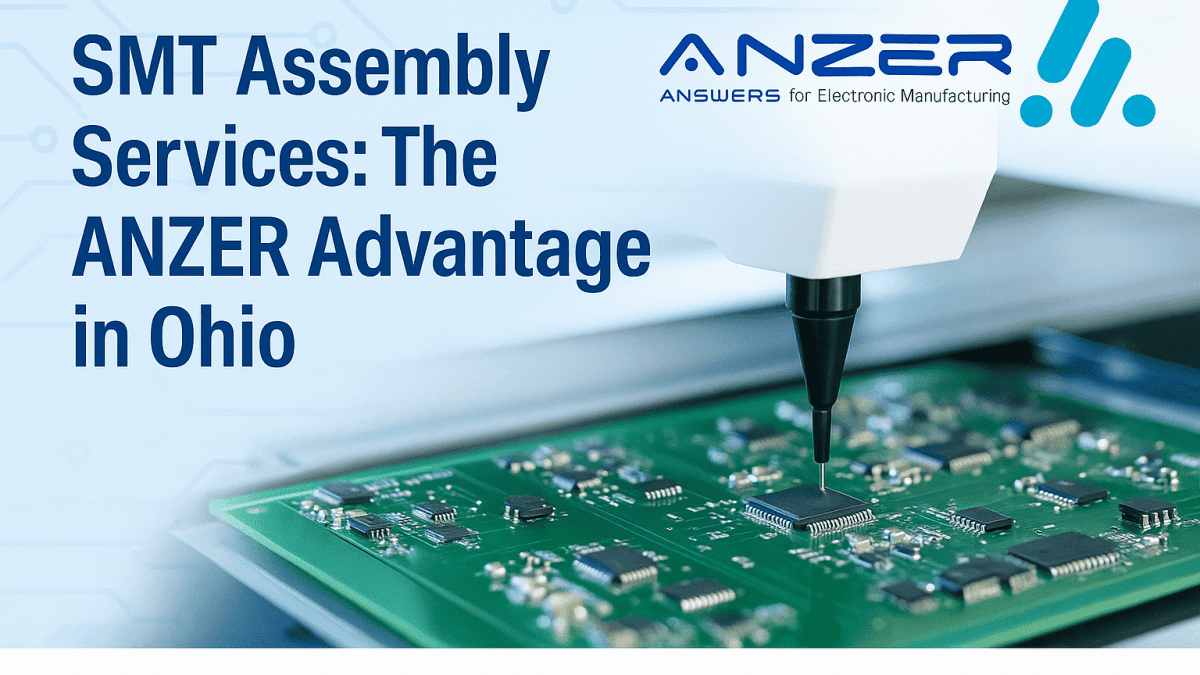
SMT Assembly Services: The ANZER Advantage in Ohio
Key Highlights
- ANZER’s SMT assembly services in Ohio utilize advanced surface mount technology for efficient and precise manufacturing processes.
- The assembly process involves critical stages such as solder paste application, component placement, and reflow, ensuring high-quality results for electronic devices.
- With flexibility for high-mix and low-volume production, ANZER accommodates diverse client needs while maintaining excellence in assembly.
- The benefits of SMT assembly include reduced space and weight in devices, contributing to the modern designs of electronics.
- ANZER stands out with localized supply chains, leading to shorter lead times and more streamlined operations, enhancing overall production efficiency.
- Quality control measures, including automated inspections, are vital components of ANZER’s commitment to delivering reliable SMT assembly services.
Introduction
Electronics manufacturing has evolved significantly, making surface mount PCB assembly the preferred choice for many industries. With its compact size and efficient production techniques, surface mount technology enhances the capabilities of circuit boards. This method allows for increased component density and reduces overall weight, further optimizing electronic devices. ANZER, based in Ohio, offers comprehensive SMT services that cater to diverse project needs, ensuring high-quality results through advanced equipment and expertise. Whether it’s a prototype or a full-scale production run, ANZER delivers exceptional value and reliability.
Table of Contents
Understanding SMT Assembly Services
Manufacturing electronics today often relies on efficient techniques that enhance performance and reduce costs. Surface mount PCB assembly encompasses a highly automated process where electronic components are mounted directly onto the surface of printed circuit boards. This method supports a higher component density, allowing for more compact designs and improved signal integrity. The assembly process involves several key stages, including solder paste application, precise component placement, and reflow soldering. Through advanced equipment like pick-and-place machines and reflow ovens, manufacturers can ensure high reliability and consistency, making SMT a preferred choice in the electronics industry.
What Is SMT Assembly?
SMT assembly, or Surface Mount Technology assembly, is a method for producing electronic circuits by mounting components directly onto the surface of printed circuit boards (PCBs). This technique enhances precision, improves efficiency, and optimizes space utilization compared to traditional assembly methods.
SMT vs. Traditional Through-Hole PCB Assembly
Surface mount PCB assembly offers notable advantages over traditional through-hole techniques. The smaller size of SMT components allows for higher component density on circuit boards, enhancing product functionality while saving space. Additionally, the automated assembly process of SMT reduces manufacturing costs and lead times, making it ideal for mass production. Conversely, through-hole assembly is beneficial for certain applications that require robust connections, particularly in high-stress environments. Each method has its strengths, and choosing between SMT and through-hole depends on specific project requirements and design considerations.
The Step-by-Step SMT Assembly Process
The assembly process begins with preparing the printed circuit board (PCB) and applying solder paste. This paste is crucial for creating strong solder joints that connect the components. Next, the placement of surface mount devices (SMD) is performed using advanced pick-and-place machines that ensure precise positioning of each component. Following placement, the reflow soldering step takes place in a reflow oven. This heats the board to melt the solder paste, securing the components in place. Optical inspection is then used to check for any defects, helping to maintain high quality throughout the manufacturing process.

From Design to Finished Product
The journey from design to finished product in surface mount PCB assembly is both structured and dynamic. Initially, the design phase focuses on the layout of the electronic circuits, ensuring optimal placement for signal integrity and functionality. Following this, components are precisely placed using advanced pick-and-place machines, which handle smaller SMD components with high accuracy. Once component placement is complete, the reflow soldering process begins. This involves heating solder paste to create strong solder joints, ensuring reliable connections in the final product. The entire assembly process is monitored with quality control measures, leading to high-reliability outcomes.
Key Stages: Solder Paste, Placement, and Reflow
Solder paste is the first step in the surface mount PCB assembly process, ensuring that components adhere firmly to the circuit board. This paste contains tiny metal balls suspended in a sticky medium, applied precisely to the pads where components will be placed. Next, placement involves carefully positioning the SMT components onto the solder paste using advanced pick-and-place machines. Afterward, the assembly enters the reflow phase, where heat is applied in a reflow oven. This melts the solder paste, creating strong solder joints that connect the components to the circuit board, ensuring reliable performance.
Core Equipment Used in SMT Assembly
Integral to the success of surface mount pcb assembly are several key pieces of advanced equipment. Pick-and-place machines play a crucial role, quickly and accurately positioning tiny surface mount devices onto printed circuit boards. Following component placement, reflow ovens facilitate the soldering process by applying heat, ensuring strong solder joints and reliable connections. Inspection tools, including automated optical inspection systems, help maintain high quality control standards. They ensure that every solder joint meets the necessary criteria, identifying any potential issues early in the manufacturing process.
Pick-and-Place Machines
Advanced pick-and-place machines are vital in surface mount PCB assembly. These machines automate the placement of SMT components onto printed circuit boards, enhancing speed and accuracy. They use advanced vision systems for precise alignment, minimizing mechanical stress on components during the assembly process. As a result, manufacturers can achieve higher component density and reliable solder joints. With their capability to handle smaller components and optimize production lines, pick-and-place machines drastically improve the efficiency of the overall manufacturing process.
Reflow Ovens and Inspection Tools
Reflow ovens play a crucial role in the surface mount PCB assembly process by ensuring that solder paste flows and forms reliable solder joints. These ovens use controlled heat to melt the solder, which then solidifies to create strong connections between SMT components and printed circuit boards. Inspection tools, like automated optical inspection systems, are essential for verifying quality. They detect issues such as misalignment or insufficient solder, helping maintain high reliability in the final product. Together, they enhance efficiency and protect against manufacturing defects.
ANZER’s SMT Manufacturing Capabilities in Ohio
ANZER stands out in Ohio for its versatile surface mount PCB assembly capabilities. With advanced equipment, the facility accommodates high-mix, low-volume production runs while maintaining flexibility for electronic box builds and sub-system assembly. A strong focus on quality control ensures reliable solder joints and precise component placement. Established relationships with distributors streamline component sourcing, enhancing efficiency and reducing lead times. These advantages translate into cost savings, making ANZER the ideal choice for businesses seeking high-quality and dependable SMT manufacturing solutions.
High-Mix, Low-Volume Production Flexibility
Flexibility in production is a hallmark of ANZER’s high-mix, low-volume surface mount PCB assembly services. This approach enables manufacturers to adapt quickly to changing demands, efficiently managing a variety of projects, whether launching prototypes or fulfilling small batch orders. By utilizing advanced equipment, the assembly process allows for quick adjustments in component placement, ensuring that even smaller components can be handled with precision. This adaptability not only meets diverse customer needs but also enhances the overall quality control of the finished products, delivering reliable and high-performance electronic circuits.
Electronic Box Builds and Sub-System Assembly
Electronic box builds and sub-system assembly play a crucial role in the manufacturing process. At ANZER, we specialize in complete electronic box builds, ensuring that every component is carefully integrated for optimal performance. With our expertise in surface mount PCB assembly, we efficiently manage the assembly of smaller components while maintaining high reliability. Sub-systems are essential for larger electronic systems, and our capabilities extend to wiring harnesses and cable assemblies. By leveraging local supply chains in Ohio, we ensure quick turnaround times and cost-effective solutions for your assembly needs.
Advantages of SMT Assembly for Electronics Manufacturing
In the realm of electronics manufacturing, surface mount pcb assembly offers distinct advantages that include higher component density and space efficiency. This technology allows smaller components to be placed closer together, enhancing the overall performance of electronic circuits. Additionally, SMT processes reduce manufacturing costs and improve assembly speed through automation. The heat generated during soldering minimizes thermal stress on components, leading to more reliable solder joints. These benefits make SMT assembly a popular choice for creating compact and efficient electronic devices in today’s fast-paced industry.
Space and Weight Reduction in Devices
Modern electronic devices benefit greatly from space and weight reductions made possible by surface mount PCB assembly. This technology allows for smaller components with higher component density, enabling sleek designs while maintaining optimal performance. One of the key advantages lies in the reduced mechanical stress on solder joints due to advanced placement techniques and better heat dissipation. By using surface mount devices, manufacturers can create lighter, more compact products that cater to customer demands for portability. This innovative approach significantly transforms the electronics industry, leading to efficient, reliable solutions.
Cost and Efficiency Improvements
Cost savings in surface mount PCB assembly come from several factors that streamline the manufacturing process. Automated equipment reduces labor costs while improving precision, ensuring every solder joint is reliable. Less material is wasted due to accurate component placement, ultimately driving down expenses. Efficiency also benefits from higher component density in the design. Smaller components take up less space on circuit boards, allowing for compact designs that can fit more functions in a smaller footprint. This optimal use of space contributes to both manufacturing efficiency and reduced costs.
ANZER’s Unique Advantages as a U.S. Manufacturer
ANZER stands out as a U.S. manufacturer, providing significant advantages in the electronic manufacturing landscape. The local supply chain not only reduces lead times but also ensures high-quality sourcing of components for surface mount PCB assembly and other processes. By fostering long-term relationships with distributors and OEMs, ANZER can quickly obtain necessary parts, leading to cost savings and enhanced operational efficiency. This strategic positioning enables better quality management practices while supporting cost-effective solutions for various electronic assembly needs.
Ohio Location Benefits and Local Supply Chains
Manufacturing in Ohio has distinct advantages, particularly for surface mount PCB assembly. Proximity to major suppliers enhances component sourcing, helping keep project lead times short and efficient. Being near large distributors and OEMs ensures a steady flow of necessary electronic components, fostering smoother operations. This local network not only boosts quality management but also lowers shipping costs. The convenience of sourcing parts locally allows for quicker response times and heightened reliability, making Ohio a prime location for companies looking to optimize their manufacturing processes.
Quality Management and Supply Chain Savings
Quality management plays a crucial role in ensuring the integrity of surface mount PCB assembly. By maintaining high standards, ANZER effectively manages component sourcing and quality control, which leads to enhanced reliability in the final products. Local sourcing also promotes cost savings, as shorter shipping distances reduce overall expenses. In addition to financial benefits, strong quality assurance measures foster trust with clients. By implementing rigorous inspection processes and cultivating relationships with suppliers, ANZER streamlines its supply chain, ultimately leading to efficient production and higher customer satisfaction.
Comparing SMT and Through-Hole Assembly at ANZER
Surface mount technology (SMT) and through-hole assembly both serve vital roles in electronics manufacturing, each with unique strengths. SMT allows for higher component density on printed circuit boards, accommodating smaller electronic components. This translates to lighter, more compact designs, ideal for modern devices. In contrast, through-hole assembly offers reliable connections suitable for rugged environments, making it a favorite for high-stress applications. Understanding when to use each method is crucial. At ANZER, flexible options ensure that you can choose the right assembly process for your specific project needs.
Reliability and Application Differences
Reliability plays a crucial role in distinguishing between surface mount PCB assembly and traditional methods. Surface mount technology often provides greater component density, allowing manufacturers to design smaller and more compact devices. This high reliability is especially beneficial in environments where mechanical and thermal stress can occur, ensuring stable solder joints. Applications vary significantly, as surface mount devices excel in high-frequency electronics due to superior signal integrity, while through-hole assemblies might be preferred for their robustness in heavy-duty applications. Choosing the right method ultimately depends on specific project requirements.
When to Choose Each Technology
Opting for surface mount PCB assembly is ideal when designing modern, compact devices that require high component density. This technology excels at accommodating smaller components, optimizing space, and enhancing electrical performance. Conversely, traditional through-hole assembly is better suited for applications demanding robust mechanical strength and simplicity in repairs. Projects involving larger components or those needing exceptional durability often benefit from this method. Carefully assessing your project’s requirements and considering aspects like size, weight, and reliability can guide your choice between these two effective assembly technologies.
Common SMT Assembly Challenges and Solutions
Challenges in surface mount PCB assembly can arise due to component sourcing and quality control. Ensuring that SMT components meet specifications is vital for maintaining high reliability. To address these issues, rigorous quality checks, such as automated optical inspection and solder paste inspection, are crucial. Implementing visual inspection throughout the manufacturing process helps catch defects early on, reducing waste and rework. Additionally, staying informed about the latest technologies and best practices can streamline the assembly process. Proper training for staff also enhances troubleshooting skills, resilience in facing challenges, and improves overall efficiency.
Component Sourcing and Quality Control
Sourcing components for surface mount PCB assembly is crucial for ensuring high quality and reliability. ANZER’s strong relationships with both large distributors and specialized suppliers allow us to acquire the best electronic components. This careful selection process helps maintain signal integrity and prevents issues like mechanical or thermal stress on solder joints. Quality control measures, including solder paste inspection and automated optical inspection, are implemented throughout the assembly process to verify that all components meet stringent standards before they reach our production line.
Tips for Troubleshooting SMT Issues
Identifying and resolving issues in surface mount PCB assembly can be straightforward with a few helpful strategies. Regularly inspect solder joints to ensure strong connections, paying close attention to thermal stress during the reflow process. Utilizing automated optical inspection (AOI) can greatly enhance defect detection, catching any misalignment of components before they reach the production line. Additionally, maintaining optimal room temperature during operations contributes to better performance of solder paste. By proactively addressing potential quality control challenges, manufacturers can ensure higher reliability in their electronic products.
Conclusion
In summary, embracing surface mount PCB assembly presents numerous advantages for today’s electronics manufacturing needs. By leveraging the advanced equipment and processes offered by experienced providers like ANZER, businesses can enjoy benefits such as increased efficiency and superior quality. The focus on sourcing components responsibly and maintaining high reliability ensures that every electronic product meets rigorous standards. Choosing to work with a dedicated manufacturer can lead to significant cost savings and streamlined production. Rely on ANZER for your SMT assembly needs to remain competitive in the fast-paced electronics industry.
Frequently Asked Questions
How does double-sided SMT assembly work?
Double-sided SMT assembly involves applying solder paste to both sides of a printed circuit board (PCB), placing components, and reflowing the solder. This process maximizes space efficiency and allows for complex designs, ensuring a high-density assembly suitable for modern electronic applications.
What impacts the cost of SMT assembly services in Ohio?
Several factors influence the cost of SMT assembly services in Ohio, including component pricing, labor costs, production volume, and technology used. Additionally, local market conditions and supply chain efficiency can significantly impact overall expenses and pricing strategies for manufacturers.
What tips do you have for successful small-scale or DIY SMT assembly?
For successful small-scale or DIY SMT assembly, ensure you have the right tools, including a quality soldering iron and magnification. Practice precise component placement and maintain clean work surfaces. Use templates for alignment and invest time in learning best practices to troubleshoot potential issues effectively.
What types of SMT assembly services does ANZER offer in Ohio?
Anzer offers a range of SMT assembly services in Ohio, including high-mix, low-volume production, electronic box builds, and sub-system assemblies. Their capabilities ensure flexibility to meet diverse client requirements while maintaining quality and efficiency throughout the manufacturing process.
How does ANZER ensure quality control in their SMT assembly process?
Anzer employs rigorous quality control measures throughout its SMT assembly process, including real-time inspections, automated testing, and adherence to industry standards. This ensures that every component meets stringent specifications, minimizing defects and enhancing overall production reliability for clients in Ohio.
What are the advantages of choosing local SMT assembly services like ANZER in Ohio?
Choosing local SMT assembly services like Anzer in Ohio offers benefits such as reduced lead times, improved communication, and access to local supply chains. Additionally, working with a U.S.-based manufacturer ensures higher quality standards and compliance with regional regulations.