What is PCB Assembly? A Complete Guide for OEMs and Startups
If you’re an OEM or a startup venturing into electronics, you’ve likely come across the term PCB Assembly (PCBA). But what exactly does it mean, why is it critical, and how can you make the right decisions when choosing a manufacturing partner? In this in-depth guide, we’ll cover everything you need to know about PCB assembly—from basics to advanced practices—so you can move from prototype to production with confidence.
ANZER, based in Akron, Ohio, has been at the forefront of electronics design and contract manufacturing for over 33 years, completing more than 4,000 projects across 10+ industries including medical, aerospace, industrial automation, automotive, and agriculture. With certifications like AS9100D (Aerospace), ISO 13485:2016 (Medical), and ISO 9001:2015 (Quality Management), ANZER provides trusted PCB assembly services that ensure your products are always On-Spec. On-Time. On-Budget.
Let’s dive in.
Table of Contents
What is PCB Assembly?
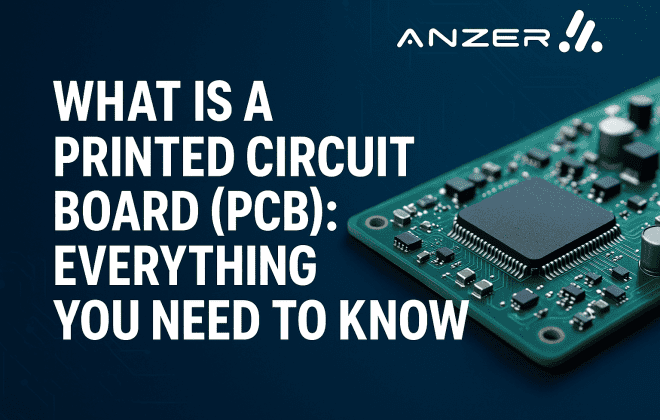
PCB Assembly (PCBA) is the process of mounting electronic components onto a printed circuit board (PCB). While a bare PCB is just a board made of substrate and copper traces, a fully assembled PCB is what brings electronic devices to life. This involves techniques such as:
- Surface Mount Technology (SMT) – placing components directly on the board’s surface.
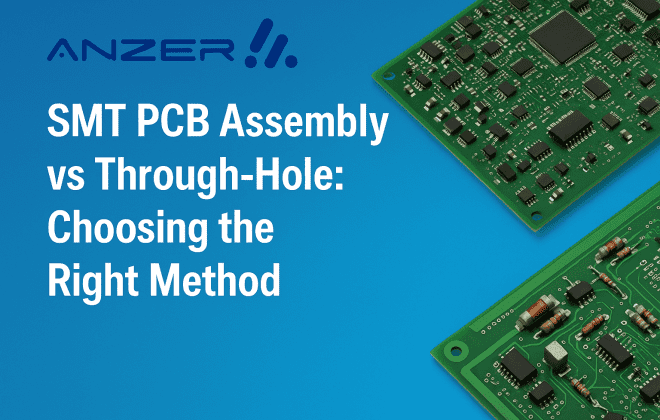
- Through-Hole Technology (THT) – inserting component leads through drilled holes.
- Mixed Technology – combining SMT and THT for complex builds.
In short: PCB Assembly is the bridge between design and functional electronics.
Why PCB Assembly Matters for OEMs and Startups
For both startups and established OEMs, PCB assembly is where product ideas turn into tangible, testable, and scalable solutions. Here’s why it matters:
- Product Functionality: Without assembly, your PCB is just copper and fiberglass. Assembly makes it an operational device.
- Quality & Reliability: Proper assembly ensures devices work in the real world, from medical life-support systems to aerospace controls.
- Scalability: Assembly processes determine whether you can cost-effectively move from one prototype to thousands of units.
Whether you’re building a next-gen medical device or industrial automation module, the assembly stage defines your product’s success.
Types of PCB Assembly Methods
1. Surface Mount Technology (SMT)
- Components mounted directly onto PCB surface.
- Enables high-density and compact designs.
- Faster and more cost-effective for large volumes.
2. Through-Hole Technology (THT)
- Components inserted into drilled holes.
- Provides stronger mechanical bonds.
- Preferred for high-stress environments like aerospace and automotive.
3. Mixed Technology
- Combination of SMT and THT.
- Often used in medical and aerospace assemblies where both density and durability are critical.
ANZER is equipped with state-of-the-art SMT lines and expert THT technicians, ensuring maximum flexibility for all project types.
The PCB Assembly Process: Step-by-Step
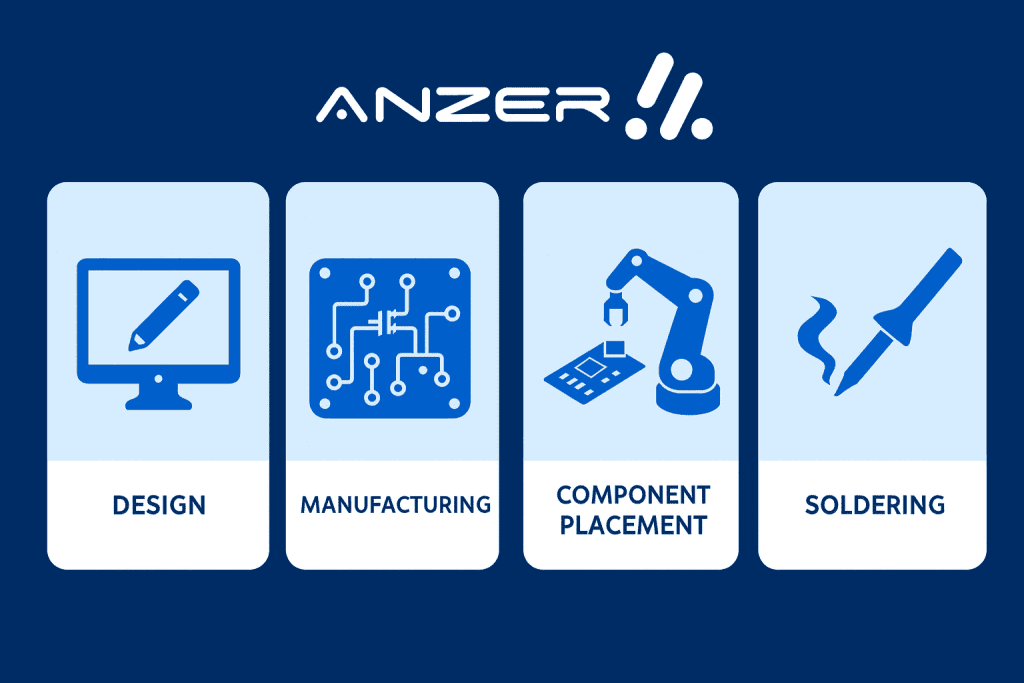
Here’s a streamlined look at the PCB assembly workflow:
Step 1: Solder Paste Application
- A stencil applies solder paste onto board pads.
- Automated printers ensure precision.
Step 2: Component Placement
- Pick-and-place machines position SMT components.
- THT components are inserted manually or with automated insertion systems.
Step 3: Soldering
- Reflow soldering for SMT.
- Wave soldering or hand soldering for THT.
Step 4: Inspection and Testing
- Automated Optical Inspection (AOI).
- X-ray inspection for hidden solder joints.
- Functional and in-circuit testing.
Step 5: Conformal Coating & Potting (If Required)
- Protects electronics against moisture, dust, chemicals, and vibration.
Step 6: Final Assembly & Quality Assurance
- Integration into box builds or subsystems.
- Rigorous quality control under ISO 9001, ISO 13485, and AS9100D standards.
Pro Tip: Always choose a partner who combines automated precision with human oversight. This balance reduces defects and enhances product longevity.
Key Industries That Rely on PCB Assembly
PCB assembly is the backbone of nearly every industry. Here are a few sectors where ANZER’s expertise makes a difference:
1. Medical Electronics
- Applications: Diagnostic devices, monitoring systems, implantables.
- Why ANZER: ISO 13485 certification ensures compliance with medical regulations.
2. Aerospace & Defense
- Applications: Navigation systems, control units, communication devices.
- Why ANZER: AS9100D certification and proven reliability in mission-critical systems.
3. Industrial Automation & Controls
- Applications: Robotics, PLC systems, manufacturing equipment.
- Why ANZER: Expertise in ruggedized assemblies with coating and potting.
4. Automotive & Transportation
- Applications: Engine controls, safety systems, infotainment.
- Why ANZER: Customizable solutions with no minimum order quantities.
5. Consumer & Commercial Electronics
- Applications: Lighting systems, IoT devices, custom modules.
- Why ANZER: Flexible prototyping for startups and scalability for OEMs.
Why Work with a Certified PCB Assembly Partner?
Not all PCB assembly providers are equal. Certifications separate reliable partners from risky ones.
- AS9100D (Aerospace) – Ensures compliance with rigorous aerospace standards.
- ISO 13485:2016 (Medical) – Guarantees processes that meet global medical device regulations.
- ISO 9001:2015 (Quality Management) – Validates consistent quality in all projects.
ANZER holds all three certifications, positioning us as a trusted U.S.-based electronics manufacturer.
Benefits of Choosing ANZER for PCB Assembly
When OEMs and startups choose ANZER, they gain:
- 33+ years of expertise and 4,000+ completed projects.
- No minimum order quantities—ideal for startups and R&D teams.
- Dedicated prototype line for rapid iterations.
- Value-added services like coating, potting, machining, and box builds.
- Responsive support with customer-first communication.
How to Choose the Right PCB Assembly Partner
Here’s a checklist OEMs and startups should use:
- Certifications: Ensure ISO 9001, ISO 13485, AS9100D.
- Experience: Look for decades of proven projects.
- Capabilities: SMT, THT, coating, potting, box builds.
- Scalability: Ability to handle prototypes and high-volume runs.
- Testing: AOI, X-ray, functional testing.
- Customer Service: Clear communication, no hidden costs.
ANZER checks every box.
Frequently Asked Questions (FAQs)
1. What is the difference between PCB and PCBA?
- A PCB is a bare printed circuit board with no components. A PCBA is a fully assembled board ready to function.
2. How long does PCB assembly take?
- Timelines vary by complexity. Prototypes may take a few days to weeks, while production runs depend on order size and testing requirements.
3. Can startups work with ANZER even with small orders?
- Yes. ANZER has no minimum order quantities, making us ideal for startups and R&D teams.
4. What industries require certified PCB assembly?
- Medical, aerospace, automotive, and industrial automation demand certified manufacturing due to safety and regulatory needs.
5. Why choose U.S.-based PCB assembly?
- Local manufacturing ensures faster communication, better IP protection, and compliance with industry standards.
Call to Action: Bring Your PCB Assembly Project to Life
Whether you’re a startup building your first prototype or an OEM scaling production, ANZER is your trusted partner for PCB assembly in Ohio and beyond.
- Request a Quote Today → Contact ANZER
- Explore Our Services → ANZER PCB Assembly Services
Further Reading
- IPC Standards for PCB Assembly
- ISO 13485 Medical Devices Overview
- AS9100 Aerospace Quality Management
Conclusion
So, what is PCB assembly? It’s the crucial process that transforms a bare circuit board into a fully functional electronic product. For OEMs and startups, choosing the right assembly partner defines success in performance, compliance, and cost-efficiency.
With ANZER’s certified excellence, in-house capabilities, and flexible production models, you can confidently bring your innovations to market. We deliver on our promise: On-Spec. On-Time. On-Budget.