Choosing the Right Box Build Assembly Services for Your Project – Anzer
Are you looking for a way to turn your complex electronic designs into finished products? Box build assembly is the all-in-one solution that takes your project from a simple circuit board to a fully integrated system. In the world of electronics manufacturing, a box build service handles everything from installing the main printed circuit board into an enclosure to connecting all the wires and loading the software. It’s the final and most crucial step in creating a product that is ready for your customers.
Table of Contents
Key Highlights
- Box build assembly goes beyond simple PCB assembly to create a fully functional, enclosed product.
- Turnkey solutions streamline your entire electronics manufacturing process, from sourcing parts to final assembly.
- The process involves system integration, where all electronic and mechanical parts are combined into one unit.
- Comprehensive quality control measures, including functional testing, ensure every product meets high standards.
- Box builds are essential for a wide range of industries, including medical, industrial, and consumer electronics.
- Partnering with an expert simplifies your supply chain and reduces your product’s time-to-market.
Understanding Box Build Assembly Services
A box build assembly is an electromechanical system that combines a populated printed circuit board assembly (PCBA) with all the other necessary components inside an enclosure. Think of it as the complete package, where individual parts are brought together to create a single, functional device. This service is becoming more popular in fields like robotics and mechatronics.
Instead of just getting PCB assembly services, a box build simplifies your electronics manufacturing process. It ensures every part works together seamlessly, with quality assurance checks at every stage. You get a finished product without having to manage multiple vendors. The following sections will explain what makes this service unique and what functions it performs.
What Sets Box Build Assembly Apart from PCB Assembly?
Many people wonder how a box build differs from standard PCB assembly. The main distinction is the scope of the work. PCB assembly focuses specifically on populating a bare circuit board with electronic components using methods like surface mount technology. The process stops once the board is assembled and tested.
On the other hand, box build assembly takes that completed circuit board and integrates it into a larger system. This service includes placing the PCB into an enclosure, connecting wires and harnesses, installing power supplies, and adding any other mechanical or electronic parts. It’s about creating the complete final product, not just one of its components.
Ultimately, while PCB assembly is a critical step, box build assembly is the comprehensive process that delivers a market-ready device. It transforms individual parts into a fully enclosed and operational system, ready for your end-user.
Key Functions of Box Build Assembly in Electronics
The box build assembly process involves several crucial functions that ensure your electronic product is assembled correctly and performs reliably. It’s more than just putting parts in a box; it’s a detailed system integration effort that brings your design to life. This process requires a combination of electrical and mechanical expertise.
The core of a box build is product assembly, where all the individual electronic components are brought together. This includes mounting the main PCB, connecting it to other sub-assemblies, and ensuring everything fits perfectly within the enclosure. Quality control is a major function throughout this stage to prevent errors.
Some of the key functions performed during a box build include:
- Integrating various sub-assemblies and PCBs.
- Installing and routing all necessary cables and wire harnesses.
- Assembling mechanical components and enclosures.
- Loading software and configuring the system.
- Conducting final functional testing to verify performance.
Essential Components of Box Build Assembly Projects
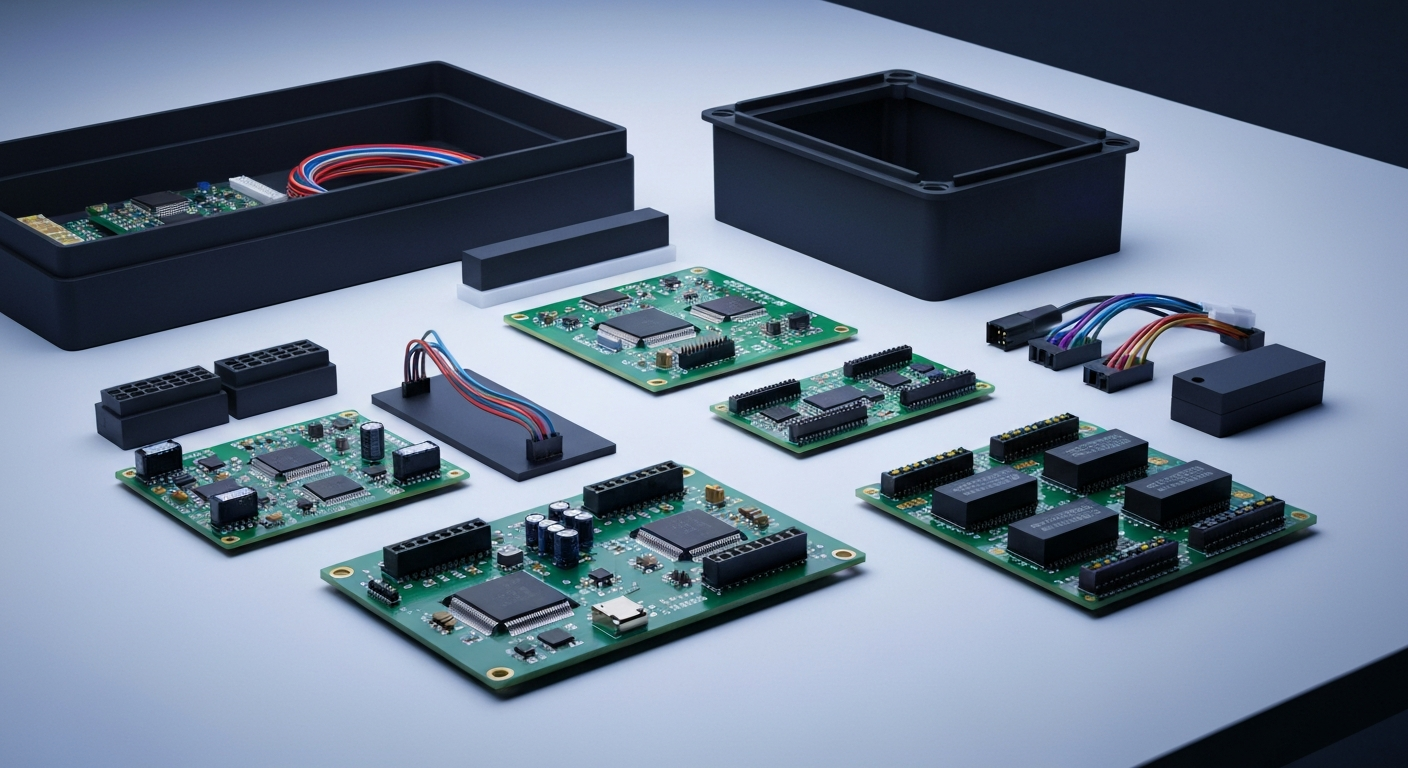
A successful box build assembly relies on the correct integration of several key components. These parts work together to create the final, functional system. The most central element is the printed circuit board, which acts as the brain of the device. However, many other parts are just as important for the product to work as intended.
Beyond the PCB, these projects include the wire harness and cable assemblies that connect everything, as well as the mechanical assembly of the enclosure and other hardware. Each component must be sourced and assembled with precision. Let’s look at these essential parts in more detail.
Printed Circuit Boards and Integration
The printed circuit board (PCB) is the heart of any electronic device. In a box build, the assembled PCB is the core component around which everything else is built. The quality of the PCB design and its assembly directly impacts the performance of the final product.
System integration is the process of making sure this PCB works harmoniously with all other parts of the assembly. This involves more than just physically placing the board in an enclosure. It requires connecting it to power supplies, user interfaces like screens or switches, and any other sub-assemblies. The goal is to create a unified system.
Effective system integration is a key part of the electronics manufacturing process for box builds. It ensures that every connection is secure and that all components communicate properly, resulting in a reliable and fully functional product that meets your exact specifications.
Wiring, Cabling, and Harnesses
Proper wiring is essential for any box build project. The wire harness and various cable assemblies are the lifelines that distribute power and data throughout the system. Without clean and correct connections, even the best components will fail to perform.
The assembly process for wiring harnesses involves carefully routing cables to avoid tangles, electromagnetic interference, and potential damage from moving parts or heat. Each wire must be cut to the correct length, terminated with the right connectors, and clearly labeled for easy identification during assembly and future maintenance.
A box build provider handles all aspects of these connections, including:
- Creating custom cable harnesses for specific applications.
- Routing complex wiring harnesses within the enclosure.
- Ensuring all cable assemblies are tested for continuity and integrity.
- Securing all connections to prevent them from loosening due to vibration.
Enclosures and Mechanical Elements
The enclosure is the protective shell of your product, but it’s also a critical part of the mechanical assembly. Enclosures can be standard or custom-made from various materials, including metal and plastic enclosures, depending on the product’s environment and requirements.
Beyond just housing the electronics, the enclosure and other mechanical components play a role in the product’s functionality. This can include integrating switches, connectors, displays, and fans for thermal management. A key challenge is ensuring all these mechanical parts fit together perfectly and align with the internal electronics.
Your box build partner will source or fabricate the right enclosures and manage the integration of all mechanical elements. This attention to detail ensures the final product is not only functional but also durable and well-protected from its operating environment.
The Step-by-Step Box Build Assembly Process
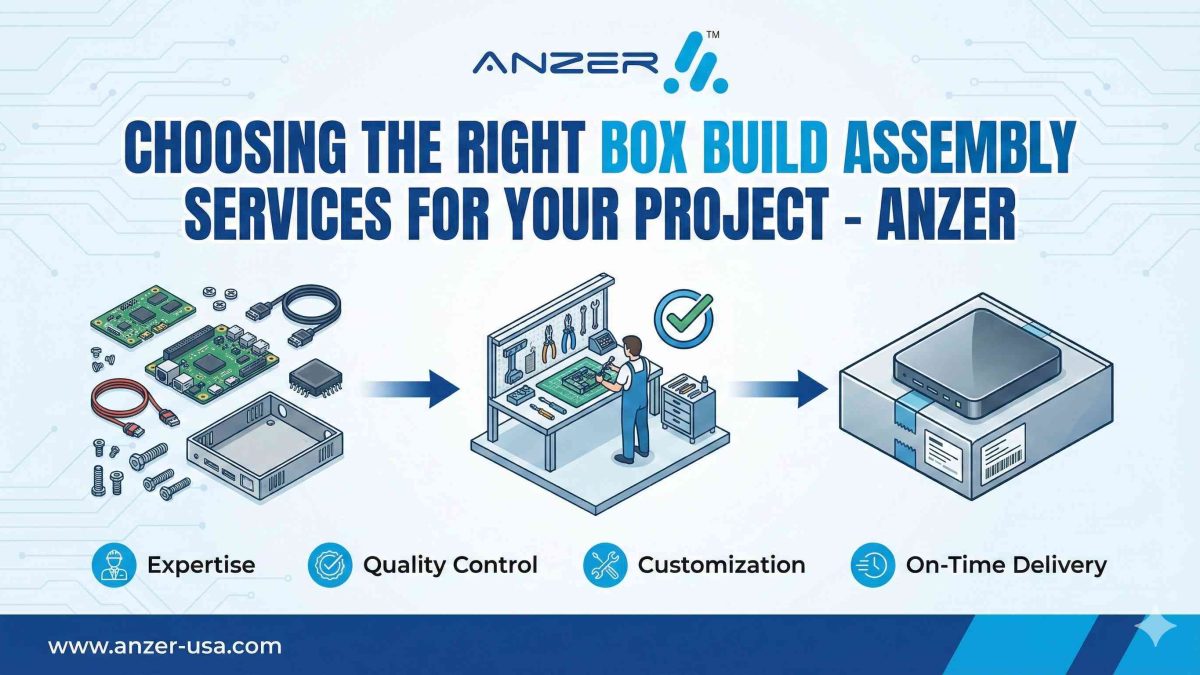
The box build assembly process is a structured workflow designed to efficiently create a complete electronic system. This multi-stage process ensures that every component is sourced, assembled, and tested according to your exact specifications. It starts with careful planning and preparation before any physical assembly begins.
From component sourcing and sub-assembly to final system integration and testing, each step is crucial for the final product assembly. Having a clear, well-managed process eliminates errors and speeds up production. The following sections break down this process into its key stages.
Component Sourcing and Preparation
The first step in any box build is component sourcing and preparation. This begins with a detailed bill of materials (BOM), which is a comprehensive list of every single part needed for the project. An accurate BOM is essential for avoiding delays and ensuring all components are correct.
Your assembly partner takes on the task of supply chain management, sourcing all items on the BOM from trusted suppliers. This includes everything from the PCBs and electronic components to the enclosure, wires, and even screws. This simplifies your supply chain by consolidating all sourcing activities with a single partner, which helps manage lead times and reduce complexity.
Sub-Assembly and System Integration
Once all components are sourced and prepared, the next stage is creating smaller sub-assemblies and then integrating them into the final system. A sub-assembly could be as simple as a small circuit board with a few connectors or a more complex unit with its own housing.
System integration is where everything comes together. During this phase, the main PCB assemblies, wire harnesses, power supplies, and any other sub-assembly units are installed into the final enclosure. This step requires precision to ensure everything fits correctly and all connections are secure.
This is also the point where software loading and IC programming often occur. The firmware that makes your product smart is installed onto the microcontrollers. After integration, preliminary functional testing may be performed to verify that the core systems are communicating and operating as expected before the unit is fully closed.
Final Assembly, Testing, and Packaging
The final assembly stage involves closing up the enclosure and adding any external components, such as labels, bezels, or feet. Once the unit is fully assembled, it moves to the most critical phase: thorough testing and quality control. This ensures the product is ready for the real world.
A series of tests are performed to guarantee the product works exactly as designed. This includes a final visual inspection to check for cosmetic defects and, most importantly, a comprehensive functional testing sequence. This test simulates the product’s actual use to confirm it meets all performance specifications.
The quality control process typically includes:
- A final visual inspection of the completed unit.
- Continuity tests for all wiring and cables.
- Full functional testing of all hardware and software features.
- Environmental or burn-in testing for high-reliability applications.
- Final packaging designed to protect the product during shipping.
Types of Products That Benefit from Box Build Assembly Services
Box build assembly services are incredibly versatile and are used across a wide range of industries. Any product that requires more than just a standalone PCB can benefit from this type of integration. From large-scale industrial machinery to handheld consumer gadgets, box builds are essential for creating finished goods.
Industries like industrial automation, medical devices, and consumer electronics heavily rely on electronics manufacturing services to deliver complete, ready-to-use systems. Let’s explore some specific examples of products that are created using box build assembly.
Industrial and Commercial Electronics
In the world of industrial and commercial electronics, reliability and durability are key. Box build assemblies are used to create robust systems that can withstand harsh environments. These products are often the control centers for much larger pieces of equipment.
A perfect example is in industrial automation, where box builds are used to create control panels for conveyor systems, high-density storage units, and other automated machinery. These enclosures protect the sensitive electronics inside from dust, moisture, and vibration while providing an interface for operators.
The a wide range of industries, from food equipment manufacturing to heavy equipment controls, depend on box builds. The electronics manufacturing process for these products ensures that every unit is built to strict standards, providing the reliability needed for critical industrial applications.
Medical Devices and Equipment
The medical field demands the highest levels of precision and reliability, making box build assembly an essential service for medical devices. Lives can depend on the proper functioning of this equipment, so there is no room for error. Products like MRI machines, CT scanners, and ultrasound systems all rely on complex box builds.
For these devices, product quality is paramount. The assembly process must adhere to strict industry standards and regulations, such as ISO 13485. This involves meticulous documentation, component traceability, and thorough testing to ensure every unit is safe and effective.
Choosing a turnkey box build provider with experience in medical devices ensures that these stringent quality standards are met. From sourcing certified components to performing rigorous functional tests, every step is managed to deliver a product that clinicians and patients can trust.
Consumer Technology Applications
Box build assembly is also at the heart of many consumer electronics we use every day. While these products may not face the same harsh conditions as industrial equipment, they need to be reliable, cost-effective, and aesthetically pleasing to achieve customer satisfaction.
From smart home devices and gaming systems to specialized kitchen appliances, the box build process is what turns a collection of components into a polished finished product ready for store shelves. For consumer technology, rapid prototyping is often a key service offered by box build partners, allowing companies to quickly test and refine their designs.
Box builds are used to create a variety of quality products for consumers, including:
- Smart home hubs and security systems.
- High-end audio and video equipment.
- Portable electronic gadgets.
- Specialized gaming industry peripherals.
Why Choose Turnkey Box Build Assembly Services?
Are you tired of juggling multiple suppliers for your electronics project? Turnkey box build assembly offers a streamlined, single-source solution. A turnkey provider manages the entire process for you, from sourcing components and manufacturing PCBs to final assembly and testing. This simplifies your supply chain management significantly.
By handing over the entire project to one expert partner, you benefit from a single point of contact for customer service, consistent quality assurance, and simplified order fulfillment. Let’s look at how this approach can save you time, reduce costs, and get your product to market faster.
Streamlined Supply Chain Management
One of the biggest advantages of a turnkey box build service is streamlined supply chain management. Instead of coordinating with separate vendors for PCBs, cables, enclosures, and assembly, you work with a single partner who handles everything. This eliminates the risk and complexity of managing multiple supply chains.
This integrated approach helps reduce lead times and prevents the delays that can occur when dealing with different suppliers. Your box build partner leverages their expertise and established relationships to source all components efficiently, ensuring everything arrives on time for assembly. This focus on efficiency leads to greater customer satisfaction.
A turnkey partner simplifies your supply chain by:
- Acting as a single point of contact for all components.
- Managing all sourcing and procurement activities.
- Reducing the administrative burden on your team.
- Leveraging their full box build capabilities to optimize the process.
Faster Time-to-Market and Cost Savings
In today’s competitive market, getting your product to customers quickly is crucial. Turnkey box build services help you achieve a faster time-to-market by consolidating the entire production process under one roof. With streamlined workflows and no delays between different vendors, your product moves from concept to completion much more efficiently.
This efficiency also leads to significant cost savings. By managing the complete box build process, your partner can identify opportunities to optimize manufacturability, reduce labor costs, and minimize rework. You also save on the overhead costs associated with managing multiple suppliers and maintaining your own assembly space and equipment.
Whether you need rapid prototyping to validate a new design or high-volume production, a turnkey solution offers a cost-effective and speedy path to market. You can focus on your core competencies, like design and marketing, while your partner handles the complexities of manufacturing.
Factors to Consider When Selecting a Box Build Assembly Partner
Choosing the right partner for your box build assembly is a critical decision that will impact your product’s quality and your time-to-market. Not all providers are created equal, so it’s important to evaluate them based on a few key factors. You need a partner who can meet your specific requirements and deliver consistent results.
You should look for a company with proven years of experience, the right certifications for your industry, and a commitment to high quality standards. Good communication and excellent customer service are also essential. The next section will cover what to look for in more detail.
Experience, Certifications, and Industry Expertise
When evaluating a potential box build partner, their experience and expertise should be at the top of your list. A provider with many years of experience will have a deep understanding of the manufacturing process and will be better equipped to handle complex projects and solve problems that may arise.
Certifications are another crucial indicator of a company’s commitment to quality. Look for certifications that are relevant to your industry, as they demonstrate that the provider adheres to recognized industry standards. This is a key part of their quality management and quality assurance systems.
Here are some important qualifications to look for:
- Industry Experience: Do they have a proven track record in your specific market (e.g., medical, aerospace, industrial)?
- Quality Certifications: Are they certified to standards like ISO 9001, ISO 13485 (for medical), or AS9100 (for aerospace)?
- Workmanship Standards: Do their technicians hold certifications like IPC-A-610 for assembly quality?
- Regulatory Compliance: Can they meet requirements like ITAR or RoHS?
Frequently Asked Questions
What kind of information is needed for a box build assembly quote?
To get an accurate quote for box build services, you will need to provide a detailed bill of materials (BOM), your PCB design files, and assembly drawings. You should also include information on the electronic components, dimensions of the enclosure, and any other specific requirements for testing or packaging.
How is quality controlled in box build assembly services?
Quality control is managed through a multi-step process. It includes visual inspection at every stage, comprehensive functional testing of the final unit, and adherence to strict quality standards like IPC-A-610. A robust quality management system ensures every assembly meets performance and reliability requirements before it ships.
How does system integration fit into the box build assembly process?
System integration is a core part of the box build assembly process where the assembled PCB is combined with all other parts—like wiring, power supplies, and mechanical components—inside an enclosure. This step transforms individual components into a single, cohesive final product, ready for use in electronics manufacturing.
Conclusion
In conclusion, selecting the right box build assembly services is crucial for your project’s success. Understanding the various components, processes, and the benefits of turnkey solutions can significantly impact your product’s performance and market readiness. By considering factors such as experience and industry expertise, you can ensure a partnership that aligns with your project goals. Remember, effective box build assembly not only streamlines your supply chain but also enhances quality control and accelerates time-to-market. If you’re ready to take your project to the next level, get in touch with us today to discuss how our services can meet your unique needs.
ANZER is your reliable partner for innovative PCB Assembly and Electronics Manufacturing Services in Ohio, USA. You’re developing a prototype, scaling up to mass production, or requiring specialized assembly—we’re here to deliver precision-crafted, cost-effective solutions. With latest technology and years of expertise, we guarantee products that exceed expectations every time.