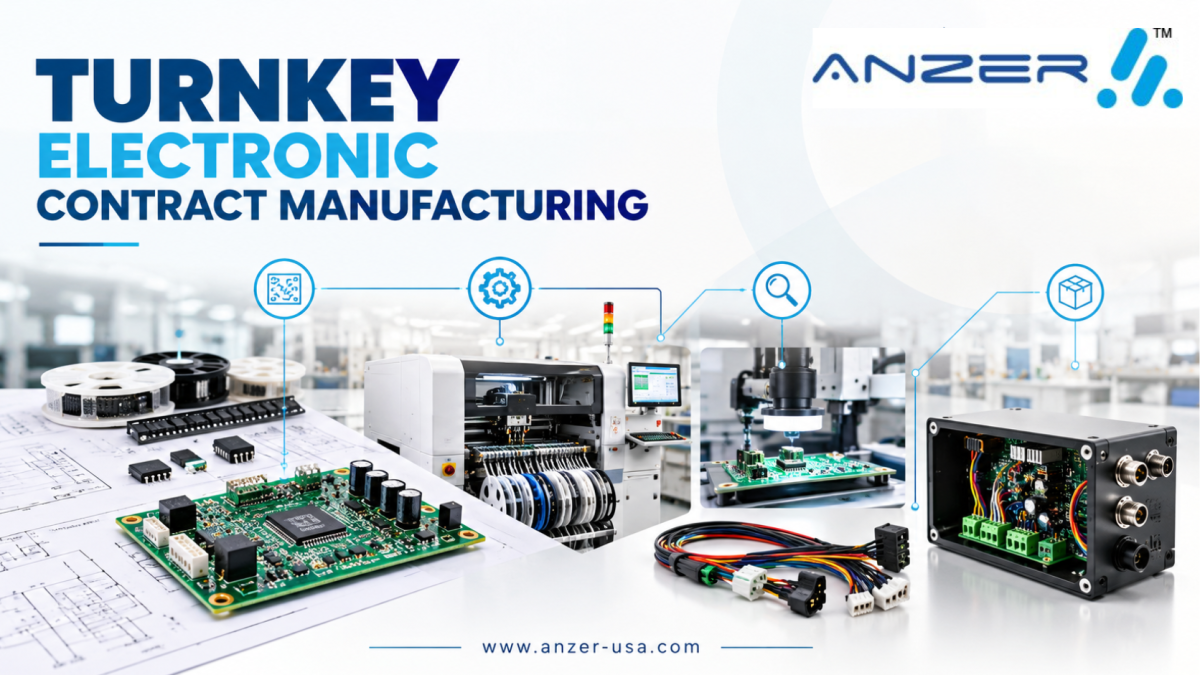
Turnkey Electronic Contract Manufacturing: What OEMs Should Know Before Choosing a Manufacturing Partner
Turnkey electronic contract manufacturing allows original equipment manufacturers (OEMs) to work with one manufacturing partner for connected activities such as component sourcing, PCB assembly, inspection, testing, and product integration. Instead of coordinating multiple suppliers independently, an OEM can consolidate manufacturing responsibilities under a defined scope of work.
However, turnkey manufacturing is not simply about outsourcing more tasks. The real objective is to establish clear responsibility for materials, workmanship, quality requirements, documentation, and delivery.
For OEMs developing industrial equipment, medical electronics, aerospace assemblies, and other electronic products, choosing the right partner requires more than comparing unit prices. Buyers need to understand what the supplier will manage, what engineering information must be provided, and how the manufacturing process will be controlled from prototype through production.
ANZER USA provides turnkey electronic contract manufacturing from its manufacturing facility in Akron, Ohio, combining electronics assembly, component sourcing, testing, wire and cable harness assembly, box build, and related manufacturing services.
What Is Turnkey Electronic Contract Manufacturing?
Turnkey electronic contract manufacturing is a manufacturing arrangement in which an external electronics manufacturing services (EMS) or electronic contract manufacturing (ECM) provider manages multiple connected production activities on behalf of an OEM.
Depending on the agreed scope, these activities can include:
- Component procurement and supply chain coordination.
- PCB fabrication and assembly.
- Surface Mount Technology (SMT) and Through-Hole Technology (THT) assembly.
- Inspection and electrical testing.
- Wire harness and cable assembly.
- Conformal coating and potting.
- Box build and system integration.
- Final inspection, serialization, labeling, and packaging.
The OEM supplies the product requirements, design information, acceptance criteria, and other necessary technical inputs. The manufacturing partner performs the agreed production activities and provides the resulting assemblies or finished products.
The exact scope varies by project. A turnkey PCB assembly program may deliver tested printed circuit board assemblies, while a complete turnkey electronics manufacturing program may also include enclosure integration, wiring, and final product testing.
The distinction matters because the word “turnkey” does not automatically mean that every engineering, compliance, testing, or logistics responsibility has transferred to the manufacturer.
How Does Turnkey Electronics Manufacturing Work?
A well-defined turnkey program connects engineering, procurement, assembly, verification, and final delivery through an agreed manufacturing plan.
1. Engineering Review and Design Readiness
Before production begins, the manufacturer reviews the available design and manufacturing documentation.
Depending on the project, this may include schematics, PCB fabrication files, assembly drawings, mechanical drawings, a bill of materials (BOM), and test requirements.
A Design for Manufacturability (DFM) review can identify potential assembly difficulties, component clearance concerns, sourcing risks, and other issues before they create production problems.
Design for Assembly (DFA) review can also help identify opportunities to simplify assembly and improve process consistency.
OEMs can explore ANZER’s electronic design and manufacturability support when evaluating manufacturing readiness.
The goal is to resolve important questions before materials are purchased and production begins.
2. Component Sourcing and Material Planning
Component sourcing is one of the defining responsibilities of a turnkey manufacturing arrangement.
The manufacturing partner coordinates the procurement of required components according to the approved BOM, sourcing requirements, and project specifications.
A useful sourcing review should address:
- Manufacturer part numbers and approved suppliers.
- Component availability and lifecycle status.
- Approved alternatives and substitution permissions.
- Required quantities and expected production demand.
- Applicable RoHS and REACH requirements.
- Material traceability and documentation expectations.
- Responsibility for shortages, excess inventory, and unused components.
Substitution control deserves particular attention. A component that appears similar may differ in electrical characteristics, package dimensions, temperature rating, reliability, or regulatory suitability.
An OEM should explicitly define who may approve a substitute. Component availability alone should not determine whether an alternative is acceptable.
For more information, review PCB component traceability in manufacturing.
3. PCB Fabrication and Assembly
After the design and materials are ready, production moves into PCB fabrication and assembly according to the approved requirements.
SMT assembly places surface-mount components onto printed circuit boards. THT assembly accommodates through-hole components that are inserted into drilled holes and soldered. Some products require a combination of both technologies.
The appropriate process depends on the design, component selection, mechanical requirements, and intended application.
A turnkey provider can coordinate these activities with the associated material requirements and inspection processes rather than leaving the OEM to manage separate manufacturing interfaces.
ANZER supports turnkey PCB assembly and contract manufacturing, including SMT, THT, and mixed-technology assembly.
4. Inspection and Electrical Testing
Assembly completion does not, by itself, establish that a product meets its requirements.
Inspection and testing should be selected according to the design, risk, acceptance criteria, and intended application.
| Method | Primary purpose |
|---|---|
| Automated Optical Inspection (AOI) | Examines visible assembly features, component placement, and solder-joint characteristics. |
| X-ray inspection | Examines hidden features, including applicable BGA solder joints. |
| In-Circuit Testing (ICT) | Checks electrical connections and component characteristics where the design and test access support it. |
| Flying probe testing | Checks selected electrical characteristics without requiring a conventional dedicated ICT fixture. |
| Functional testing | Evaluates whether the assembly operates according to defined functional requirements. |
| Burn-in testing | Applies specified operating or stress conditions to identify certain early-life failures. |
These methods serve different purposes. AOI does not replace functional testing, and functional testing does not necessarily identify every assembly defect.
The inspection and testing plan should specify which methods apply, what constitutes acceptance, how failures are handled, and which records the OEM requires.
ANZER supports multiple inspection and testing methods, with the final selection based on project requirements.
5. Wire Harnesses, Coating, Potting, and Box Build
For products that require more than a bare PCBA, turnkey manufacturing can extend into additional integration work.
Wire harnesses connect electrical components through organized wire assemblies. Cable assemblies use an outer sheath or jacket to provide the required grouping and protection. Their construction depends on the intended operating environment and application.
Conformal coating provides a protective layer over selected circuit-board surfaces. Potting encapsulates specified components or assemblies in a protective compound. Neither process should be selected without considering material compatibility, serviceability, heat dissipation, and the product’s actual environmental requirements.
Box build brings together PCBAs, wiring, connectors, mechanical enclosures, and other specified components to create a more complete electronic system.
ANZER offers wire harness and cable assembly and box build assembly services, allowing OEMs to evaluate a more integrated manufacturing scope.
6. Final Verification, Packaging, and Delivery
The final stage should confirm that the product configuration matches the approved requirements.
Depending on the contract, this may include functional verification, final inspection, serialization, labeling, packaging, and delivery documentation.
Before production starts, the OEM and manufacturer should agree on the required records, acceptance criteria, packaging configuration, and shipment responsibilities.
A clear definition of the deliverable prevents a common sourcing problem: receiving an assembly that is technically complete but missing required documentation, labeling, accessories, or final integration work.
Turnkey vs. Consignment vs. Partial Turnkey Manufacturing
Not every OEM needs the same sourcing model. The best choice depends on purchasing control, internal resources, component sourcing arrangements, and the responsibilities the OEM wants to retain.
| Manufacturing model | Material sourcing | Main consideration |
|---|---|---|
| Full turnkey | Manufacturer sources the agreed materials and manages the defined manufacturing scope. | Consolidates sourcing and production responsibilities with one partner. |
| Consignment | OEM supplies some or all of the required materials. | Preserves greater direct control over component purchasing but increases the OEM’s material coordination responsibilities. |
| Partial turnkey | OEM and manufacturer divide sourcing and production responsibilities. | Provides flexibility but requires clear ownership for each material category and process. |
Full turnkey is not automatically the right choice for every project.
An OEM with established component agreements or proprietary sourcing requirements may prefer consignment or a hybrid arrangement. A company seeking to reduce purchasing coordination may prefer a broader turnkey scope.
The important question is whether the chosen model assigns every responsibility clearly.
See ANZER’s guide to turnkey PCB assembly vs. consignment for additional considerations.
What Should OEMs Evaluate When Choosing a Turnkey Manufacturing Partner?
The supplier selection process should examine manufacturing fit, quality systems, engineering support, sourcing practices, and production continuity.
Quality Systems and Applicable Standards
Start with the requirements that apply to the product and its intended market.
ANZER holds ISO 9001:2015, ISO 13485:2016, and AS9100D certifications. The relevant quality system depends on the manufacturing program and its applicable requirements.
For example, ISO 13485:2016 is relevant to medical device quality management, while AS9100D addresses quality management requirements for aviation, space, and defense organizations.
Buyers should verify the applicable certification scope and confirm how the manufacturer’s quality system aligns with their contractual requirements.
For electronic assembly workmanship, specify the applicable IPC acceptance class. ANZER supports IPC Class 2 and Class 3 manufacturing requirements, subject to the agreed product specifications.
A certification is an important qualification, but it should not replace a review of the actual manufacturing process, inspection plan, traceability requirements, and documentation.
Engineering Support and DFM
Manufacturing difficulties often originate before the first board reaches the production line.
Ask how the supplier reviews design files, identifies component sourcing risks, handles incomplete documentation, and communicates recommended changes.
A useful DFM process should produce actionable findings rather than a general statement that a design is manufacturable.
The OEM should also retain control of design changes and establish an approval process for modifications to the BOM, PCB layout, assembly drawings, and acceptance criteria.
Prototype-to-Production Continuity
A prototype build provides an opportunity to learn about the actual manufacturing process before scaling production.
Component placement, solderability, assembly access, test coverage, and mechanical integration may require adjustments after an initial build.
When the prototype and production stages use different suppliers, manufacturing knowledge and process decisions must be transferred between organizations. That transfer can introduce additional coordination and validation work.
ANZER maintains a dedicated prototype production line and supports prototype-to-production PCB manufacturing.
For OEMs, this continuity can be useful when engineering changes are expected or when a product needs to move from early builds into repeatable manufacturing.
Testing and Traceability
A manufacturing partner should be able to explain how the product will be inspected, tested, and documented.
Ask which inspection methods are available, what the test plan covers, how nonconforming assemblies are handled, and which records will accompany the product.
For regulated or high-reliability applications, define the required lot or serial-level traceability, material records, inspection evidence, and acceptance documentation before production begins.
Do not assume that every testing method or record is automatically included in a turnkey quote.
Domestic Manufacturing and Supply Chain Coordination
For OEMs that require U.S.-based production, manufacturing location can affect supplier communication, logistics planning, and procurement requirements.
ANZER conducts its manufacturing in Akron, Ohio, USA. Its capabilities cover electronics assembly, component sourcing, wire harness assembly, coating, potting, box build, and related manufacturing activities.
The value of a domestic partner should be assessed against the actual program requirements. Location alone does not guarantee lower costs, shorter lead times, or immunity from component shortages.
Buyers should evaluate sourcing transparency, material availability, communication practices, and the manufacturer’s ability to meet the agreed requirements.
What Should You Include in a Turnkey Electronics Manufacturing RFQ?
A detailed request for quotation (RFQ) helps the supplier evaluate the actual scope instead of relying on assumptions.
Before requesting a quote, prepare the following information.
Product and program details
- Product description and intended application.
- Current development stage: prototype, pilot, or production.
- Initial quantity and expected future demand.
- Required delivery schedule and destination.
Technical documentation
- Current BOM with manufacturer part numbers.
- Gerber or other applicable PCB fabrication files.
- Assembly drawings and schematics.
- Pick-and-place data where applicable.
- Mechanical drawings, enclosure details, and wire or cable drawings.
- Firmware programming instructions, if required.
Manufacturing and quality requirements
- Required SMT, THT, or mixed-technology processes.
- Applicable IPC class and customer-specific workmanship requirements.
- Component sourcing and substitution rules.
- Inspection and functional testing requirements.
- Coating, potting, or box build requirements.
- Traceability and quality documentation expectations.
- Serialization, labeling, and packaging instructions.
Commercial and operational requirements
- Customer-supplied versus manufacturer-supplied materials.
- Approved suppliers and purchasing restrictions.
- Ownership of excess or unused inventory.
- Required setup, tooling, or engineering activities.
- Quote assumptions, exclusions, and schedule dependencies.
Not every project will have a complete documentation package at the first discussion. If something is still being developed, identify it clearly instead of presenting an unfinished requirement as final.
Use ANZER’s PCB assembly quote guide to help prepare the information needed for a manufacturing inquiry.
Is Turnkey Electronic Contract Manufacturing Right for Your Business?
Turnkey manufacturing can be a good fit when an OEM wants one partner to coordinate component sourcing, assembly, testing, and integration across a defined scope.
It may be especially useful for:
- OEMs that want to reduce the number of separate manufacturing suppliers they coordinate.
- Engineering teams moving from prototype builds into repeatable production.
- Industrial electronics companies that require PCB assembly and box build integration.
- Buyers that need defined inspection, testing, and documentation requirements.
- Organizations evaluating domestic electronics manufacturing options.
A turnkey arrangement may be less suitable when the OEM must retain direct purchasing control, has strict customer-mandated suppliers, or lacks the documentation needed to define the manufacturing scope. These issues do not necessarily rule out turnkey manufacturing, but they must be resolved before committing to a production plan.
ANZER offers no minimum order quantity, a dedicated prototype production line, and support spanning PCB assembly through box build and related manufacturing services. These capabilities allow OEMs to discuss manufacturing requirements across different development stages without assuming that every program needs the same production model.
Common Mistakes to Avoid
Comparing quotes without comparing scope. A lower price may exclude testing, programming, packaging, or other work included in another proposal.
Allowing undocumented component substitutions. Define approval authority and acceptable alternatives before procurement.
Treating inspection as a substitute for testing. Visual inspection, electrical testing, and functional verification identify different categories of problems.
Ignoring production documentation. BOM revisions, drawings, test procedures, and acceptance criteria must remain aligned.
Assuming turnkey transfers all product responsibility. The OEM remains responsible for defining product requirements, approving design changes, and fulfilling its own customer or regulatory obligations.
Choosing a supplier only on unit price. Manufacturing fit, quality controls, sourcing responsibilities, and production continuity can materially affect the total cost and risk of a program.
Conclusion: Choose a Manufacturing Partner That Owns Its Agreed Scope
Turnkey electronic contract manufacturing is most effective when sourcing, assembly, testing, integration, and delivery responsibilities are clearly defined from the beginning.
For OEMs, the decision should start with product requirements, manufacturing readiness, quality expectations, and supply chain responsibilities. A detailed RFQ and a documented agreement on the manufacturing scope provide a stronger foundation than a unit-price comparison alone.
ANZER USA supports OEMs with turnkey electronic contract manufacturing from Akron, Ohio, including component sourcing, SMT and THT assembly, inspection, testing, wire harness assembly, coating, potting, and box build services.
If you are evaluating a manufacturing partner for a prototype, pilot build, or production program, contact ANZER USA to discuss your project requirements.